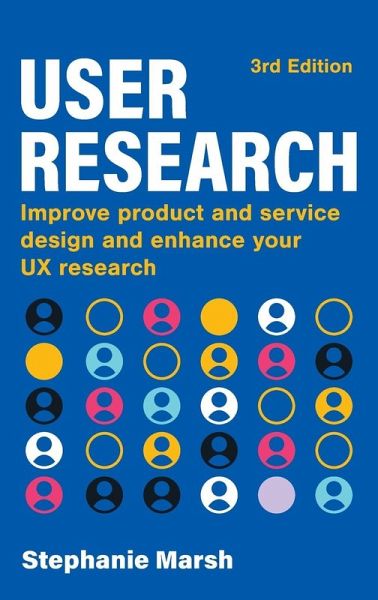
Many businesses are rooted in creating desirable products and services for users, but fail to consider the consumer. How can they create products and services that work for users? This book has the answers. User experience research, (UX research) focuses on understanding user behaviours, needs and motivations through a range of observational techniques, task analysis and other methodologies. User Research is a practical guide that shows mid-career professionals and academic readers how to use the vast array of user research methods available. Written by Stephanie Marsh, one of the UK's leading…mehr
Many businesses are rooted in creating desirable products and services for users, but fail to consider the consumer. How can they create products and services that work for users? This book has the answers. User experience research, (UX research) focuses on understanding user behaviours, needs and motivations through a range of observational techniques, task analysis and other methodologies. User Research is a practical guide that shows mid-career professionals and academic readers how to use the vast array of user research methods available. Written by Stephanie Marsh, one of the UK's leading UX research professionals, readers can benefit from in-depth knowledge that explores the fundamentals of user research. Covering all the key research methods including face-to-face user testing, card sorting, surveys and many more, the book gives expert insight into the nuances, advantages and disadvantages of each. While also providing guidance on how to interpret, analyze and share the data once it has been obtained. Now in its third edition, User Research provides new insight into how to incorporate cross-functional collaboration when approaching user research, how to navigate the ever-changing world of GDPR as AI enters the research space and a pathway to founding their products and services with the understanding of consumer behaviour.
Stephanie Marsh (she/they) is a leading expert in UX Research and UX Research Operations based in the UK. As the former Head of User Research and Analysis at the UK Government Digital Service and Head of Digital at the UK Ministry of Defence, they have played a pivotal role in advancing digital innovation within the public sector. Previously a Bunnyfoot consultant , one of the UK's leading UX consultancies, Stephanie has applied their expertise to enhance user experiences across diverse industries. As a respected thought leader, she has contributed to peer-reviewed publications and shared insights through speaking engagements at conferences and industry events.
Inhaltsangabe
Chapter 01: Introduction why is user research so important?; Section ONE: The fundamentals what good research looks like; Chapter 02: Planning your user research; Chapter 03: Best practice in user research what, why and how; Chapter 04: Managing user research for successful outcomes; Chapter 05: Getting the legal and ethical stuff right; Chapter 06: Cross functional working; Section TWO: Selecting and using user research methods; Chapter 07: Usability testing observing people doing things; Chapter 08: User interviews understanding people's experience through talking to them; Chapter 09: Surveys how to gauge a widespread user response; Chapter 10: Getting the best out of stakeholder workshops collaborative sessions for constructive work with key participants; Chapter 11: Content testing what do people think your content means?; Chapter 12: Card sorting understanding how people group and relate things; Chapter 13: Information architecture validation through tree testing does the structure of your information work for your users?; Chapter 14: Diary studies how to capture user research data over time; Chapter 15: Contextual inquiry interviewing people in their own environment; Chapter 16: Ethnography and pop up research observing how people behave and running fast paced research in the real world; Chapter 17: How to combine user research methodologies; Section THREE: Analysing user research data and communicating the insights; Chapter 18: In depth analysis understanding your qualitative data; Chapter 19: Fast paced analysis; Chapter 20: Analysing usability data and cataloguing issues and needs; Chapter 21: Making recommendations how to make your research findings and insights actionable; Chapter 22: Creating impactful executive summaries and detailed reports to present results; Chapter 23: Tools for analysis and UX storytelling; Chapter 24: Conclusion;
Chapter - 01: Introduction: Why is user research so important?
Section - ONE: The fundamentals: What good research looks like
Chapter - 02: Planning your user research
Chapter - 03: Best practice in user research: Who, what, why and how
Chapter - 04: Getting the legal and ethical stuff right
Chapter - 05: Setting up for success
Chapter - 06: Managing user research logistics: agencies, facilities and contracts
Section - TWO: Selecting and using user research methods
Chapter - 07: Usability testing: observing people doing things
Chapter - 08: Content testing: what do people think your content means?
Chapter - 09: Card sorting: understanding how people group and relate things
Chapter - 10: Surveys: how to gauge a widespread user response
Chapter - 11: User interviews: understanding people's experience through talking to them
Chapter - 12: Diary studies: how to capture user research data over time
Chapter - 13: Information architecture validation through tree testing: does the structure of your information work for your users?
Chapter - 14: Ethnography: Observing how people behave in the real world
Chapter - 15: Contextual inquiry: Interviewing people in their own environment
Chapter - 16: A/B Testing: A technique to compare different options
Chapter - 17: Getting the best out of stakeholder workshops
Chapter - 18: Guerrilla research: Running fast-paced research in the real world
Chapter - 19: How to combine user research methodologies
Section - THREE: Analyzing user research data
Chapter - 20: Content analysis: understanding your qualitative data
Chapter - 21: Identifying themes through affinity diagramming
Chapter 01: Introduction why is user research so important?; Section ONE: The fundamentals what good research looks like; Chapter 02: Planning your user research; Chapter 03: Best practice in user research what, why and how; Chapter 04: Managing user research for successful outcomes; Chapter 05: Getting the legal and ethical stuff right; Chapter 06: Cross functional working; Section TWO: Selecting and using user research methods; Chapter 07: Usability testing observing people doing things; Chapter 08: User interviews understanding people's experience through talking to them; Chapter 09: Surveys how to gauge a widespread user response; Chapter 10: Getting the best out of stakeholder workshops collaborative sessions for constructive work with key participants; Chapter 11: Content testing what do people think your content means?; Chapter 12: Card sorting understanding how people group and relate things; Chapter 13: Information architecture validation through tree testing does the structure of your information work for your users?; Chapter 14: Diary studies how to capture user research data over time; Chapter 15: Contextual inquiry interviewing people in their own environment; Chapter 16: Ethnography and pop up research observing how people behave and running fast paced research in the real world; Chapter 17: How to combine user research methodologies; Section THREE: Analysing user research data and communicating the insights; Chapter 18: In depth analysis understanding your qualitative data; Chapter 19: Fast paced analysis; Chapter 20: Analysing usability data and cataloguing issues and needs; Chapter 21: Making recommendations how to make your research findings and insights actionable; Chapter 22: Creating impactful executive summaries and detailed reports to present results; Chapter 23: Tools for analysis and UX storytelling; Chapter 24: Conclusion;
Chapter - 01: Introduction: Why is user research so important?
Section - ONE: The fundamentals: What good research looks like
Chapter - 02: Planning your user research
Chapter - 03: Best practice in user research: Who, what, why and how
Chapter - 04: Getting the legal and ethical stuff right
Chapter - 05: Setting up for success
Chapter - 06: Managing user research logistics: agencies, facilities and contracts
Section - TWO: Selecting and using user research methods
Chapter - 07: Usability testing: observing people doing things
Chapter - 08: Content testing: what do people think your content means?
Chapter - 09: Card sorting: understanding how people group and relate things
Chapter - 10: Surveys: how to gauge a widespread user response
Chapter - 11: User interviews: understanding people's experience through talking to them
Chapter - 12: Diary studies: how to capture user research data over time
Chapter - 13: Information architecture validation through tree testing: does the structure of your information work for your users?
Chapter - 14: Ethnography: Observing how people behave in the real world
Chapter - 15: Contextual inquiry: Interviewing people in their own environment
Chapter - 16: A/B Testing: A technique to compare different options
Chapter - 17: Getting the best out of stakeholder workshops
Chapter - 18: Guerrilla research: Running fast-paced research in the real world
Chapter - 19: How to combine user research methodologies
Section - THREE: Analyzing user research data
Chapter - 20: Content analysis: understanding your qualitative data
Chapter - 21: Identifying themes through affinity diagramming
Chapter - 24: Analysing usability data and cataloguing issues and needs
Chapter - 25: Analysing data to create personas to communicate user characteristics and behaviour
Chapter - 26: Analysing data to create mental models: visualizing how users think and identify opportunities
Chapter - 27: Turning findings into insights
Section - FOUR: UX storytelling: Communicating your findings
Chapter - 28: Making recommendations: How to make your research findings actionable
Chapter - 29: Creating executive summaries and detailed reports to present results
Chapter - 30: Using video playback to present your research results
Chapter - 31: Using journey and experience maps to visualize user research data
Chapter - 32: Using scenarios and storyboards to represent the user journey
Chapter - 33: Using infographics to translate numerical and statistical data
Chapter - 34: How to recommend changes to visual, interaction and information design
Chapter - 35: Conclusion
Rezensionen
"This book offers a comprehensive overview of how to be a great user researcher and explains exactly how to plan, run and debrief impactful user research. This new edition is right up to date with modern research needs for ethical data handling, and operationalising research. An essential handbook for new and experienced researchers to keep by their side!" Steve Bromley, Principal User Researcher at Reach PLC and author of Building User Research Teams and How To Be A Games User Researcher
Es gelten unsere Allgemeinen Geschäftsbedingungen: www.buecher.de/agb
Impressum
www.buecher.de ist ein Internetauftritt der buecher.de internetstores GmbH
Geschäftsführung: Monica Sawhney | Roland Kölbl | Günter Hilger
Sitz der Gesellschaft: Batheyer Straße 115 - 117, 58099 Hagen
Postanschrift: Bürgermeister-Wegele-Str. 12, 86167 Augsburg
Amtsgericht Hagen HRB 13257
Steuernummer: 321/5800/1497
USt-IdNr: DE450055826