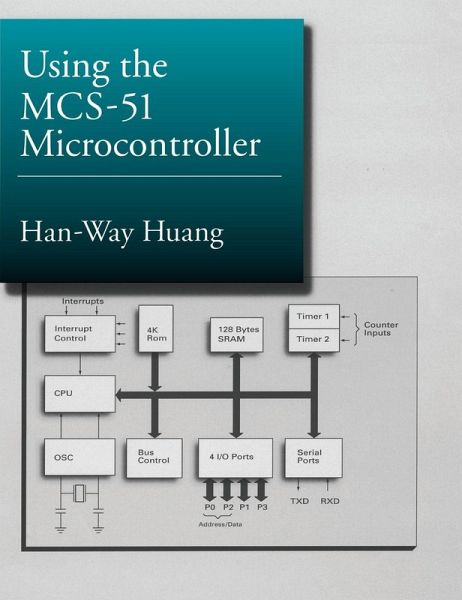
In this book, the author provides a comprehensive treatment of the MCS-51 microcontroller. Huang covers the full spectrum of I/O functions of the MCS-52 variants; by progresively developing topics, starting with the simple and moving to the complex, he strikes a balanced introduction to the theoretical topics and the design and implementation issues of the MCS-51 microcontroller. The book starts wit the MCS-51 CPU architecture and programming model and then progresses toward every I/O function. In each I/O function, the author first presents the general issue and then details the specifics of…mehr
In this book, the author provides a comprehensive treatment of the MCS-51 microcontroller. Huang covers the full spectrum of I/O functions of the MCS-52 variants; by progresively developing topics, starting with the simple and moving to the complex, he strikes a balanced introduction to the theoretical topics and the design and implementation issues of the MCS-51 microcontroller. The book starts wit the MCS-51 CPU architecture and programming model and then progresses toward every I/O function. In each I/O function, the author first presents the general issue and then details the specifics of the MCS-51. Numerous design examples and exercises illustrate the concepts presented and helps readers grasp the key concepts and learn the applications. The book is an ideal introduction to microcontroller and microprocessor based design, while containing enough rigour and depth to provide in depth knowledge of the MCS-51 microcontroller. It is intended as a textbook for a first course on microprocessors or microcontrollers, but is also suitable for anyone who needs to learn about the MCS-51 microcontroller. It includes a supplemental CD and will also have a solutions manual available only to adopters of the text.
1: Introduction to the Intel MCS-51 1.1: Objectives 1.2: What is a Computer? 1.3: The Computer's Software 1.4: The MCS-51 Memory Organization 1.5: The MCS-51 Registers 1.6: Memory Addressing 1.7: The MCS-51 Addressing Modes 1.8: The MCS-51 Memory Spaces 1.9: A Sample of MCS-51 Instructions 1.10: The MCS-51 Machine Code 1.11: Summary 1.12Exercises 2: MCS-51 Assembly Programming 2.1: Objectives 2.2: Assembly Language Program Structure 2.3: A Sampler of Assembler Directives 2.4: Flowcharts 2.5: Writing Programs to Do Arithmetic 2.6: Program loops 2.7: Logical Operations 2.8: Rate Instructions 2.9: Boolean Variable Manipulation Instructions 2.10: Program Execution time 2.11: MCS-51 Development Tools 2.12: Summary 2.13: Exercises 2.14: Lab Exercises and Assignments 3: Advanced Assembly Programming 3.1: Objectives 3.2: Introduction 3.3: Stack 3.4: Indexable Data Structures 3.5: Strings 3.6: Subroutines 3.7: Issues in Subroutine Calls 3.8: The Stack Frame 3.9: Examples of Subroutine Calls 3.10: Dual Data Pointers of the DS87C520 Microcontroller 3.11: Summary 3.12: Exercises 3.13: Lab Exercises and Assignments 4: Bus Cycles and Memory Expansion 4.1: Objectives 4.2: Introduction 4.3: Basics of Bus 4.4: Waveforms of Bus Signals 4.5: Bus Transactions 4.6: Bus Transaction timing Diagram 4.7: A Summary of the MCS-51/52 Signal Pins 4.8: The MCS-51/52 Bus Cycle Timing Diagram 4.9: Memory Terminology and SRAM 4.10: Memory System Design for MCS-51/52 4.11: Summary 4.12: Exercises 5: Interrupts, Resets, and Exception Procesing 5.1: Objectives 5.2: Basics of Interrupts 5.3: Resets 5.4: MCS-51 Interrupts 5.5: The MCS-51 Reset 5.6: Power-Saving Modes of Operation 5.7: MCS-51 Interrupt Programming 5.8: Summary 5.9: Exercises 5.10: Lab Exercises and Assignments 6: Parallel I/O Ports 6.1: Objectives 6.2: Basic I/O Concepts 6.3: I/O Addressing 6.4: I/O Transfer Synchronization 6.5: MCS-51/52 Parallel I/O Overview 6.6: Simple Input Device 6.7: Interfacing Parallel Ports with the Keyboard 6.8: Simple Output Devices 6.9: The I8255 Programmable Peripheral Interface 6.10: Summary 6.11: Exercises 6.12: Lab Exercises and Assignments 7: Timer Function 7.1: Objectives 7.2: Introduction 7.3: Timer 0 and Timer 1 7.4: Timer 2 7.5: Programmable Counter Array 7.6: Motor Control 7.7: DS87C520 Timers 7.8: Summary 7.9: Exercises 7.10: Lab Exercises and Assignments 8: Analog to Digital Converter 8.1: Objectives 8.2: Introduction 8.3: Successive Approximation Method 8.4: Voltage Level Scaling and Shifting 8.5: The Intel 8XC51GB A/D Converter 8.6: The Procedure for Using the A/D Converter 8.7: Measuring the Barometric Pressure 8.8: Measuring the Temperature 8.9: Measuring the Humidity 8.10: Using an External A/D Converter ADC0820 8.11: Summary 8.12: Exercises 8.13: Lab Exercises and Assignments 9: Serial Communication 9.1: Objectives 9.2: Introduction 9.3: The EIA-232-E (or RS232) Standard 9.4: The MCS-51 Serial Interface 9.5: Applications of Mode 0 9.6: Applications of Mode 1 9.7: Applications of Mode 2 and 3 9.8: The DS87C520 Serial Ports 9.9: Summary 9.10: Exercises 9.11: Lab Exercises and Assignments 10: Serial Expansion Port 10.1: Objectives 10.2: Introduction 10.3: SEP-related Registers 10.4: The SEP Operation 10.5: SEP-Compatible Peripheral Chips 10.6: Simulating the SEP 10.7: Interfacing the 74HC589 to the SEP 10.8: Interfacing the 74HC595 and the SEP 10.9: Interfacing to the Seven-Segment Display Driver MC14489 10.10: The Xicor Serial EPROM 10.11: Interfacing to A/D Converter with Serial Interface 10.12: D/A Converters with Serial Interface 10.13: Summary 10.14: Exercises 10.15: Lab Exercises and Assignments Appendix A: Instruction Execution Time Appendix B: Special Funciton Registers (SFR) Appendix C: Interrupt Vector Addresses Appendix D: Standard Resistors Appendix E: MCS-51 Software and Hardware Vendors Appendix F: MCS-51 Variants Appendix G: MCS-51 Instruction Set Appendix H: Dallas DS87C520 Datasheet References Glossary Index
1: Introduction to the Intel MCS-51 1.1: Objectives 1.2: What is a Computer? 1.3: The Computer's Software 1.4: The MCS-51 Memory Organization 1.5: The MCS-51 Registers 1.6: Memory Addressing 1.7: The MCS-51 Addressing Modes 1.8: The MCS-51 Memory Spaces 1.9: A Sample of MCS-51 Instructions 1.10: The MCS-51 Machine Code 1.11: Summary 1.12Exercises 2: MCS-51 Assembly Programming 2.1: Objectives 2.2: Assembly Language Program Structure 2.3: A Sampler of Assembler Directives 2.4: Flowcharts 2.5: Writing Programs to Do Arithmetic 2.6: Program loops 2.7: Logical Operations 2.8: Rate Instructions 2.9: Boolean Variable Manipulation Instructions 2.10: Program Execution time 2.11: MCS-51 Development Tools 2.12: Summary 2.13: Exercises 2.14: Lab Exercises and Assignments 3: Advanced Assembly Programming 3.1: Objectives 3.2: Introduction 3.3: Stack 3.4: Indexable Data Structures 3.5: Strings 3.6: Subroutines 3.7: Issues in Subroutine Calls 3.8: The Stack Frame 3.9: Examples of Subroutine Calls 3.10: Dual Data Pointers of the DS87C520 Microcontroller 3.11: Summary 3.12: Exercises 3.13: Lab Exercises and Assignments 4: Bus Cycles and Memory Expansion 4.1: Objectives 4.2: Introduction 4.3: Basics of Bus 4.4: Waveforms of Bus Signals 4.5: Bus Transactions 4.6: Bus Transaction timing Diagram 4.7: A Summary of the MCS-51/52 Signal Pins 4.8: The MCS-51/52 Bus Cycle Timing Diagram 4.9: Memory Terminology and SRAM 4.10: Memory System Design for MCS-51/52 4.11: Summary 4.12: Exercises 5: Interrupts, Resets, and Exception Procesing 5.1: Objectives 5.2: Basics of Interrupts 5.3: Resets 5.4: MCS-51 Interrupts 5.5: The MCS-51 Reset 5.6: Power-Saving Modes of Operation 5.7: MCS-51 Interrupt Programming 5.8: Summary 5.9: Exercises 5.10: Lab Exercises and Assignments 6: Parallel I/O Ports 6.1: Objectives 6.2: Basic I/O Concepts 6.3: I/O Addressing 6.4: I/O Transfer Synchronization 6.5: MCS-51/52 Parallel I/O Overview 6.6: Simple Input Device 6.7: Interfacing Parallel Ports with the Keyboard 6.8: Simple Output Devices 6.9: The I8255 Programmable Peripheral Interface 6.10: Summary 6.11: Exercises 6.12: Lab Exercises and Assignments 7: Timer Function 7.1: Objectives 7.2: Introduction 7.3: Timer 0 and Timer 1 7.4: Timer 2 7.5: Programmable Counter Array 7.6: Motor Control 7.7: DS87C520 Timers 7.8: Summary 7.9: Exercises 7.10: Lab Exercises and Assignments 8: Analog to Digital Converter 8.1: Objectives 8.2: Introduction 8.3: Successive Approximation Method 8.4: Voltage Level Scaling and Shifting 8.5: The Intel 8XC51GB A/D Converter 8.6: The Procedure for Using the A/D Converter 8.7: Measuring the Barometric Pressure 8.8: Measuring the Temperature 8.9: Measuring the Humidity 8.10: Using an External A/D Converter ADC0820 8.11: Summary 8.12: Exercises 8.13: Lab Exercises and Assignments 9: Serial Communication 9.1: Objectives 9.2: Introduction 9.3: The EIA-232-E (or RS232) Standard 9.4: The MCS-51 Serial Interface 9.5: Applications of Mode 0 9.6: Applications of Mode 1 9.7: Applications of Mode 2 and 3 9.8: The DS87C520 Serial Ports 9.9: Summary 9.10: Exercises 9.11: Lab Exercises and Assignments 10: Serial Expansion Port 10.1: Objectives 10.2: Introduction 10.3: SEP-related Registers 10.4: The SEP Operation 10.5: SEP-Compatible Peripheral Chips 10.6: Simulating the SEP 10.7: Interfacing the 74HC589 to the SEP 10.8: Interfacing the 74HC595 and the SEP 10.9: Interfacing to the Seven-Segment Display Driver MC14489 10.10: The Xicor Serial EPROM 10.11: Interfacing to A/D Converter with Serial Interface 10.12: D/A Converters with Serial Interface 10.13: Summary 10.14: Exercises 10.15: Lab Exercises and Assignments Appendix A: Instruction Execution Time Appendix B: Special Funciton Registers (SFR) Appendix C: Interrupt Vector Addresses Appendix D: Standard Resistors Appendix E: MCS-51 Software and Hardware Vendors Appendix F: MCS-51 Variants Appendix G: MCS-51 Instruction Set Appendix H: Dallas DS87C520 Datasheet References Glossary Index
Es gelten unsere Allgemeinen Geschäftsbedingungen: www.buecher.de/agb
Impressum
www.buecher.de ist ein Internetauftritt der buecher.de internetstores GmbH
Geschäftsführung: Monica Sawhney | Roland Kölbl | Günter Hilger
Sitz der Gesellschaft: Batheyer Straße 115 - 117, 58099 Hagen
Postanschrift: Bürgermeister-Wegele-Str. 12, 86167 Augsburg
Amtsgericht Hagen HRB 13257
Steuernummer: 321/5800/1497
USt-IdNr: DE450055826