
Andere Kunden interessierten sich auch für
 Crociata Usa contro il Venezuela. Decifrato il codice Chavez19,99 €
 Faith and Freedom in Latin America15,99 €
 A Decade of Venezuela's Hugo Chavez, Por Ahora14,99 €
o") Correndo O VÃ(c)o14,99 €
Correndo O VÃ(c)o14,99 € Recollections of a Service of Three Years During the War-Of-Extermination in the Republics of Venezuela and Columbia22,99 €
 Territories in Resistance15,99 €
 The Letters of Minerva Mirabal and Manolo Tavárez33,99 €



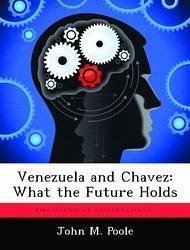
The next 10 years will bring many challenges and opportunities for the United States and its involvement with the Chávez government of Venezuela. The question on how should the United States prepare its interaction with an increasingly hostile Venezuelan government can be better answered through the use of scenario-planning methodology, a process of five phases: Orient, Explore, Synthesize, Act, and Monitor. With Chávez and Venezuela, the scenario-based methodology process begins by identifying potential changes in events or forces between the US and Venezuela. These events or forces are combined in different ways to create a set of four stories about how the future could unfold. With the creation of these four stories, implications are derived, adding depth of each scenario. At the end, indicators are developed for monitoring events that could unfold, providing insight to potentially predicted outcomes. In order to ensure national and regional security policy success in the Western Hemisphere, the United States' government must always consider national security strategies for potential future interaction with the Chávez government of Venezuela. This work has been selected by scholars as being culturally important, and is part of the knowledge base of civilization as we know it. This work was reproduced from the original artifact, and remains as true to the original work as possible. Therefore, you will see the original copyright references, library stamps (as most of these works have been housed in our most important libraries around the world), and other notations in the work. This work is in the public domain in the United States of America, and possibly other nations. Within the United States, you may freely copy and distribute this work, as no entity (individual or corporate) has a copyright on the body of the work. As a reproduction of a historical artifact, this work may contain missing or blurred pages, poor pictures, errant marks, etc. Scholars believe, and we concur, that this work is important enough to be preserved, reproduced, and made generally available to the public. We appreciate your support of the preservation process, and thank you for being an important part of keeping this knowledge alive and relevant.