
Andere Kunden interessierten sich auch für
 Venus and Adonis14,90 €
 Venus and Adonis14,90 €
 Venus and Adonis20,99 €
 Point of Venus21,99 €
 Jolene's Adonis17,99 €
 Between Venus and Mars16,99 €
 The Tinted Venus18,99 €





Venus and Adonis is a narrative poem by William Shakespeare published in 1593. It is probably Shakespeare's first publication.The poem tells the story of Venus, the goddess of Love of her unrequited love and of her attempted seduction of Adonis, an extremely handsome young man, who would rather go hunting. The poem is pastoral, and at times erotic, comic, and tragic. It contains discourses on the nature of love, and observations of nature.It is written in stanzas of six lines of iambic pentameter rhyming ABABCC although this verse form was known before Shakespeare's use, it is now commonly known as the Venus and Adonis stanza, after this poem. This form was also used by Edmund Spenser and Thomas Lodge. The poem consists of 199 stanzas or 1,194 lines.It was published originally as a quarto pamphlet and published with great care. It was probably printed using Shakespeare's fair copy. The printer was Richard Field, who, like Shakespeare, was from Stratford. Venus and Adonis appeared in print before any of Shakespeare's plays were published, but not before some of his plays had been acted on stage. It has certain qualities in common with A Midsummer Night's Dream, Romeo and Juliet, and Love's Labour's Lost. It was written when the London theatres were closed for a time due to the plague.The poem begins with a brief dedication to Shakespeare's patron, Henry Wriothesley, 3rd Earl of Southampton, in which the poet describes the poem as "the first heir of my invention".The poem is inspired by and based on stories found in the Metamorphoses, a narrative poem by the Latin poet, Ovid (43 BC - AD 17/18). Ovid's much briefer version of the tale occurs in book ten of his Metamorphoses. It differs greatly from Shakespeare's version. Ovid's Venus goes hunting with Adonis to please him, but otherwise is uninterested in the out-of-doors. She wears "tucked up" robes, worries about her complexion, and particularly hates dangerous wild animals. Shakespeare's Venus is a bit like a wild animal herself: she apparently goes naked, and is not interested in hunting, but only in making love to Adonis, offering her body to him in graphically explicit terms. In the end, she insists that the boar's killing of Adonis happened accidentally as the animal, impressed by the young hunter's beauty, gored him while trying to kiss him.
A Midsummer Night's Dream is a comedy written by William Shakespeare in 1595/96. It portrays the events surrounding the marriage of Theseus, the Duke of Athens, to Hippolyta, the former queen of the Amazons. These include the adventures of four young Athenian lovers and a group of six amateur actors (the mechanicals) who are controlled and manipulated by the fairies who inhabit the forest in which most of the play is set.The play is one of Shakespeare's most popular works for the stage and is widely performed across the world. It is unknown exactly when A Midsummer Night's Dream was written or first performed, but on the basis of topical references and an allusion to Edmund Spenser's Epithalamion, it is usually dated 1595 or early 1596. Some have theorised that the play might have been written for an aristocratic wedding (for example that of Elizabeth Carey, Lady Berkeley), while others suggest that it was written for the Queen to celebrate the feast day of St. John, but no evidence exists to support this theory. In any case, it would have been performed at The Theatre and, later, The Globe. Though it is not a translation or adaptation of an earlier work, various sources such as Ovid's Metamorphoses and Chaucer's "The Knight's Tale" served as inspiration. According to John Twyning, the play's plot of four lovers undergoing a trial in the woods was intended as a "riff" on Der Busant, a Middle High German poem. According to Dorothea Kehler, the writing period can be placed between 1594 and 1596, which means that Shakespeare had probably already completed Romeo and Juliet and had yet to start working on The Merchant of Venice. The play belongs to the early-middle period of the author, when Shakespeare devoted his attention to the lyricism of his works.
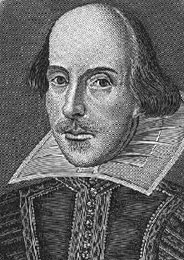
Bild: Wikipedia