
Andere Kunden interessierten sich auch für
 Betty Ford16,99 €
 Wayward Lives, Beautiful Experiments15,99 €
 One Summer17,99 €
 The Gentrification of the Mind20,99 €
 Humans: A Brief History of How We F*cked It All Up15,99 €
 How the Irish Saved Civilization15,99 €
 Letters from an American Farmer and Sketches of Eighteenth-Century America12,99 €







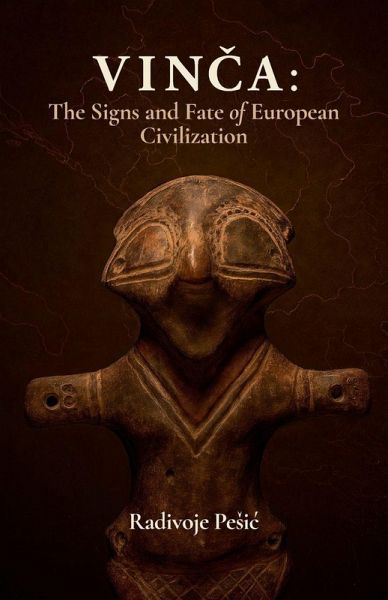
Thousands of years before cities and writing surfaced in Mesopotamia, the Danube River Basin in the Balkans was home to a flourishing civilization. Since their rediscovery in the 20th century, the prehistoric cultures of Lepenski Vir and Vin¿a have redrawn the map of ancient history, challenging established archaeology and chronology and fascinating the imagination. At the center of attention and controversy are the so-called "Vin¿a symbols," whose interpretations have drawn enthusiasm, denial, and - worst of all - silence. Faced with these mysterious signs from the depths of the Stone Age and the lost civilization that inscribed them in the heart of Europe, modern man finds himself wondering about his past, his present, and his future.In Vin¿a: The Signs and Fate of European Civilization, the visionary Serbian author Radivoje Pei¿ unveils a wide-ranging and provocative perspective on this forgotten world and script fated for impactful recollection. For the first time in a definitive English edition, Pei¿ takes the reader on a multi-dimensional journey through the open questions and hidden secrets of the ancient world. The spiritual landscapes encoded in the Vin¿a script, the enigmatic identities of the Pelasgians and the Etruscans, the twists and turns of Slavic history, and many other puzzles are charted anew in search of a rectified map of language, historical consciousness, and the rich heritage of the human spirit. Dusting off the books of life, nature, and scholarship, Pei¿ boldly endeavors to throw light on the links and disconnects between ancient cultures and modern crises.