
Violence in Psychiatry
Herausgeber: Warburton, Katherine D.; Stahl, Stephen M.
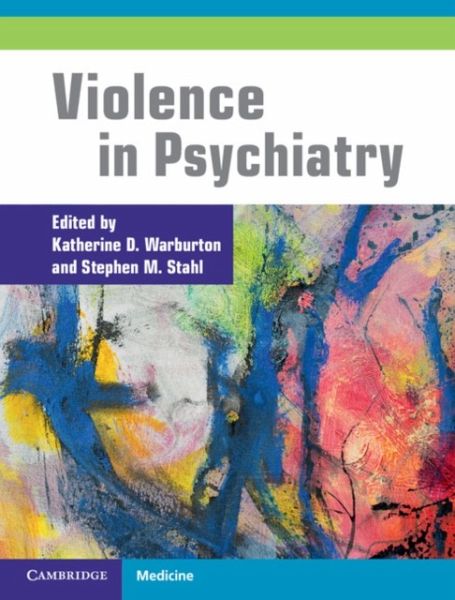
Violence in Psychiatry
Herausgeber: Warburton, Katherine D.; Stahl, Stephen M.
- Gebundenes Buch
- Merkliste
- Auf die Merkliste
- Bewerten Bewerten
- Teilen
- Produkt teilen
- Produkterinnerung
- Produkterinnerung
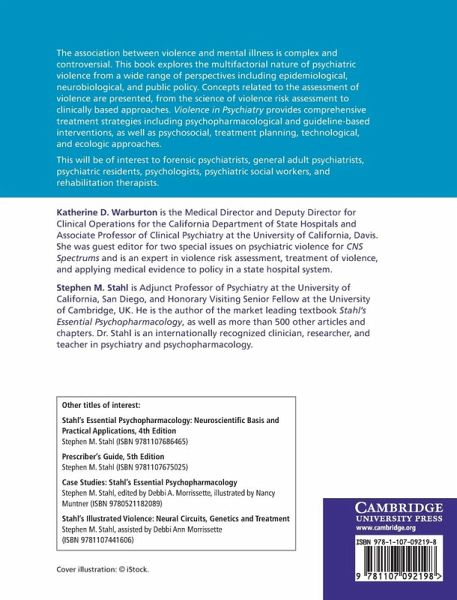
This book focuses on violence from assessment, through underlying neurobiology, to treatment and other recommendations for practice.
Andere Kunden interessierten sich auch für
 Stephen M. Stahl (San Diego University of California)Stahl's Self-Assessment Examination in Psychiatry58,99 €
 Joseph F. Goldberg (New Yo Icahn School of Medicine at Mount SinaiClinical Reasoning and Decision-Making in Psychiatry69,99 €
 Howard CH Khoe (Singapore National Psychiatry Residency Programme)Practise Psychiatry56,99 €
 Seminars in Child and Adolescent Psychiatry45,99 €
 Matthew Gibfried (Missou Saint Louis University School of MedicineClinical Case Studies in Long-Term Care Psychiatry46,99 €
 David Ames (University of Melbourne)Guide to the Psychiatry of Old Age28,99 €
 Cambridge Prescriber's Guide in Psychiatry46,99 €
-
-
-







This book focuses on violence from assessment, through underlying neurobiology, to treatment and other recommendations for practice.
Produktdetails
- Produktdetails
- Verlag: Cambridge University Press
- Seitenzahl: 356
- Erscheinungstermin: 28. April 2016
- Englisch
- Abmessung: 260mm x 208mm x 24mm
- Gewicht: 924g
- ISBN-13: 9781107092198
- ISBN-10: 1107092191
- Artikelnr.: 44273153
- Herstellerkennzeichnung
- Libri GmbH
- Europaallee 1
- 36244 Bad Hersfeld
- gpsr@libri.de
- Verlag: Cambridge University Press
- Seitenzahl: 356
- Erscheinungstermin: 28. April 2016
- Englisch
- Abmessung: 260mm x 208mm x 24mm
- Gewicht: 924g
- ISBN-13: 9781107092198
- ISBN-10: 1107092191
- Artikelnr.: 44273153
- Herstellerkennzeichnung
- Libri GmbH
- Europaallee 1
- 36244 Bad Hersfeld
- gpsr@libri.de
List of contributors; Part I. Statement of the Problem: 1.
Deinstitutionalization and the rise of violence; 2. The new mission of
forensic mental health systems: managing violence as a medical syndrome in
an environment that balances treatment and safety; Part II. Assessment: 3.
The evolution of violence risk assessment; 4. Assessment of aggression in
inpatient settings; 5. Clinical assessment of psychotic and mood disorder
symptoms for risk of future violence; 6. Inpatient aggression in community
hospitals; 7. Prevalence of physical violence in a forensic psychiatric
hospital system during 2011-2013: patient assaults, staff assaults, and
repeatedly violent patients; 8. The psychiatrist's duty to protect; Part
III. Neurobiology: 9. Deconstructing violence as a medical syndrome:
mapping psychotic, impulsive, and predatory subtypes to malfunctioning
brain circuits; 10. Aggression, DRD1 polymorphism, and lesion location in
penetrating traumatic brain injury; 11. Is impulsive violence an addiction?
The habit hypothesis; 12. The neurobiology of psychopathy: recent
developments and new directions in research and treatment; 13. The
neurobiology of violence; 14. Impulsivity and aggression in schizophrenia:
a neural circuitry perspective with implications for treatment; 15.
Serotonin and impulsive aggression; Part IV. Guidelines: 16. California
State-Hospital Violence Assessment and Treatment (Cal-VAT) guidelines; Part
V. Psychopharmacology: 17. Effectiveness of antipsychotic drugs against
hostility in patients with schizophrenia in the Clinical Antipsychotic
Trials of Intervention Effectiveness (CATIE) study; 18. Clozapine: an
effective treatment for seriously violent and psychotic men with antisocial
personality disorder in a UK high-security hospital; 19. Augmentation of
clozapine with amisulpride: an effective therapeutic strategy for violent
treatment-resistant schizophrenia patients in a UK high-security hospital;
20. The psychopharmacology of violence: making sensible decisions; 21.
Treating the violent patient with psychosis or impulsivity utilizing
antipsychotic polypharmacy and high-dose monotherapy; 22. A rational
approach to employing high plasma levels of antipsychotics for violence
associated with schizophrenia: case vignettes; 23. Illustrative cases to
support Cal-VAT guidelines; Part VI. Treatment Interventions: 24. A new
standard of care for forensic mental health: prioritizing forensic
intervention; 25. Forensic focused treatment planning: a new standard for
forensic mental health systems; 26. Implementing an ecological approach to
violence reduction at a forensic psychiatric hospital: approaches and
lessons learned; 27. The appropriateness of treating psychopathic
disorders; 28. Psychosocial approaches to violence and aggression:
contextually anchored and trauma-informed interventions; 29. Co-morbid
mental illness and criminalness: implications for housing and treatment;
30. Crime, violence and behavioral health: collaborative community
strategies for risk mitigation; 31. New technologies in the management of
risk and violence in forensic settings; 32. Risk reduction treatment of
psychopathy and applications to mentally disordered offenders; Index.
Deinstitutionalization and the rise of violence; 2. The new mission of
forensic mental health systems: managing violence as a medical syndrome in
an environment that balances treatment and safety; Part II. Assessment: 3.
The evolution of violence risk assessment; 4. Assessment of aggression in
inpatient settings; 5. Clinical assessment of psychotic and mood disorder
symptoms for risk of future violence; 6. Inpatient aggression in community
hospitals; 7. Prevalence of physical violence in a forensic psychiatric
hospital system during 2011-2013: patient assaults, staff assaults, and
repeatedly violent patients; 8. The psychiatrist's duty to protect; Part
III. Neurobiology: 9. Deconstructing violence as a medical syndrome:
mapping psychotic, impulsive, and predatory subtypes to malfunctioning
brain circuits; 10. Aggression, DRD1 polymorphism, and lesion location in
penetrating traumatic brain injury; 11. Is impulsive violence an addiction?
The habit hypothesis; 12. The neurobiology of psychopathy: recent
developments and new directions in research and treatment; 13. The
neurobiology of violence; 14. Impulsivity and aggression in schizophrenia:
a neural circuitry perspective with implications for treatment; 15.
Serotonin and impulsive aggression; Part IV. Guidelines: 16. California
State-Hospital Violence Assessment and Treatment (Cal-VAT) guidelines; Part
V. Psychopharmacology: 17. Effectiveness of antipsychotic drugs against
hostility in patients with schizophrenia in the Clinical Antipsychotic
Trials of Intervention Effectiveness (CATIE) study; 18. Clozapine: an
effective treatment for seriously violent and psychotic men with antisocial
personality disorder in a UK high-security hospital; 19. Augmentation of
clozapine with amisulpride: an effective therapeutic strategy for violent
treatment-resistant schizophrenia patients in a UK high-security hospital;
20. The psychopharmacology of violence: making sensible decisions; 21.
Treating the violent patient with psychosis or impulsivity utilizing
antipsychotic polypharmacy and high-dose monotherapy; 22. A rational
approach to employing high plasma levels of antipsychotics for violence
associated with schizophrenia: case vignettes; 23. Illustrative cases to
support Cal-VAT guidelines; Part VI. Treatment Interventions: 24. A new
standard of care for forensic mental health: prioritizing forensic
intervention; 25. Forensic focused treatment planning: a new standard for
forensic mental health systems; 26. Implementing an ecological approach to
violence reduction at a forensic psychiatric hospital: approaches and
lessons learned; 27. The appropriateness of treating psychopathic
disorders; 28. Psychosocial approaches to violence and aggression:
contextually anchored and trauma-informed interventions; 29. Co-morbid
mental illness and criminalness: implications for housing and treatment;
30. Crime, violence and behavioral health: collaborative community
strategies for risk mitigation; 31. New technologies in the management of
risk and violence in forensic settings; 32. Risk reduction treatment of
psychopathy and applications to mentally disordered offenders; Index.
List of contributors; Part I. Statement of the Problem: 1.
Deinstitutionalization and the rise of violence; 2. The new mission of
forensic mental health systems: managing violence as a medical syndrome in
an environment that balances treatment and safety; Part II. Assessment: 3.
The evolution of violence risk assessment; 4. Assessment of aggression in
inpatient settings; 5. Clinical assessment of psychotic and mood disorder
symptoms for risk of future violence; 6. Inpatient aggression in community
hospitals; 7. Prevalence of physical violence in a forensic psychiatric
hospital system during 2011-2013: patient assaults, staff assaults, and
repeatedly violent patients; 8. The psychiatrist's duty to protect; Part
III. Neurobiology: 9. Deconstructing violence as a medical syndrome:
mapping psychotic, impulsive, and predatory subtypes to malfunctioning
brain circuits; 10. Aggression, DRD1 polymorphism, and lesion location in
penetrating traumatic brain injury; 11. Is impulsive violence an addiction?
The habit hypothesis; 12. The neurobiology of psychopathy: recent
developments and new directions in research and treatment; 13. The
neurobiology of violence; 14. Impulsivity and aggression in schizophrenia:
a neural circuitry perspective with implications for treatment; 15.
Serotonin and impulsive aggression; Part IV. Guidelines: 16. California
State-Hospital Violence Assessment and Treatment (Cal-VAT) guidelines; Part
V. Psychopharmacology: 17. Effectiveness of antipsychotic drugs against
hostility in patients with schizophrenia in the Clinical Antipsychotic
Trials of Intervention Effectiveness (CATIE) study; 18. Clozapine: an
effective treatment for seriously violent and psychotic men with antisocial
personality disorder in a UK high-security hospital; 19. Augmentation of
clozapine with amisulpride: an effective therapeutic strategy for violent
treatment-resistant schizophrenia patients in a UK high-security hospital;
20. The psychopharmacology of violence: making sensible decisions; 21.
Treating the violent patient with psychosis or impulsivity utilizing
antipsychotic polypharmacy and high-dose monotherapy; 22. A rational
approach to employing high plasma levels of antipsychotics for violence
associated with schizophrenia: case vignettes; 23. Illustrative cases to
support Cal-VAT guidelines; Part VI. Treatment Interventions: 24. A new
standard of care for forensic mental health: prioritizing forensic
intervention; 25. Forensic focused treatment planning: a new standard for
forensic mental health systems; 26. Implementing an ecological approach to
violence reduction at a forensic psychiatric hospital: approaches and
lessons learned; 27. The appropriateness of treating psychopathic
disorders; 28. Psychosocial approaches to violence and aggression:
contextually anchored and trauma-informed interventions; 29. Co-morbid
mental illness and criminalness: implications for housing and treatment;
30. Crime, violence and behavioral health: collaborative community
strategies for risk mitigation; 31. New technologies in the management of
risk and violence in forensic settings; 32. Risk reduction treatment of
psychopathy and applications to mentally disordered offenders; Index.
Deinstitutionalization and the rise of violence; 2. The new mission of
forensic mental health systems: managing violence as a medical syndrome in
an environment that balances treatment and safety; Part II. Assessment: 3.
The evolution of violence risk assessment; 4. Assessment of aggression in
inpatient settings; 5. Clinical assessment of psychotic and mood disorder
symptoms for risk of future violence; 6. Inpatient aggression in community
hospitals; 7. Prevalence of physical violence in a forensic psychiatric
hospital system during 2011-2013: patient assaults, staff assaults, and
repeatedly violent patients; 8. The psychiatrist's duty to protect; Part
III. Neurobiology: 9. Deconstructing violence as a medical syndrome:
mapping psychotic, impulsive, and predatory subtypes to malfunctioning
brain circuits; 10. Aggression, DRD1 polymorphism, and lesion location in
penetrating traumatic brain injury; 11. Is impulsive violence an addiction?
The habit hypothesis; 12. The neurobiology of psychopathy: recent
developments and new directions in research and treatment; 13. The
neurobiology of violence; 14. Impulsivity and aggression in schizophrenia:
a neural circuitry perspective with implications for treatment; 15.
Serotonin and impulsive aggression; Part IV. Guidelines: 16. California
State-Hospital Violence Assessment and Treatment (Cal-VAT) guidelines; Part
V. Psychopharmacology: 17. Effectiveness of antipsychotic drugs against
hostility in patients with schizophrenia in the Clinical Antipsychotic
Trials of Intervention Effectiveness (CATIE) study; 18. Clozapine: an
effective treatment for seriously violent and psychotic men with antisocial
personality disorder in a UK high-security hospital; 19. Augmentation of
clozapine with amisulpride: an effective therapeutic strategy for violent
treatment-resistant schizophrenia patients in a UK high-security hospital;
20. The psychopharmacology of violence: making sensible decisions; 21.
Treating the violent patient with psychosis or impulsivity utilizing
antipsychotic polypharmacy and high-dose monotherapy; 22. A rational
approach to employing high plasma levels of antipsychotics for violence
associated with schizophrenia: case vignettes; 23. Illustrative cases to
support Cal-VAT guidelines; Part VI. Treatment Interventions: 24. A new
standard of care for forensic mental health: prioritizing forensic
intervention; 25. Forensic focused treatment planning: a new standard for
forensic mental health systems; 26. Implementing an ecological approach to
violence reduction at a forensic psychiatric hospital: approaches and
lessons learned; 27. The appropriateness of treating psychopathic
disorders; 28. Psychosocial approaches to violence and aggression:
contextually anchored and trauma-informed interventions; 29. Co-morbid
mental illness and criminalness: implications for housing and treatment;
30. Crime, violence and behavioral health: collaborative community
strategies for risk mitigation; 31. New technologies in the management of
risk and violence in forensic settings; 32. Risk reduction treatment of
psychopathy and applications to mentally disordered offenders; Index.