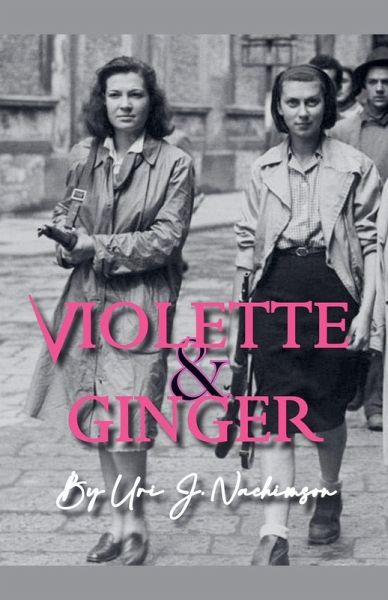
Set during World War II, when Poland was under Nazi German occupation, this story is inspired by the testimonies of survivors. While most of the descriptions of events and places are real, the plot itself is fictional. The book raises many profound questions, such as the nature of faith in God and the troubling issue of why there was so little resistance from the victims, who often participated in their own demise. There are no easy answers to these questions, but the author depicts situations in which humanity is lost, and individuals become predators, turning on their victims and resigning…mehr
Set during World War II, when Poland was under Nazi German occupation, this story is inspired by the testimonies of survivors. While most of the descriptions of events and places are real, the plot itself is fictional. The book raises many profound questions, such as the nature of faith in God and the troubling issue of why there was so little resistance from the victims, who often participated in their own demise. There are no easy answers to these questions, but the author depicts situations in which humanity is lost, and individuals become predators, turning on their victims and resigning themselves to their fates. The protagonist, Violette, was born in Vienna to Jewish parents who emigrated to the United States on the last ship before the invasion. Due to Nazi racial laws, she was forced to abandon her university studies and was later arrested by the Gestapo. After managing to escape, she joined the partisans, where she met her red-haired lover.
Uri Jerzy Nachimson was born in Szczecin, Poland, in 1947. Two years later, his parents emigrated to Israel. In 1966, he served in the Israeli army in the Northern Command for three years. He participated in the Six-Day War as a photographer in combat. As a freelance photographer, he wandered around Prague as crowds demonstrated in front of Soviet tanks. His travels to Egypt are the inspiration for his book, Seeds of Love. In 1990, he returned for the first time to Poland to seek his roots. He was deeply affected by the attitude of the Poles towards the Jews during and after World War II, and he started to research the history of the Jews of Poland. Thus, the trilogy was born: Lilly's Album, The Polish Patriot, and Identity. Uri's grandmother, Ida Friedberg, was the granddaughter of the Jewish writer A.S. Friedberg, editor of the Polish Jewish newspaper Hazefira, and the author of many books. In 2005, Uri moved to Tuscany, Italy, where he lives with his wife. While in Cortona, he wrote Two Margherita, Broken Hearts in Boulevard Unirii, Recalled to Life, Violette and Ginger, The Girl from Haukaloolloo, Isabella, In the Depth of Silence, and others.
Es gelten unsere Allgemeinen Geschäftsbedingungen: www.buecher.de/agb
Impressum
www.buecher.de ist ein Internetauftritt der buecher.de internetstores GmbH
Geschäftsführung: Monica Sawhney | Roland Kölbl | Günter Hilger
Sitz der Gesellschaft: Batheyer Straße 115 - 117, 58099 Hagen
Postanschrift: Bürgermeister-Wegele-Str. 12, 86167 Augsburg
Amtsgericht Hagen HRB 13257
Steuernummer: 321/5800/1497
USt-IdNr: DE450055826