
Andere Kunden interessierten sich auch für
 The Angel Adjutant of "Twice Born Men"18,99 €
 Nearest East30,99 €
 Non-Resistance Applied to the Internal Defence of a Community14,99 €
 Divine Socialism; Or, "The Man Christ Jesus."15,99 €
 Report on India and Persia of the Deputation Sent by the Board of Foreign Missions29,99 €
 Respublica Christiana, Sive Erotemata Christiano-politica De Republica29,99 €
 The New Heresy14,99 €



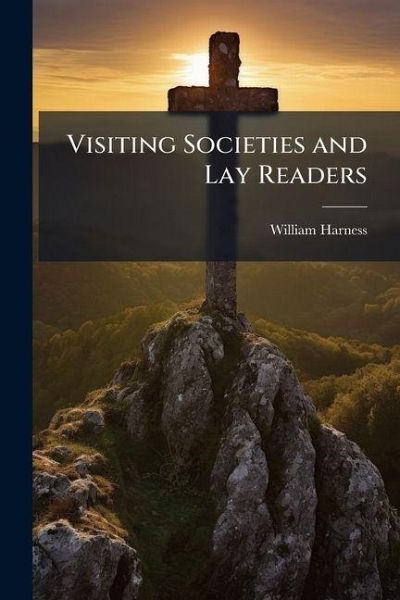
Visiting Societies and Lay Readers: A Letter to the Lord Bishop of London, penned by William Harness in 1844, offers a compelling snapshot of religious discourse in 19th-century England. Harness addresses the Lord Bishop directly, engaging with the pressing issues of religious instruction and the role of lay readers within visiting societies. The work provides valuable insights into the ethical considerations and practical challenges faced by those involved in spreading religious knowledge and offering spiritual guidance. Harness's letter serves as a historical document, shedding light on the organizational structures and theological debates that shaped the religious landscape of the time. It will be of interest to historians of Christianity, scholars of Victorian England, and anyone curious about the evolution of religious practice and social welfare. This work has been selected by scholars as being culturally important, and is part of the knowledge base of civilization as we know it. This work was reproduced from the original artifact, and remains as true to the original work as possible. Therefore, you will see the original copyright references, library stamps (as most of these works have been housed in our most important libraries around the world), and other notations in the work. This work is in the public domain in the United States of America, and possibly other nations. Within the United States, you may freely copy and distribute this work, as no entity (individual or corporate) has a copyright on the body of the work. As a reproduction of a historical artifact, this work may contain missing or blurred pages, poor pictures, errant marks, etc. Scholars believe, and we concur, that this work is important enough to be preserved, reproduced, and made generally available to the public. We appreciate your support of the preservation process, and thank you for being an important part of keeping this knowledge alive and relevant.