
Andere Kunden interessierten sich auch für
 Vital Signs7,49 €
 Vital Signs23,99 €
 Vital Signs9,49 €
 Signs of Marriage15,99 €
 Vital Records21,99 €
 About Time8,49 €
 Signs of Time in Black Poetry14,99 €

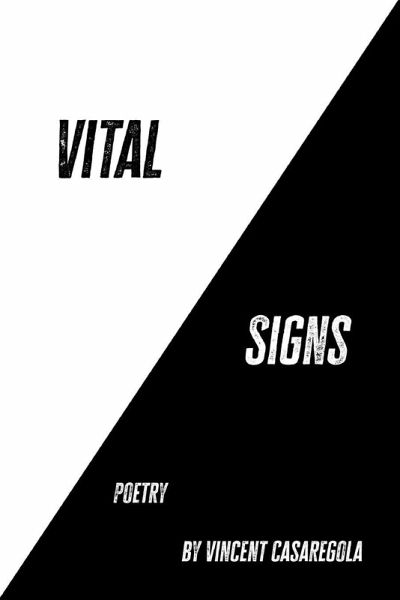
The poems in Vincent Casaregola's Vital Signs move through the shadows like "old souls carted across eons, / traveling nightly through some / metaphysical underground" (lines from "Transmigration of Souls"). These poems occupy recesses that are often unexplored and unacknowledged. The author gives voice to the physically and psychologically traumatized, the ill, and the injured, as well as those who give care-family, health care workers, and mental health professionals. -Aaron Lelito, poetry editor of The Closed Eye Open Vincent Casaregola is a poet whose latest collection Vital Signs is focused on the trauma occasioned by our daily interactions with illness, injury, violence, and suffering. These are not easy poems; they do not present a romanticized view of our times. Divided into four sections, the book chronicles a landscape of bodies, broken and lost; indeed, his opening poem "As If Secrets Would Spill," captures the moments after someone lies in the road "prone. . ./spread-eagled, art for passers-by, / an elegy in the making . . ." The speaker admits to staring "just as you" hoping for some revelation, but the poem concludes "no solace, no insight, no comfort for those / who drive past in search of more." Bleak yes and yet I was swept along, poem after poem, by the power of the images, the drama of the stories they tell. A case of bullets waits to be activated; an "angry, hidden will" keeps "the finger / pulling shot after shot from the leaping gun." Structural violence follows an old musician whose poverty pushes him to sleep under a bridge wrapped in a "blanket patched /with bits of duct tape, along with / an old square of blue plastic tarp-." We know these stories but look away. These poems do not preach or harangue, but they do ask us to pay more attention, to be more present. The third section "Case History Monologues" allows patients to come forward and describe their lives and illness in their own words, not in medicine's hyper confusing language. I knew enough not to expect a happy resolution; I did receive sharp and precise images of tortured souls who admit the gun "felt good in my hand, / hard and real." We want an admission, but we only get "I wished to move slowly / and to cut through chaos, /or at least, to reveal it as it is." Is all knowledge power? The last section "In the Shadow of Corona" traces our introduction to Covid, our gradual realization that this is a plague, and the poems recall earlier times when physicians wore the "Birdman" mask and attempted to help from a safe distance. There is no safety; the poet wonders "When It Will Come" but he leaves us with a final image that does allow a bit of hope, a little faith to intrude: "and sensing light / behind layers of cloud, / I make this rain / my new home." Vital Signs describes a time of desperation and sorrow, but the poems transcend that with their powerful images and steady rhythms. I will recommend this book to all who love language. -Deirdre Neilen, Editor, The Healing Muse