
Andere Kunden interessierten sich auch für
 Vitamina D e doença arterial periférica33,99 €
 Vitamin D & periphere arterielle Verschlusskrankheit50,90 €
 Vitamine D & maladie artérielle périphérique33,99 €
 Vitamina D e malattia arteriosa periferica33,99 €
 Witamina D i choroba t¿tnic obwodowych33,99 €
 Polymorphism of the nitric oxide synthase gene in DVT27,99 €
 Expression of miR-21-5p in miscarriage: inflammatory role40,99 €
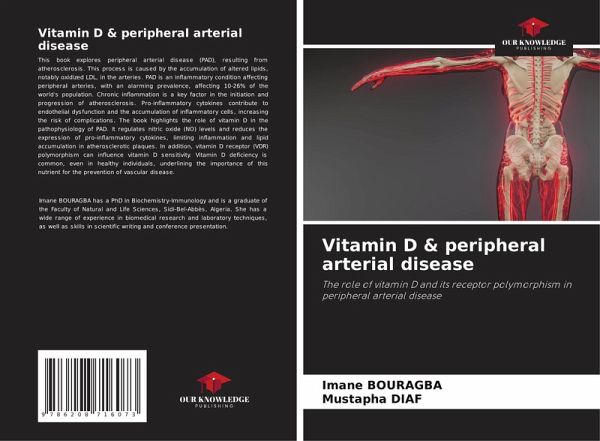
This book explores peripheral arterial disease (PAD), resulting from atherosclerosis. This process is caused by the accumulation of altered lipids, notably oxidized LDL, in the arteries. PAD is an inflammatory condition affecting peripheral arteries, with an alarming prevalence, affecting 10-26% of the world's population. Chronic inflammation is a key factor in the initiation and progression of atherosclerosis. Pro-inflammatory cytokines contribute to endothelial dysfunction and the accumulation of inflammatory cells, increasing the risk of complications. The book highlights the role of vitamin D in the pathophysiology of PAD. It regulates nitric oxide (NO) levels and reduces the expression of pro-inflammatory cytokines, limiting inflammation and lipid accumulation in atherosclerotic plaques. In addition, vitamin D receptor (VDR) polymorphism can influence vitamin D sensitivity. Vitamin D deficiency is common, even in healthy individuals, underlining the importance of this nutrient for the prevention of vascular disease.