- Broschiertes Buch
- Merkliste
- Auf die Merkliste
- Bewerten Bewerten
- Teilen
- Produkt teilen
- Produkterinnerung
- Produkterinnerung
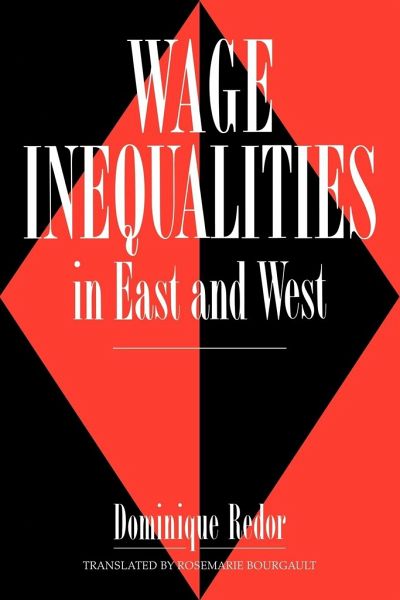
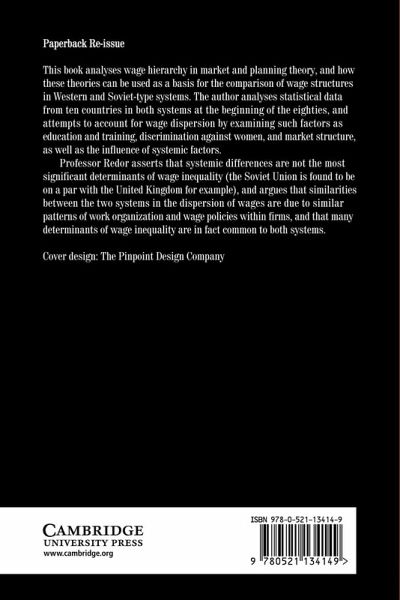
This book analyses wage hierarchy in market and planning theory in Western and Soviet-type systems.
Andere Kunden interessierten sich auch für
D. J. RobertsonFactory Wage Structures and National Agreements40,99 €
John Rogers CommonsProposed Minimum Wage Law For Wisconsin: Bill, 317 S, Introduced By Senator Kleczka And 799 A, Introduced By Assemblyman Stern14,99 €
Report Of The Minimum Wage Commission Of Massachusetts, Volumes 1-725,99 €
Richard P. ChaykowskiWage Compensation and Mobility Patterns Within Unionized Firms: The Role of Internal Labor Markets14,99 €
Andrew Ackworth MitchellThe Breakdown of Minimum Wage and A Memorandum on Unemployment14,99 €
Charles Henry VerrillMinimum-wage Legislation in the United States and Foreign Countries30,99 €
John A. RyanA Living Wage17,99 €-
-
-
This book analyses wage hierarchy in market and planning theory in Western and Soviet-type systems.
Produktdetails
- Produktdetails
- Verlag: Cambridge University Press
- Seitenzahl: 232
- Erscheinungstermin: 1. März 2010
- Englisch
- Abmessung: 229mm x 152mm x 14mm
- Gewicht: 383g
- ISBN-13: 9780521134149
- ISBN-10: 0521134145
- Artikelnr.: 29425191
- Herstellerkennzeichnung
- Libri GmbH
- Europaallee 1
- 36244 Bad Hersfeld
- gpsr@libri.de
- Verlag: Cambridge University Press
- Seitenzahl: 232
- Erscheinungstermin: 1. März 2010
- Englisch
- Abmessung: 229mm x 152mm x 14mm
- Gewicht: 383g
- ISBN-13: 9780521134149
- ISBN-10: 0521134145
- Artikelnr.: 29425191
- Herstellerkennzeichnung
- Libri GmbH
- Europaallee 1
- 36244 Bad Hersfeld
- gpsr@libri.de
Preface
Introduction
Part I. The Analysis of Wage Structures in the Western System and in the Soviet-type System: 1. The wage hierarchy in the market and planning theories
2. Constructing a comparative model of wage structures
3. A statistical analysis of the wage dispersion
4. Analyzing intersector earning differences
5. Stability and adaptation of wage structures
Part II. Why are the Wage Structures in both Systems so Similar: 6. Two different types of wage regulation
7. The structuring role of sectors and large firms in the two systems
8. Pay and the division of labour between manual and non-manual workers
9. The dispersion of disposable incomes of households in the two systems
10. A tentative synthesis
Conclusion
Appendix
Glossary
Statistical sources and bibliography
Index.
Introduction
Part I. The Analysis of Wage Structures in the Western System and in the Soviet-type System: 1. The wage hierarchy in the market and planning theories
2. Constructing a comparative model of wage structures
3. A statistical analysis of the wage dispersion
4. Analyzing intersector earning differences
5. Stability and adaptation of wage structures
Part II. Why are the Wage Structures in both Systems so Similar: 6. Two different types of wage regulation
7. The structuring role of sectors and large firms in the two systems
8. Pay and the division of labour between manual and non-manual workers
9. The dispersion of disposable incomes of households in the two systems
10. A tentative synthesis
Conclusion
Appendix
Glossary
Statistical sources and bibliography
Index.
Preface
Introduction
Part I. The Analysis of Wage Structures in the Western System and in the Soviet-type System: 1. The wage hierarchy in the market and planning theories
2. Constructing a comparative model of wage structures
3. A statistical analysis of the wage dispersion
4. Analyzing intersector earning differences
5. Stability and adaptation of wage structures
Part II. Why are the Wage Structures in both Systems so Similar: 6. Two different types of wage regulation
7. The structuring role of sectors and large firms in the two systems
8. Pay and the division of labour between manual and non-manual workers
9. The dispersion of disposable incomes of households in the two systems
10. A tentative synthesis
Conclusion
Appendix
Glossary
Statistical sources and bibliography
Index.
Introduction
Part I. The Analysis of Wage Structures in the Western System and in the Soviet-type System: 1. The wage hierarchy in the market and planning theories
2. Constructing a comparative model of wage structures
3. A statistical analysis of the wage dispersion
4. Analyzing intersector earning differences
5. Stability and adaptation of wage structures
Part II. Why are the Wage Structures in both Systems so Similar: 6. Two different types of wage regulation
7. The structuring role of sectors and large firms in the two systems
8. Pay and the division of labour between manual and non-manual workers
9. The dispersion of disposable incomes of households in the two systems
10. A tentative synthesis
Conclusion
Appendix
Glossary
Statistical sources and bibliography
Index.