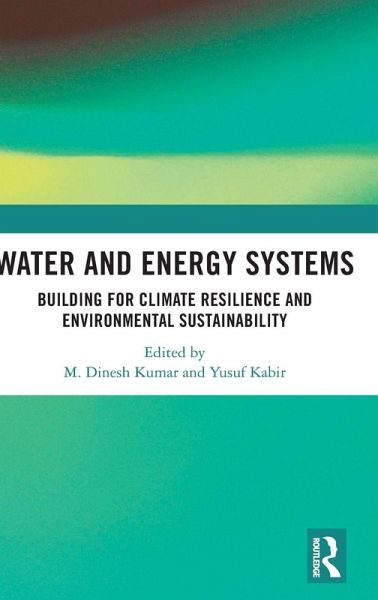
This book addresses how water supply systems can be planned, designed and managed for sustainability by presenting unique approaches and methodologies in rural drinking water supply schemes. It synthesizes the findings of research studies undertaken by IRAP and pilot projects undertaken by RCUES of AIILSG, Mumbai.
This book addresses how water supply systems can be planned, designed and managed for sustainability by presenting unique approaches and methodologies in rural drinking water supply schemes. It synthesizes the findings of research studies undertaken by IRAP and pilot projects undertaken by RCUES of AIILSG, Mumbai.
M. Dinesh Kumar is Executive Director of Institute for Resource Analysis and Policy, an Indian think-tank on water management founded by him in 2008. He has a PhD in Water Management. He had a graduation in Civil Engineering and master's degree in water resources management. He works on water, agriculture and energy related issues in India and internationally, heading several research and consultancy projects and training assignments of the organization. He is the author of nearly 300 research publications, including 11 academic books, 9 edited volumes, 120 book chapters and several international, peer-reviewed journal articles. Yusuf Kabir has been working in the water and sanitation sector for the past 25 years. He has been with UNICEF India since 2007. His areas of specialization are: Rural and Urban Drinking Water Supply, Sanitation and Hygiene, Wastes Management, Environment, Climate Change Adaptations, Disaster Management and Sustainable Development. He did his postgraduation in Environment Management from India's premier management Institute: Indian Institute of Social Welfare and Business Management (IISWBM) followed by PG in Sustainable Development from Staffordshire University, U.K. under commonwealth scholarship. He is the author of two international edited volumes, several book chapters and eight peer-reviewed journal articles.
Inhaltsangabe
1. Why Are Climate-resilient Water and Clean Energy Systems Critical for Sustainable Growth? 2. Development of a Framework for Assessing Climate Risk in Water Supply 3. Mapping Climate Induced Risks in Maharashtra's Rural Water Supply 4. Effect of Coastal and Riverine Floods, Cyclones and Landslides on Rural Water Supply Schemes, and Strategies for Mitigation 5. Life Cycle Costs of Rural Water Supply Systems, Climate Variability Impacts 6. Interventions for Making Groundwater-based RWS Schemes Climate-Resilient 7. Solar-Powered Drinking Water Supply Schemes for Reducing Carbon Footprint of Water Supply: How Far Are they technically feasible and Cost-Effective? 8. Approach & methodologies for conceptualization, planning, technology selection and design of water supply schemes, and water quality surveillance 9. Best Practices for Water Resources Management and Source Protection 10. A Multifaceted Approach to Mitigate Extreme HydroMet Hazards and Shocks faced by Public Institutions in Nagpur, Central India 11. Innovations for Sustainability of Environmental Sanitation Infrastructure and safe containment of faeces in Maharashtra 12. Harnessing Children, Youth and Community Engagement for Plastic Waste Management: A Case Study of Three Municipal Corporations in Mumbai Metropolitan Region 13. Summary of Findings and Conclusions Annexure 1: Design of Unconventional Water Supply Sources Annexure 2: Why a drinking Water Quality Surveillance Index?
1. Why Are Climate-resilient Water and Clean Energy Systems Critical for Sustainable Growth? 2. Development of a Framework for Assessing Climate Risk in Water Supply 3. Mapping Climate Induced Risks in Maharashtra's Rural Water Supply 4. Effect of Coastal and Riverine Floods, Cyclones and Landslides on Rural Water Supply Schemes, and Strategies for Mitigation 5. Life Cycle Costs of Rural Water Supply Systems, Climate Variability Impacts 6. Interventions for Making Groundwater-based RWS Schemes Climate-Resilient 7. Solar-Powered Drinking Water Supply Schemes for Reducing Carbon Footprint of Water Supply: How Far Are they technically feasible and Cost-Effective? 8. Approach & methodologies for conceptualization, planning, technology selection and design of water supply schemes, and water quality surveillance 9. Best Practices for Water Resources Management and Source Protection 10. A Multifaceted Approach to Mitigate Extreme HydroMet Hazards and Shocks faced by Public Institutions in Nagpur, Central India 11. Innovations for Sustainability of Environmental Sanitation Infrastructure and safe containment of faeces in Maharashtra 12. Harnessing Children, Youth and Community Engagement for Plastic Waste Management: A Case Study of Three Municipal Corporations in Mumbai Metropolitan Region 13. Summary of Findings and Conclusions Annexure 1: Design of Unconventional Water Supply Sources Annexure 2: Why a drinking Water Quality Surveillance Index?
Es gelten unsere Allgemeinen Geschäftsbedingungen: www.buecher.de/agb
Impressum
www.buecher.de ist ein Internetauftritt der buecher.de internetstores GmbH
Geschäftsführung: Monica Sawhney | Roland Kölbl | Günter Hilger
Sitz der Gesellschaft: Batheyer Straße 115 - 117, 58099 Hagen
Postanschrift: Bürgermeister-Wegele-Str. 12, 86167 Augsburg
Amtsgericht Hagen HRB 13257
Steuernummer: 321/5800/1497
USt-IdNr: DE450055826