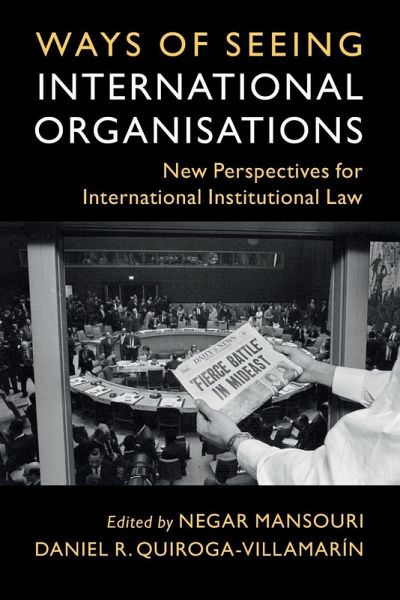
Ways of Seeing International Organisations
Herausgeber: Mansouri, Negar; Quiroga-Villamarín, Daniel R.
Ways of Seeing International Organisations
Herausgeber: Mansouri, Negar; Quiroga-Villamarín, Daniel R.
- Broschiertes Buch
- Merkliste
- Auf die Merkliste
- Bewerten Bewerten
- Teilen
- Produkt teilen
- Produkterinnerung
- Produkterinnerung
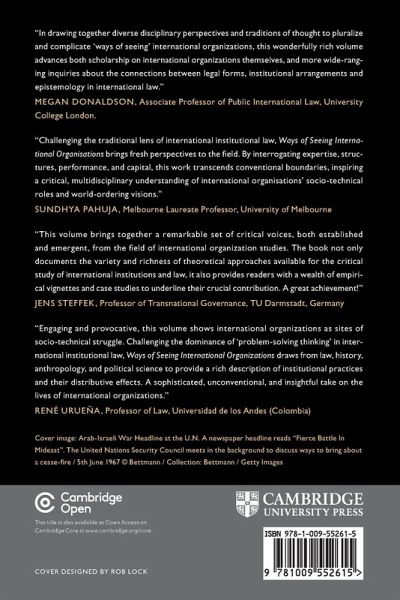
A breath of fresh air in the study of international institutions in global governance. As the United Nations -and multilateral diplomacy, more broadly- look at their weakest, this volume foregrounds the crucial role of such institutions in world (dis)order. This title is also available as Open Access on Cambridge Core.
Andere Kunden interessierten sich auch für
Ayse Zarakol (University of Cambridge)Before the West34,99 €
Kerry Goettlich (University of London City St Georgeâ s)From Frontiers to Borders40,99 €
Ida Danewid (University of Sussex)Resisting Racial Capitalism32,99 €
Andrew Phillips (University of Queensland)How the East Was Won42,99 €
Eren DuzgunCapitalism, Jacobinism and International Relations34,99 €
Perin E. Gurel (Indiana University of Notre Dame)Türkiye, Iran, and the Politics of Comparison30,99 €
Routledge International Handbook of Religion in Global Society51,99 €-
-
-
A breath of fresh air in the study of international institutions in global governance. As the United Nations -and multilateral diplomacy, more broadly- look at their weakest, this volume foregrounds the crucial role of such institutions in world (dis)order. This title is also available as Open Access on Cambridge Core.
Produktdetails
- Produktdetails
- LSE International Studies
- Verlag: Cambridge University Press
- Seitenzahl: 344
- Erscheinungstermin: 25. März 2025
- Englisch
- Abmessung: 229mm x 152mm x 19mm
- Gewicht: 504g
- ISBN-13: 9781009552615
- ISBN-10: 1009552619
- Artikelnr.: 72184154
- Herstellerkennzeichnung
- Libri GmbH
- Europaallee 1
- 36244 Bad Hersfeld
- gpsr@libri.de
- LSE International Studies
- Verlag: Cambridge University Press
- Seitenzahl: 344
- Erscheinungstermin: 25. März 2025
- Englisch
- Abmessung: 229mm x 152mm x 19mm
- Gewicht: 504g
- ISBN-13: 9781009552615
- ISBN-10: 1009552619
- Artikelnr.: 72184154
- Herstellerkennzeichnung
- Libri GmbH
- Europaallee 1
- 36244 Bad Hersfeld
- gpsr@libri.de
Part I. Thinking International Organisations Differently: 1. Seeing
international organisations differently Negar Mansouri and Daniel R.
Quiroga-Villamarín; 2. Critical theory and international organisations: the
need for an integrated approach B. S. Chimni; 3. Inter-disciplinarity and
the law of international organizations Jan Klabbers; Part II. Ways of
Seeing International Institutions: Expertise, Authority, & Knowledge
Production: 4. Studying the assembling of expertise in global governance
Annabelle Littoz-Monnet; 5. Experts, practices, power: the work of
international criminal court reform Richard Clements; 6. Drawing the
contours of hidden hunger as an object of governance Juanita Uribe;
Structures, Spaces, & Jurisdictions: 7. The puzzle of freedom: structure
and agency in international adjudication Tommaso Soave; 8. Reassembling
transnational legal conflicts across global institutions: ethnographic
perspectives on claims of authority over the Mediterranean Sea Kiri Santer;
9. Placeholders: an archival journey into the interim histories of
international organisations Daniel R. Quiroga-Villamarín; People,
Practices, & Performance: 10. The micro-politics of international
commissions: the case of telegraphic standards Jan Eijking; 11. Keeping up
standards for a better world: anthropological alternatives to the study of
international organisations Miia Halme-Tuomisaari; 12. 'The critic is not
the one who debunks, but the one who assembles': on professional
performances and material practices Dimitri Van Den Meerssche; Capital,
Class, & Political Economy: 13. Laissez faire, state capitalism, and the
making of international organizations: the dynamics of a struggle Negar
Mansouri; 14. Deconstructing 'resilience talk' in global governance: toward
a critical political economy approach A. Claire Cutler; 15. A white knight
in shining armor? Ethiopia, international organisations, and the global
colour line Daniel R. Quiroga-Villamarín; Part III. Conclusion: 16:
Examining elephants in the dark Guy Fiti Sinclair.
international organisations differently Negar Mansouri and Daniel R.
Quiroga-Villamarín; 2. Critical theory and international organisations: the
need for an integrated approach B. S. Chimni; 3. Inter-disciplinarity and
the law of international organizations Jan Klabbers; Part II. Ways of
Seeing International Institutions: Expertise, Authority, & Knowledge
Production: 4. Studying the assembling of expertise in global governance
Annabelle Littoz-Monnet; 5. Experts, practices, power: the work of
international criminal court reform Richard Clements; 6. Drawing the
contours of hidden hunger as an object of governance Juanita Uribe;
Structures, Spaces, & Jurisdictions: 7. The puzzle of freedom: structure
and agency in international adjudication Tommaso Soave; 8. Reassembling
transnational legal conflicts across global institutions: ethnographic
perspectives on claims of authority over the Mediterranean Sea Kiri Santer;
9. Placeholders: an archival journey into the interim histories of
international organisations Daniel R. Quiroga-Villamarín; People,
Practices, & Performance: 10. The micro-politics of international
commissions: the case of telegraphic standards Jan Eijking; 11. Keeping up
standards for a better world: anthropological alternatives to the study of
international organisations Miia Halme-Tuomisaari; 12. 'The critic is not
the one who debunks, but the one who assembles': on professional
performances and material practices Dimitri Van Den Meerssche; Capital,
Class, & Political Economy: 13. Laissez faire, state capitalism, and the
making of international organizations: the dynamics of a struggle Negar
Mansouri; 14. Deconstructing 'resilience talk' in global governance: toward
a critical political economy approach A. Claire Cutler; 15. A white knight
in shining armor? Ethiopia, international organisations, and the global
colour line Daniel R. Quiroga-Villamarín; Part III. Conclusion: 16:
Examining elephants in the dark Guy Fiti Sinclair.
Part I. Thinking International Organisations Differently: 1. Seeing
international organisations differently Negar Mansouri and Daniel R.
Quiroga-Villamarín; 2. Critical theory and international organisations: the
need for an integrated approach B. S. Chimni; 3. Inter-disciplinarity and
the law of international organizations Jan Klabbers; Part II. Ways of
Seeing International Institutions: Expertise, Authority, & Knowledge
Production: 4. Studying the assembling of expertise in global governance
Annabelle Littoz-Monnet; 5. Experts, practices, power: the work of
international criminal court reform Richard Clements; 6. Drawing the
contours of hidden hunger as an object of governance Juanita Uribe;
Structures, Spaces, & Jurisdictions: 7. The puzzle of freedom: structure
and agency in international adjudication Tommaso Soave; 8. Reassembling
transnational legal conflicts across global institutions: ethnographic
perspectives on claims of authority over the Mediterranean Sea Kiri Santer;
9. Placeholders: an archival journey into the interim histories of
international organisations Daniel R. Quiroga-Villamarín; People,
Practices, & Performance: 10. The micro-politics of international
commissions: the case of telegraphic standards Jan Eijking; 11. Keeping up
standards for a better world: anthropological alternatives to the study of
international organisations Miia Halme-Tuomisaari; 12. 'The critic is not
the one who debunks, but the one who assembles': on professional
performances and material practices Dimitri Van Den Meerssche; Capital,
Class, & Political Economy: 13. Laissez faire, state capitalism, and the
making of international organizations: the dynamics of a struggle Negar
Mansouri; 14. Deconstructing 'resilience talk' in global governance: toward
a critical political economy approach A. Claire Cutler; 15. A white knight
in shining armor? Ethiopia, international organisations, and the global
colour line Daniel R. Quiroga-Villamarín; Part III. Conclusion: 16:
Examining elephants in the dark Guy Fiti Sinclair.
international organisations differently Negar Mansouri and Daniel R.
Quiroga-Villamarín; 2. Critical theory and international organisations: the
need for an integrated approach B. S. Chimni; 3. Inter-disciplinarity and
the law of international organizations Jan Klabbers; Part II. Ways of
Seeing International Institutions: Expertise, Authority, & Knowledge
Production: 4. Studying the assembling of expertise in global governance
Annabelle Littoz-Monnet; 5. Experts, practices, power: the work of
international criminal court reform Richard Clements; 6. Drawing the
contours of hidden hunger as an object of governance Juanita Uribe;
Structures, Spaces, & Jurisdictions: 7. The puzzle of freedom: structure
and agency in international adjudication Tommaso Soave; 8. Reassembling
transnational legal conflicts across global institutions: ethnographic
perspectives on claims of authority over the Mediterranean Sea Kiri Santer;
9. Placeholders: an archival journey into the interim histories of
international organisations Daniel R. Quiroga-Villamarín; People,
Practices, & Performance: 10. The micro-politics of international
commissions: the case of telegraphic standards Jan Eijking; 11. Keeping up
standards for a better world: anthropological alternatives to the study of
international organisations Miia Halme-Tuomisaari; 12. 'The critic is not
the one who debunks, but the one who assembles': on professional
performances and material practices Dimitri Van Den Meerssche; Capital,
Class, & Political Economy: 13. Laissez faire, state capitalism, and the
making of international organizations: the dynamics of a struggle Negar
Mansouri; 14. Deconstructing 'resilience talk' in global governance: toward
a critical political economy approach A. Claire Cutler; 15. A white knight
in shining armor? Ethiopia, international organisations, and the global
colour line Daniel R. Quiroga-Villamarín; Part III. Conclusion: 16:
Examining elephants in the dark Guy Fiti Sinclair.