
G. F. Bosworth
West London
G. F. Bosworth
West London
- Broschiertes Buch
- Merkliste
- Auf die Merkliste
- Bewerten Bewerten
- Teilen
- Produkt teilen
- Produkterinnerung
- Produkterinnerung
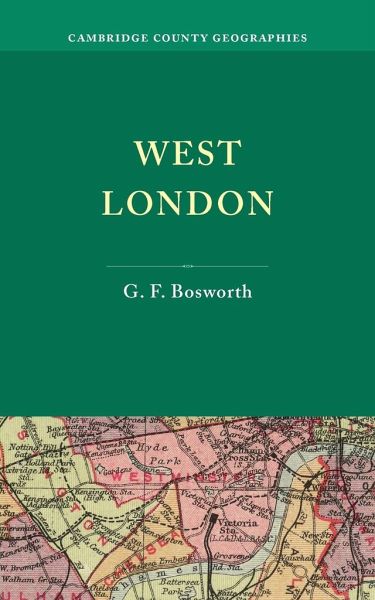
Originally published during the early part of the twentieth century, the Cambridge County Geographies were designed to provide a series of concise guides to British regions. Aimed at the general reader, they combined a comprehensive approach to various aspects of physical and human geography with an emphasis on clarity. This guide to West London by G. F. Bosworth was first published in 1912. The text is interspersed with numerous illustrative figures and also contains a list of Boroughs within the area.
Originally published during the early part of the twentieth century, the Cambridge County Geographies were designed to provide a series of concise guides to British regions. Aimed at the general reader, they combined a comprehensive approach to various aspects of physical and human geography with an emphasis on clarity. This guide to West London by G. F. Bosworth was first published in 1912. The text is interspersed with numerous illustrative figures and also contains a list of Boroughs within the area.
Produktdetails
- Produktdetails
- Verlag: Cambridge University Press
- Seitenzahl: 280
- Erscheinungstermin: 30. November 2012
- Englisch
- Abmessung: 203mm x 127mm x 17mm
- Gewicht: 340g
- ISBN-13: 9781107663602
- ISBN-10: 1107663601
- Artikelnr.: 37391853
- Herstellerkennzeichnung
- Libri GmbH
- Europaallee 1
- 36244 Bad Hersfeld
- gpsr@libri.de
- Verlag: Cambridge University Press
- Seitenzahl: 280
- Erscheinungstermin: 30. November 2012
- Englisch
- Abmessung: 203mm x 127mm x 17mm
- Gewicht: 340g
- ISBN-13: 9781107663602
- ISBN-10: 1107663601
- Artikelnr.: 37391853
- Herstellerkennzeichnung
- Libri GmbH
- Europaallee 1
- 36244 Bad Hersfeld
- gpsr@libri.de
1. County and shire. The county of London. The word London: its origin and
meaning; 2. General characteristics. Position and natural conditions. Why
London is our capital; 3. Size. Boundaries. Development. History of Growth.
London of the Romans, of the Saxons, of the Normans. Medieval London.
Stuart London; 4. London parks, commons, and open spaces in the NW and SW;
5. The Royal Parks - St James's Park. The Green Park. Hyde Park. Kensington
Gardens. Regent's Park; 6. The River Thames. The Embankment. The Wandle.
The bridges; 7. Rivers of the past. The Westbourne, and the Tybourne, or
Tyburn; 8. The water-supply of London - past and present; 9. Geology; 10.
Natural history; 11. Climate and rainfall. Greenwich Observatory and its
work; 12. People - race. Dialect. Settlements. Population; 13. Industries
and manufactures; 14. Trade. The markets. The Custom House. The Exchanges.
The Bank of England. The Royal Mint; 15. History; 16. Antiquities -
prehistoric, Roman, Saxon; 17. Architecture - (a) ecclesiastical. Medieval
churches. Wren's churches. Chapels Royal; 18. Architecture - (b)
ecclesiastical. Westminster Abbey; 19. Architecture - (c) domestic. Royal
and Episcopal palaces: The Tower, Westminster, Whitehall, The Savoy, St
James's, Kensington, Buckingham, Lambeth, and Fulham. Houses: Staple Inn,
Holland House, etc.; 20. Communications - ancient and modern. The Thames
formerly the Normal Highway of London. The Thames Watermen; 21.
Administration and divisions. The City of Westminster. The London County
Council. The Port Authority. Trinity House; 22. Public buildings - (a)
parliamentary and legal. The Houses of Parliament. Royal Courts of Justice.
Inns of Court; 23. Public buildings - (b) government and administrative
offices in Whitehall and Parliament Street. Somerset House. Spring Gardens;
24. Public buildings - (c) museums and exhibitions. British Museum, Natural
History Museum, Victoria and Albert Museum, India Museum, Imperial
Institute; 25. Public buildings - (d) art galleries. National Gallery,
National Portrait Gallery, National Gallery of British Art, The Wallace
Collection; 26. Public buildings - (e) hospitals. St Thomas's, St George's,
Charing Cross, Royal Military Hospital, Foundling Hospital; 27. Education -
primary, secondary, and technical. Foundation and collegiate schools. The
University of London; 28. Roll of honour; 29. The City of Westminster and
the Boroughs in the north-west and south-west of the county of London; Area
and population; Index.
meaning; 2. General characteristics. Position and natural conditions. Why
London is our capital; 3. Size. Boundaries. Development. History of Growth.
London of the Romans, of the Saxons, of the Normans. Medieval London.
Stuart London; 4. London parks, commons, and open spaces in the NW and SW;
5. The Royal Parks - St James's Park. The Green Park. Hyde Park. Kensington
Gardens. Regent's Park; 6. The River Thames. The Embankment. The Wandle.
The bridges; 7. Rivers of the past. The Westbourne, and the Tybourne, or
Tyburn; 8. The water-supply of London - past and present; 9. Geology; 10.
Natural history; 11. Climate and rainfall. Greenwich Observatory and its
work; 12. People - race. Dialect. Settlements. Population; 13. Industries
and manufactures; 14. Trade. The markets. The Custom House. The Exchanges.
The Bank of England. The Royal Mint; 15. History; 16. Antiquities -
prehistoric, Roman, Saxon; 17. Architecture - (a) ecclesiastical. Medieval
churches. Wren's churches. Chapels Royal; 18. Architecture - (b)
ecclesiastical. Westminster Abbey; 19. Architecture - (c) domestic. Royal
and Episcopal palaces: The Tower, Westminster, Whitehall, The Savoy, St
James's, Kensington, Buckingham, Lambeth, and Fulham. Houses: Staple Inn,
Holland House, etc.; 20. Communications - ancient and modern. The Thames
formerly the Normal Highway of London. The Thames Watermen; 21.
Administration and divisions. The City of Westminster. The London County
Council. The Port Authority. Trinity House; 22. Public buildings - (a)
parliamentary and legal. The Houses of Parliament. Royal Courts of Justice.
Inns of Court; 23. Public buildings - (b) government and administrative
offices in Whitehall and Parliament Street. Somerset House. Spring Gardens;
24. Public buildings - (c) museums and exhibitions. British Museum, Natural
History Museum, Victoria and Albert Museum, India Museum, Imperial
Institute; 25. Public buildings - (d) art galleries. National Gallery,
National Portrait Gallery, National Gallery of British Art, The Wallace
Collection; 26. Public buildings - (e) hospitals. St Thomas's, St George's,
Charing Cross, Royal Military Hospital, Foundling Hospital; 27. Education -
primary, secondary, and technical. Foundation and collegiate schools. The
University of London; 28. Roll of honour; 29. The City of Westminster and
the Boroughs in the north-west and south-west of the county of London; Area
and population; Index.
1. County and shire. The county of London. The word London: its origin and
meaning; 2. General characteristics. Position and natural conditions. Why
London is our capital; 3. Size. Boundaries. Development. History of Growth.
London of the Romans, of the Saxons, of the Normans. Medieval London.
Stuart London; 4. London parks, commons, and open spaces in the NW and SW;
5. The Royal Parks - St James's Park. The Green Park. Hyde Park. Kensington
Gardens. Regent's Park; 6. The River Thames. The Embankment. The Wandle.
The bridges; 7. Rivers of the past. The Westbourne, and the Tybourne, or
Tyburn; 8. The water-supply of London - past and present; 9. Geology; 10.
Natural history; 11. Climate and rainfall. Greenwich Observatory and its
work; 12. People - race. Dialect. Settlements. Population; 13. Industries
and manufactures; 14. Trade. The markets. The Custom House. The Exchanges.
The Bank of England. The Royal Mint; 15. History; 16. Antiquities -
prehistoric, Roman, Saxon; 17. Architecture - (a) ecclesiastical. Medieval
churches. Wren's churches. Chapels Royal; 18. Architecture - (b)
ecclesiastical. Westminster Abbey; 19. Architecture - (c) domestic. Royal
and Episcopal palaces: The Tower, Westminster, Whitehall, The Savoy, St
James's, Kensington, Buckingham, Lambeth, and Fulham. Houses: Staple Inn,
Holland House, etc.; 20. Communications - ancient and modern. The Thames
formerly the Normal Highway of London. The Thames Watermen; 21.
Administration and divisions. The City of Westminster. The London County
Council. The Port Authority. Trinity House; 22. Public buildings - (a)
parliamentary and legal. The Houses of Parliament. Royal Courts of Justice.
Inns of Court; 23. Public buildings - (b) government and administrative
offices in Whitehall and Parliament Street. Somerset House. Spring Gardens;
24. Public buildings - (c) museums and exhibitions. British Museum, Natural
History Museum, Victoria and Albert Museum, India Museum, Imperial
Institute; 25. Public buildings - (d) art galleries. National Gallery,
National Portrait Gallery, National Gallery of British Art, The Wallace
Collection; 26. Public buildings - (e) hospitals. St Thomas's, St George's,
Charing Cross, Royal Military Hospital, Foundling Hospital; 27. Education -
primary, secondary, and technical. Foundation and collegiate schools. The
University of London; 28. Roll of honour; 29. The City of Westminster and
the Boroughs in the north-west and south-west of the county of London; Area
and population; Index.
meaning; 2. General characteristics. Position and natural conditions. Why
London is our capital; 3. Size. Boundaries. Development. History of Growth.
London of the Romans, of the Saxons, of the Normans. Medieval London.
Stuart London; 4. London parks, commons, and open spaces in the NW and SW;
5. The Royal Parks - St James's Park. The Green Park. Hyde Park. Kensington
Gardens. Regent's Park; 6. The River Thames. The Embankment. The Wandle.
The bridges; 7. Rivers of the past. The Westbourne, and the Tybourne, or
Tyburn; 8. The water-supply of London - past and present; 9. Geology; 10.
Natural history; 11. Climate and rainfall. Greenwich Observatory and its
work; 12. People - race. Dialect. Settlements. Population; 13. Industries
and manufactures; 14. Trade. The markets. The Custom House. The Exchanges.
The Bank of England. The Royal Mint; 15. History; 16. Antiquities -
prehistoric, Roman, Saxon; 17. Architecture - (a) ecclesiastical. Medieval
churches. Wren's churches. Chapels Royal; 18. Architecture - (b)
ecclesiastical. Westminster Abbey; 19. Architecture - (c) domestic. Royal
and Episcopal palaces: The Tower, Westminster, Whitehall, The Savoy, St
James's, Kensington, Buckingham, Lambeth, and Fulham. Houses: Staple Inn,
Holland House, etc.; 20. Communications - ancient and modern. The Thames
formerly the Normal Highway of London. The Thames Watermen; 21.
Administration and divisions. The City of Westminster. The London County
Council. The Port Authority. Trinity House; 22. Public buildings - (a)
parliamentary and legal. The Houses of Parliament. Royal Courts of Justice.
Inns of Court; 23. Public buildings - (b) government and administrative
offices in Whitehall and Parliament Street. Somerset House. Spring Gardens;
24. Public buildings - (c) museums and exhibitions. British Museum, Natural
History Museum, Victoria and Albert Museum, India Museum, Imperial
Institute; 25. Public buildings - (d) art galleries. National Gallery,
National Portrait Gallery, National Gallery of British Art, The Wallace
Collection; 26. Public buildings - (e) hospitals. St Thomas's, St George's,
Charing Cross, Royal Military Hospital, Foundling Hospital; 27. Education -
primary, secondary, and technical. Foundation and collegiate schools. The
University of London; 28. Roll of honour; 29. The City of Westminster and
the Boroughs in the north-west and south-west of the county of London; Area
and population; Index.