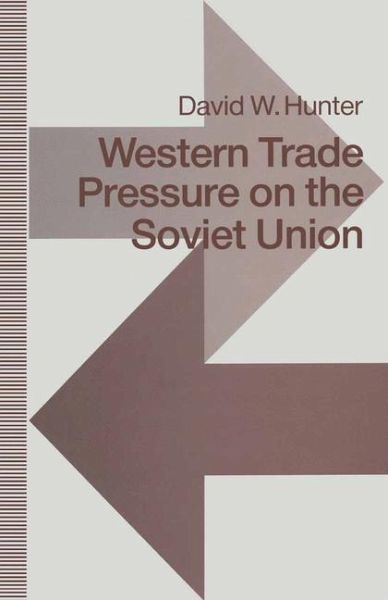
Analyzes growing US-Soviet economic interdependence and the implications of economic pressure in their relationship. From a review of US-Soviet economic relations, the author concludes that US embargo strategies against the USSR in the past have been futile, at times even counterproductive.
Analyzes growing US-Soviet economic interdependence and the implications of economic pressure in their relationship. From a review of US-Soviet economic relations, the author concludes that US embargo strategies against the USSR in the past have been futile, at times even counterproductive.
Part 1 Economic sanctions - pre-World War II through Cold War: The League of Nations; World War 2; export controls and the co-ordinating committee; the Korean War; dropping the CHINCOM differential. Part 2 East-West economic relations (1960-1985): the pipeline embargo; the Soviet grain sale; the Cuban embargo; President Nixon's decontrol of trade with The People's Republic of China; the 1970s era of detente; Afghanistan; martial law in Poland; the Versailles summit. Part 3 A conceptual framework of sanctions: anatomy of power; sanctions; symbolic vs instrumental sanctions; measures of effectiveness; instrumental sanctions; symbolic sanctions. Part 4 Economic dimensions of sanctions: patterns of trade flow; types of economic sanctions - export trade sanctions, boycotts, import trade sanctions, embargoes, financial sanctions; economic impact on the target state - short and long-term elasticity of demand, "Absolute Need" for the product, the structure of the target's economy. Part 5 Political significance of economic sanctions: alliance management - the Urengoi pipeline; sanctions as a form of deterrence - the imposition of martial law in Poland; domestic political objectives - the Jackson-Vanik amendment; political effects of economic sanctions. Part 6 Sanctions and East-West confrontation: the USSR - "Target State" - authoritarianism, nationalism (and Pan-Slavicism), economic profile, Eastern European ties; the western alliance - "Sanctioner States" - perspectives on detente, foreign policy independence within the alliance, shared "Burden" of economic sanctions, decision-making vacuum in East-West framework. Part 7 politico-economic prescription for East-West relations in an interdependent world: diagnosis of interdependence; how much interdependence is strategically wise?, how do we structure trade relations with the USSR for economic security; prognosis for the role of commercial policy in managing East-West relations; what decision-making structure is required?.
Part 1 Economic sanctions - pre-World War II through Cold War: The League of Nations; World War 2; export controls and the co-ordinating committee; the Korean War; dropping the CHINCOM differential. Part 2 East-West economic relations (1960-1985): the pipeline embargo; the Soviet grain sale; the Cuban embargo; President Nixon's decontrol of trade with The People's Republic of China; the 1970s era of detente; Afghanistan; martial law in Poland; the Versailles summit. Part 3 A conceptual framework of sanctions: anatomy of power; sanctions; symbolic vs instrumental sanctions; measures of effectiveness; instrumental sanctions; symbolic sanctions. Part 4 Economic dimensions of sanctions: patterns of trade flow; types of economic sanctions - export trade sanctions, boycotts, import trade sanctions, embargoes, financial sanctions; economic impact on the target state - short and long-term elasticity of demand, "Absolute Need" for the product, the structure of the target's economy. Part 5 Political significance of economic sanctions: alliance management - the Urengoi pipeline; sanctions as a form of deterrence - the imposition of martial law in Poland; domestic political objectives - the Jackson-Vanik amendment; political effects of economic sanctions. Part 6 Sanctions and East-West confrontation: the USSR - "Target State" - authoritarianism, nationalism (and Pan-Slavicism), economic profile, Eastern European ties; the western alliance - "Sanctioner States" - perspectives on detente, foreign policy independence within the alliance, shared "Burden" of economic sanctions, decision-making vacuum in East-West framework. Part 7 politico-economic prescription for East-West relations in an interdependent world: diagnosis of interdependence; how much interdependence is strategically wise?, how do we structure trade relations with the USSR for economic security; prognosis for the role of commercial policy in managing East-West relations; what decision-making structure is required?.
Es gelten unsere Allgemeinen Geschäftsbedingungen: www.buecher.de/agb
Impressum
www.buecher.de ist ein Internetauftritt der buecher.de internetstores GmbH
Geschäftsführung: Monica Sawhney | Roland Kölbl | Günter Hilger
Sitz der Gesellschaft: Batheyer Straße 115 - 117, 58099 Hagen
Postanschrift: Bürgermeister-Wegele-Str. 12, 86167 Augsburg
Amtsgericht Hagen HRB 13257
Steuernummer: 321/5800/1497
USt-IdNr: DE450055826