
Andere Kunden interessierten sich auch für
 What Happens When Someone I Love Has Cancer? Explain the Science of Cancer and How a Loved One's Diagnosis and Treatment Affects a Kid's Day-To-day Life17,99 €
 The Burpee Bears10,99 €
 Que pasa en mi cuerpo? Libro para muchachas14,99 €
 What Happens When a Kid Has Cancer17,99 €
 What Happens When I Have Dyslexia?10,99 €
 Scooter and Doc's Guide to Bouncing Back - How to Handle Sadness, Build Strength, and Feel Good Again19,99 €
 When We Are Sick9,49 €

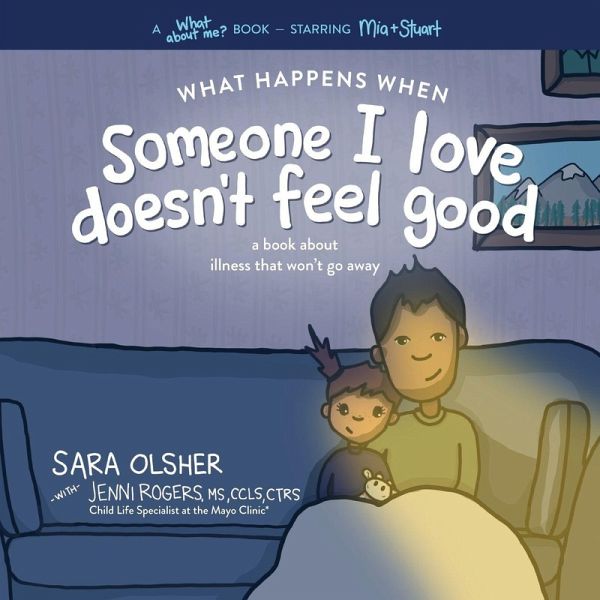
The perfect book to help kids understand and cope with a parent who has a chronic or terminal illness. Explaining a chronic or terminal illness to a kid is hard. Medical terms are difficult to understand as adults, but figuring out how to translate them into kidspeak can be next to impossible. Join Mia and Stuart as they learn how bodies work, why some bodies don't always feel good, and what to do when someone they love has an illness that won't go away. Help kids learn to manage their expectations and cope with disappointment and big feelings. This groundbreaking book approaches a difficult topic with humor and honesty. "Fills a gap in the market for people living with metastatic cancer of any kind. Talks a bit about side effects of treatment and helps kids manage their expectations." "This book found a kind and surprisingly funny way to normalize and talk about disability in a way that isn't scary." "A great way to introduce children to chronic or terminal illnesses." "Great for any stage of chronic or terminal illness - not just really advanced forms." From the author of 5-star books What Happens When Someone I Love Has Cancer and What Happens When a Kid Has Cancer comes a book written specifically for kids who have a parent coping with terminal cancer or ongoing chronic illness. Applies to All Types of Illnesses: What Happens When Someone I Love Doesn't Feel Good provides a foundation for how bodies work, making it easy to explain all types of illnesses, such as ALS (Amyotrophic Lateral Sclerosis), Alzheimer's Disease and other forms of dementia, Arthritis, Metastatic and Stage IV Cancer (including Blood Cancers like Leukemia or Lymphoma), Cystic Fibrosis, Depression, Fibromyalgia, Kidney Disease, Liver Failure, Long COVID, Multiple Sclerosis, Parkinson's Disease, and Stroke. The free guide in the back of the book helps parents explain each illness from a scientific point of view in a way kids can actually understand. How Chronic Illness Will Affect a Child: From a developmental perspective, kids experience life as if the whole world revolves around them. They need to understand that chronic illness isn't their fault, that it's not contagious, and that it's not their job to fix it. But beyond that, kids want to know how it will affect their day-to-day. Who will pick them up from school? How will playtime happen? What emotions will it cause?