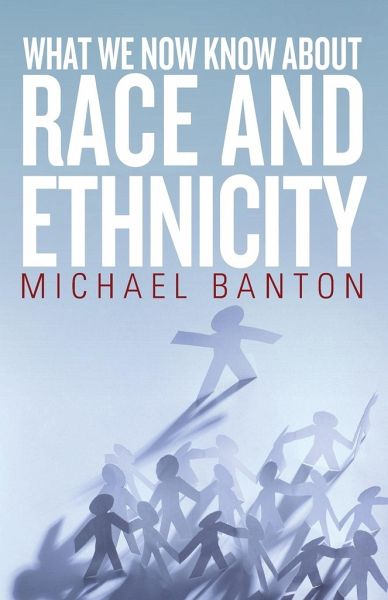
Explains how the idea of race became so important in the USA. Reviews references to "race," "racism," and "ethnicity" in sociology, anthropology, philosophy, and comparative politics.
Explains how the idea of race became so important in the USA. Reviews references to "race," "racism," and "ethnicity" in sociology, anthropology, philosophy, and comparative politics.
Michael Banton (1926-2018) taught social anthroplogy in the University of Edinburgh 1954-65; political science in the Massachusetts Institute of Technology 1962-63; and sociology in the University of Bristol 1965-92. He was President of the Royal Anthropological Institute of Great Britain and Ireland 1987-89, and from 1986 to 2001 a member of the UN Committee on the Elimination of Racial Discrimination (Chairman, 1996-98).
Inhaltsangabe
Preface Introduction: The Paradox Chapter 1. The Scientific Sources of the Paradox * Two dimensions * Taxonomy * Typology * Darwin and Mendel * Two Vocabularies * The Power of the Ordinary Language Construct
Chapter 2. The Political Sources of the Paradox * Social Categories and Their Names * After the Civil War * Discrimination * The 'One-Drop' Rule * Counter Trends
Chapter 3. International Pragmatism * The Racial Convention * Implementing the Convention * Other International Action * Naming the Categories
Chapter 4. Sociological Knowledge * Theoretical or Practical? * The Chicago School * In World Perspective * Social Race?
Chapter 5. Conceptions of Racism * Writing History * Teaching Philosophy * Teaching Sociology * Sociological Textbooks * Political Ends
Chapter 6. Ethnic Origin and Ethnicity * Census categories * Anthropology * A New Reality? * Nomenclature * Sociobiology * Ethnic Origin as a Social Sign * Comparative Politics * The Current Sociology of Ethnicity
Chapter 7. Collective Action * The Rediscovery of Weber's 1911 Notes * Four Propositions * Closure * The Human Capital Variable * The Colour Variable * Ethnic Preferences * Opening relationships
Conclusion: The Paradox Resolved Select Bibliography Index
Preface Introduction: The Paradox Chapter 1. The Scientific Sources of the Paradox * Two dimensions * Taxonomy * Typology * Darwin and Mendel * Two Vocabularies * The Power of the Ordinary Language Construct
Chapter 2. The Political Sources of the Paradox * Social Categories and Their Names * After the Civil War * Discrimination * The 'One-Drop' Rule * Counter Trends
Chapter 3. International Pragmatism * The Racial Convention * Implementing the Convention * Other International Action * Naming the Categories
Chapter 4. Sociological Knowledge * Theoretical or Practical? * The Chicago School * In World Perspective * Social Race?
Chapter 5. Conceptions of Racism * Writing History * Teaching Philosophy * Teaching Sociology * Sociological Textbooks * Political Ends
Chapter 6. Ethnic Origin and Ethnicity * Census categories * Anthropology * A New Reality? * Nomenclature * Sociobiology * Ethnic Origin as a Social Sign * Comparative Politics * The Current Sociology of Ethnicity
Chapter 7. Collective Action * The Rediscovery of Weber's 1911 Notes * Four Propositions * Closure * The Human Capital Variable * The Colour Variable * Ethnic Preferences * Opening relationships
Conclusion: The Paradox Resolved Select Bibliography Index
Es gelten unsere Allgemeinen Geschäftsbedingungen: www.buecher.de/agb
Impressum
www.buecher.de ist ein Internetauftritt der buecher.de internetstores GmbH
Geschäftsführung: Monica Sawhney | Roland Kölbl | Günter Hilger
Sitz der Gesellschaft: Batheyer Straße 115 - 117, 58099 Hagen
Postanschrift: Bürgermeister-Wegele-Str. 12, 86167 Augsburg
Amtsgericht Hagen HRB 13257
Steuernummer: 321/5800/1497
USt-IdNr: DE450055826