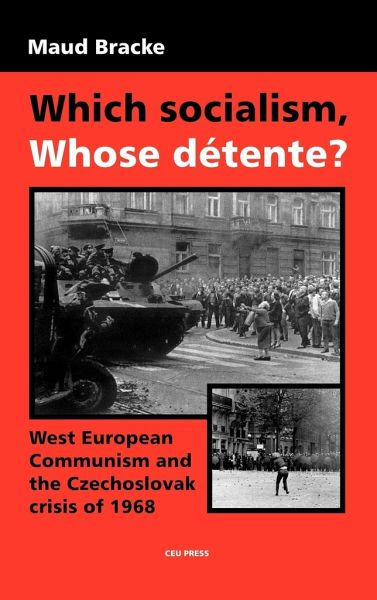
This study analyzes the impact of the Czechoslovak crisis of 1968-1969 on the two major communist parties in the West: the Italian and French ones. Discusses the central strategic and ideological tensions which these parties needed to deal with: domestic belonging versus allegiance to the world communist movement, doctrinal orthodoxy in a context of rapid societal changes, and the question of revolution and reform. These key problems were situated in different contexts: the crisis in the "world communist movement" after 1956 and the Sino-Soviet rift, socio-economic modernization and political…mehr
This study analyzes the impact of the Czechoslovak crisis of 1968-1969 on the two major communist parties in the West: the Italian and French ones. Discusses the central strategic and ideological tensions which these parties needed to deal with: domestic belonging versus allegiance to the world communist movement, doctrinal orthodoxy in a context of rapid societal changes, and the question of revolution and reform. These key problems were situated in different contexts: the crisis in the "world communist movement" after 1956 and the Sino-Soviet rift, socio-economic modernization and political radicalization in Western Europe, and the shift from Cold War to early détente on the European continent. The research for this work is based on the study of a large collection of recently released primary sources, particularly, the internal records of various communist parties in Europe.
Maud Bracke is a lecturer in modern European history at the University of Glasgow. She obtained her PhD in 2004 from the European University Institute, Florence, and has published on the history of the European Left, 1968 and the Cold War.
Inhaltsangabe
Introduction, Chapter 1. West European communism and the question of internationalism. Theoretical and analytical framework 1. The approaches to West European communism in the literature 1.1. Scholarship on communism marked by the Cold War 1.2. West European communism and the Czechoslovak crisis in the literature 2. The concepts and the method 2.1. Internationalism in theory and practice 2.2. A concept of internationalism 2.3. The comparison: PCI and PCF 2.4. National and international belonging: sources of legitimacy 3. The Czechoslovak crisis, the communist world and the Cold War 3.1. The significance of the Czechoslovak crisis in the history of the communist world and the Cold War 3.2. West European communism, the Czechoslovak crisis and the longer term 4 The contexts: explaining varieties and changes 4.1. The "world communist movement" 4.2. The domestic situation and the domestic political interplay 4.3. The Cold War and détente PART 1. THE CAUSES. WEST EUROPEAN COMMUNISM AND INTERNATIONALISM, 1956-1967 Chapter 2. West European communism and the changes of 1956 59 1. 1956 1.1. The 20th Congress of the Communist Party of the Soviet Union 1.2. The invasion of Hungary and the anti-revisionist campaign 2. The PCI and the PCF in the post-1956 communist world 2.1. Instruments of control after 1956 2.2. The positions and roles of the PCI and PCF 3. The PCI, the PCF and the changes of internationalism, 1956-1962 3.1. The PCI: Polycentrism and the "national road" 3.1.1. Definitions of Polycentrism 3.1.2. The "national road" and domestic integration 3.2. The PCF: the defence of orthodoxy and the crisis of legitimacy 3.2.1. Khrushchevism and orthodoxy 3.2.2. The crisis of legitimacy: de Gaulle and Algeria Chapter 3. West European communism and internationalism in the 1960s (1962-1967) 1. The world communist movement: the Sino-Soviet dispute and diversification 1.1. The Sino-Soviet dispute 1.2. Khrushchev's campaign for "unity" and shifting alliances 1.3. The creation of a West European pressure group in the WCM 2. East-West relations and the rise of European détente 2.1. Soviet strategy: global anti-imperialism and peaceful coexistence 2.2. West European communism and (Soviet) détente 2.3. The crisis of the Atlantic alliance and the shift to the left in Western Europe 3. The PCI: the symmetry of domestic and international developments 3.1. Domestic détente 3.2. Expanding internationalism: Polycentrism, détente, Europe 4. The PCF: the asymmetry of domestic and international developments 4.1. The Union de la gauche 4.2. The tacit conflict with the Kremlin and the concept of internationalism Conclusions to Part 1 PART 2. THE CRISIS. WEST EUROPEAN COMMUNISM, THE PRAGUE SPRING, THE INVASION Chapter 4. The Czechoslovak crisis, 1968-1969 1.The coming of the Prague Spring 1.1.Interpretations of the Prague Spring 1.2.Expressions of discontent 1.3.Immediate causes for the fall of Novotny 2.The Prague Spring: which socialism? 2.1.Socialism, democracy and pluralism: political reform 2.2.Economic reform 2.3.The re-discovery of the nation: the Slovak question, Czechoslovakia and Europe 2.4.The tension between reform and revival 3.Mounting tension in the communist world and the invasion 3.1.Soviet and East European reactions to the Prague Spring 3.2.The genesis of the decision to invade 3.3.The military invasion, the political deadlock and the Moscow Protocol 3.4.The Brezhnev Doctrine 4.The aftermath and the "normalisation" 4.1.The meaning of "normalisation" 4.2.The normalisation under Dubcek 4.3.Husak's rise and Dubcek's fall Chapter 5. West European communist parties and the Czechoslovak crisis prior to the invasion 1.The PCF 1.1. The PCF and the Czechoslovak communist party 1.2. Fragmented analyses of the Prague Spring: de-stalinisation and "orthodoxy" 1.3. The political interplay of May '68 and interpretations of the Prague Spring 1.4. The PCF's ....
Introduction, Chapter 1. West European communism and the question of internationalism. Theoretical and analytical framework 1. The approaches to West European communism in the literature 1.1. Scholarship on communism marked by the Cold War 1.2. West European communism and the Czechoslovak crisis in the literature 2. The concepts and the method 2.1. Internationalism in theory and practice 2.2. A concept of internationalism 2.3. The comparison: PCI and PCF 2.4. National and international belonging: sources of legitimacy 3. The Czechoslovak crisis, the communist world and the Cold War 3.1. The significance of the Czechoslovak crisis in the history of the communist world and the Cold War 3.2. West European communism, the Czechoslovak crisis and the longer term 4 The contexts: explaining varieties and changes 4.1. The "world communist movement" 4.2. The domestic situation and the domestic political interplay 4.3. The Cold War and détente PART 1. THE CAUSES. WEST EUROPEAN COMMUNISM AND INTERNATIONALISM, 1956-1967 Chapter 2. West European communism and the changes of 1956 59 1. 1956 1.1. The 20th Congress of the Communist Party of the Soviet Union 1.2. The invasion of Hungary and the anti-revisionist campaign 2. The PCI and the PCF in the post-1956 communist world 2.1. Instruments of control after 1956 2.2. The positions and roles of the PCI and PCF 3. The PCI, the PCF and the changes of internationalism, 1956-1962 3.1. The PCI: Polycentrism and the "national road" 3.1.1. Definitions of Polycentrism 3.1.2. The "national road" and domestic integration 3.2. The PCF: the defence of orthodoxy and the crisis of legitimacy 3.2.1. Khrushchevism and orthodoxy 3.2.2. The crisis of legitimacy: de Gaulle and Algeria Chapter 3. West European communism and internationalism in the 1960s (1962-1967) 1. The world communist movement: the Sino-Soviet dispute and diversification 1.1. The Sino-Soviet dispute 1.2. Khrushchev's campaign for "unity" and shifting alliances 1.3. The creation of a West European pressure group in the WCM 2. East-West relations and the rise of European détente 2.1. Soviet strategy: global anti-imperialism and peaceful coexistence 2.2. West European communism and (Soviet) détente 2.3. The crisis of the Atlantic alliance and the shift to the left in Western Europe 3. The PCI: the symmetry of domestic and international developments 3.1. Domestic détente 3.2. Expanding internationalism: Polycentrism, détente, Europe 4. The PCF: the asymmetry of domestic and international developments 4.1. The Union de la gauche 4.2. The tacit conflict with the Kremlin and the concept of internationalism Conclusions to Part 1 PART 2. THE CRISIS. WEST EUROPEAN COMMUNISM, THE PRAGUE SPRING, THE INVASION Chapter 4. The Czechoslovak crisis, 1968-1969 1.The coming of the Prague Spring 1.1.Interpretations of the Prague Spring 1.2.Expressions of discontent 1.3.Immediate causes for the fall of Novotny 2.The Prague Spring: which socialism? 2.1.Socialism, democracy and pluralism: political reform 2.2.Economic reform 2.3.The re-discovery of the nation: the Slovak question, Czechoslovakia and Europe 2.4.The tension between reform and revival 3.Mounting tension in the communist world and the invasion 3.1.Soviet and East European reactions to the Prague Spring 3.2.The genesis of the decision to invade 3.3.The military invasion, the political deadlock and the Moscow Protocol 3.4.The Brezhnev Doctrine 4.The aftermath and the "normalisation" 4.1.The meaning of "normalisation" 4.2.The normalisation under Dubcek 4.3.Husak's rise and Dubcek's fall Chapter 5. West European communist parties and the Czechoslovak crisis prior to the invasion 1.The PCF 1.1. The PCF and the Czechoslovak communist party 1.2. Fragmented analyses of the Prague Spring: de-stalinisation and "orthodoxy" 1.3. The political interplay of May '68 and interpretations of the Prague Spring 1.4. The PCF's ....
Es gelten unsere Allgemeinen Geschäftsbedingungen: www.buecher.de/agb
Impressum
www.buecher.de ist ein Internetauftritt der buecher.de internetstores GmbH
Geschäftsführung: Monica Sawhney | Roland Kölbl | Günter Hilger
Sitz der Gesellschaft: Batheyer Straße 115 - 117, 58099 Hagen
Postanschrift: Bürgermeister-Wegele-Str. 12, 86167 Augsburg
Amtsgericht Hagen HRB 13257
Steuernummer: 321/5800/1497
USt-IdNr: DE450055826