

Andere Kunden interessierten sich auch für
 Sharpe's Tiger16,99 €
 History of the Thirteen28,99 €
 History of the Thirteen12,90 €
 History of the Thirteen19,99 €
 The Black Dwarf, a Legend of Montrose, Count Robert of Paris, and the Surgeon's Daughter38,99 €
 Angelot12,50 €
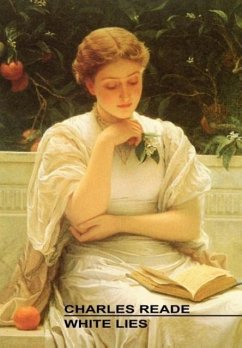
 White Lies32,99 €


Towards the close of the last century the Baron de Beaurepaire lived in the chateau of that name in Brittany. His family was of prodigious antiquity; seven successive barons had already flourished on this spot when a younger son of the house accompanied his neighbor the Duke of Normandy in his descent on England, and was rewarded by a grant of English land, on which he dug a mote and built a chateau, and called it Beaurepaire (the worthy Saxons turned this into Borreper without delay). Since that day more than twenty gentlemen of the same lineage had held in turn the original chateau and lands, and handed them down to their present lord. Thus rooted in his native Brittany, Henri Lionel Marie St. Quentin de Beaurepaire was as fortunate as any man can be pronounced before he dies. He had health, rank, a good income, a fair domain, a goodly house, a loving wife, and two lovely young daughters, all veneration and affection. Two months every year he visited the Faubourg St. Germain and the Court. At both every gentleman and every lacquey knew his name, and his face: his return to Brittany after this short absence was celebrated by a rustic fete. Above all, Monsieur de Beaurepaire possessed that treasure of treasures, content. He hunted no heart-burns. Ambition did not tempt him; why should he listen to long speeches, and court the unworthy, and descend to intrigue, for so precarious and equivocal a prize as a place in the Government, when he could be De Beaurepaire without trouble or loss of self-respect? Social ambition could get little hold of him; let parvenus give balls half in doors, half out, and light two thousand lamps, and waste their substance battling and manoeuvring for fashionable distinction; he had nothing to gain by such foolery, nothing to lose by modest living; he was the twenty-ninth Baron of Beaurepaire. So wise, so proud, so little vain, so strong in health and wealth and honor, one would have said nothing less than an earthquake could shake this gentleman and his house. Yet both were shaken, though rooted by centuries to the soil; and by no vulgar earthquake.