
Andere Kunden interessierten sich auch für
 Personality in Nonhuman Animals113,99 €
 Animal Assisted Therapy36,99 €
 The Handbook of Culture and Biology219,99 €
") Social Behaviour in Animals (Psychology Revivals)23,99 €
Social Behaviour in Animals (Psychology Revivals)23,99 € Phylogenetic Evolution of Sleep in Animals64,99 €
 who am I? how do others see me?29,99 €
 The Expression of the Emotions in Man and Animals12,60 €
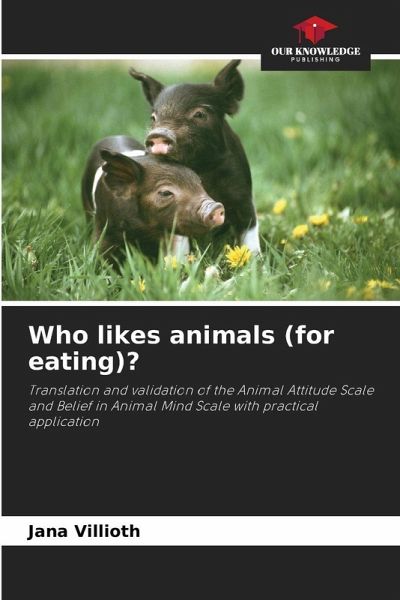
There is a severe lack of measurement instruments for human-animal relationships in the German language. Therefore, two key questionnaires were translated from English and validated on a sample of 207 people in this study: the Belief in Animal Mind Scale (BAM) and the Animal Attitude Scale (AAS). While a single-factor structure was confirmed for the BAM, the AAS was divided into subscales. Apart from a low level of difficulty of the items, both scales show good test quality criteria. In line with previous literature, more animal-friendly values were found for female participants, animal welfare activists, vegetarians and vegans, people who had kept a pet in the past and currently keep one, and, in some cases, older and more agreeable people. In a simulated online check-in for a flight, people with higher AAS values were more likely to choose a vegan or vegetarian meal. A default selection for the in-flight menu had no significant influence on the participants' food choices.