
Andere Kunden interessierten sich auch für
 Why we can't afford the rich33,99 €
 Why Does Development Fail in Resource Rich Economies180,99 €
 WHY THEY ARE RICH AND YOU ARE NOT?21,99 €
 Why Does Development Fail in Resource Rich Economies54,99 €
 WHY THEY ARE RICH AND YOU ARE NOT?17,99 €
 How Mitchell Energy & Development Corp. Got Its Start and How It Grew49,99 €
 Getting Rich44,99 €

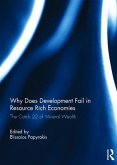

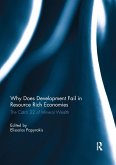

Why Europe Grew Rich and Asia Did Not provides a striking new answer to the classic question of why Europe industrialised from the late eighteenth century and Asia did not. Drawing significantly from the case of India, Prasannan Parthasarathi shows that in the seventeenth and eighteenth centuries the advanced regions of Europe and Asia were more alike than different, both characterized by sophisticated and growing economies. Their subsequent divergence can be attributed to different competitive and ecological pressures that in turn produced varied state policies and economic outcomes. This account breaks with conventional views, which hold that divergence occurred because Europe possessed superior markets, rationality, science or institutions. It offers instead a groundbreaking rereading of global economic development that ranges from India, Japan and China to Britain, France and the Ottoman Empire and from the textile and coal industries to the roles of science, technology and the state.