
Andere Kunden interessierten sich auch für
 Religion and Human Security in Wartime45,99 €
 Christ in the African imagination25,99 €
 The Mirror of Mediating Imagination62,99 €
 The Precarious Organisation80,99 €
 Futurism and the African Imagination40,99 €
 American Catholic Leadership80,99 €
 Islamic Dilemmas: Reformers, Nationalists and Industrialization81,99 €
Prophecy in Islam is the authoritative mode of
revelation and prophets are the messengers of that
revelation. As islam grew, parts of the community
felt the need for continuing guidance. This led to
the various forms of knowledge-seeking. Mystics
(Sufis and Saints) in Islam emphasised the role of
the ''heart'' as the faculty where imagination (khayal)
directly reflects the knowledge of/from God. Mystics
express this knowledge through the revelatory
Discourse (Bayan). Mystics see themselves as being
part of mainstream Islam and hence the central
problem they deal with in relation to Bayan is the
authority of their discourse.
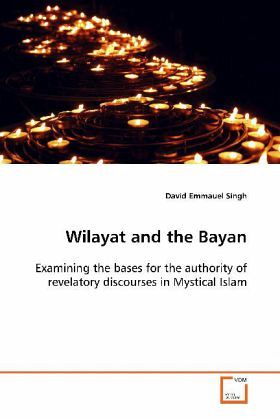
This book examines this problem in a Mystical
tradition of Islam and shows how based on this
tradition''s classical sources the support for the
authority of the Bayan is provided at three
fundamental levels: in relation to the Qur''an, in
relation to the Prophets and Prophecy and in relation
to God. The book shows the powerful role played by
Imagination in religious discourses in Islamic Mysticism.
revelation and prophets are the messengers of that
revelation. As islam grew, parts of the community
felt the need for continuing guidance. This led to
the various forms of knowledge-seeking. Mystics
(Sufis and Saints) in Islam emphasised the role of
the ''heart'' as the faculty where imagination (khayal)
directly reflects the knowledge of/from God. Mystics
express this knowledge through the revelatory
Discourse (Bayan). Mystics see themselves as being
part of mainstream Islam and hence the central
problem they deal with in relation to Bayan is the
authority of their discourse.
This book examines this problem in a Mystical
tradition of Islam and shows how based on this
tradition''s classical sources the support for the
authority of the Bayan is provided at three
fundamental levels: in relation to the Qur''an, in
relation to the Prophets and Prophecy and in relation
to God. The book shows the powerful role played by
Imagination in religious discourses in Islamic Mysticism.