
Andere Kunden interessierten sich auch für
 PLANTES MÉDICINALES SAUVAGES DANS LA PROVINCE DE BUKHARA32,99 €
 A Companion Volume to Medicinal Plants and Mushrooms of Yunnan Province of China239,99 €
 Medicinal Plants and Mushrooms of Yunnan Province of China368,99 €
![The Commonly Occuring Wild Plants of Canada, and More Especially of the Province of Ontario [microform]]( "The Commonly Occuring Wild Plants of Canada, and More Especially of the Province of Ontario [microform]") The Commonly Occuring Wild Plants of Canada, and More Especially of the Province of Ontario [microform]31,99 €
The Commonly Occuring Wild Plants of Canada, and More Especially of the Province of Ontario [microform]31,99 €![Catalogue of Canadian Plants. [microform]]( "Catalogue of Canadian Plants. [microform]") Catalogue of Canadian Plants. [microform]34,99 €
Catalogue of Canadian Plants. [microform]34,99 € Invasive Plants. Restoration of Grasslands Invaded by Sericea Lespedeza27,95 €
![Catalogue of Canadian Plants. Part II, Gamopetaled [microform]]( "Catalogue of Canadian Plants. Part II, Gamopetaled [microform]") Catalogue of Canadian Plants. Part II, Gamopetaled [microform]36,99 €
Catalogue of Canadian Plants. Part II, Gamopetaled [microform]36,99 €

![The Commonly Occuring Wild Plants of Canada, and More Especially of the Province of Ontario [microform]](https://bilder.buecher.de/produkte/65/65517/65517159m.jpg "The Commonly Occuring Wild Plants of Canada, and More Especially of the Province of Ontario [microform]")
![Catalogue of Canadian Plants. [microform]](https://bilder.buecher.de/produkte/66/66200/66200751m.jpg "Catalogue of Canadian Plants. [microform]")
![Catalogue of Canadian Plants. Part II, Gamopetaled [microform]](https://bilder.buecher.de/produkte/65/65511/65511302m.jpg "Catalogue of Canadian Plants. Part II, Gamopetaled [microform]")
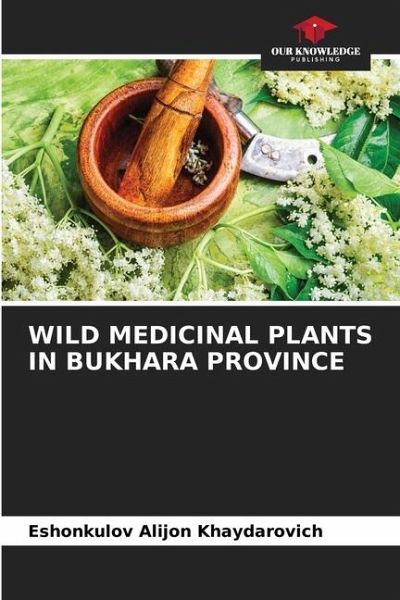
At present, about 80% of the world's population uses medicinal plants and more than 35% of the medicines used are derived from medicinal plants. In European countries more than 1300 medicinal plants are used, 90% of which are collected from natural resources.The traditional use of medicinal plants is not mainly dependent on climatic conditions or flora richness but on socio-economic factors. Ethnobotanical research plays a key role in better understanding these processes and finding practical solutions. In the monograph, for the first time, a list of 58 species of medicinal plants distributed in Bukhara region in the wild, 176 species 261, as well as GIS maps reflecting their distribution were formed. The results of analysis of life forms, areal types, ecological groups of medicinal species were carried out. It was revealed that 167 species of medicinal plants are used for gastrointestinal diseases, 104 species - for skin diseases, 7 - for mental diseases, and 11% of medicinal plants of the region are used for food by representatives of the local population.