
Andere Kunden interessierten sich auch für
 Recovery of Gray Wolves in the Great Lakes Region of the United States76,99 €
 By-catch Reduction in the World's Fisheries113,99 €
 A History of Pesticides60,99 €
 Diplomacy, Funding and Animal Welfare113,99 €
 Trade of Coral29,99 €
 An Account of the Sources, Preparation, Trade and Composition of the Bees'-wax of British India25,99 €
 Exotic Bird Species And The Migratory Bird Treaty Act28,99 €




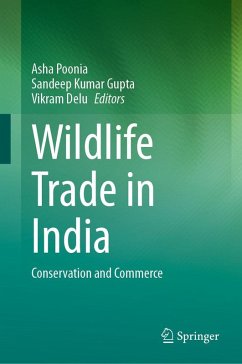
This book provides an in-depth, multidisciplinary examination of wildlife trade in India, blending scientific research, legal analysis, and socio-economic perspectives. The primary goal is to illuminate the complexities of both legal and illegal wildlife trade, examining its profound ecological, cultural, and economic impacts.
The book offers a holistic approach, incorporating the latest data on key species and market dynamics while exploring the role of local communities, law enforcement, and global demand in shaping trade patterns. Insights are provided into the rising role of digital platforms in illegal trade, as well as the challenges of enforcing wildlife protection laws in an increasingly digital world.
Readers will gain a clear understanding of how wildlife trade affects biodiversity, ecosystems, and the health of endangered species. Crucially, the book also presents practical solutions such as successful community-led conservation initiatives and sustainable trade models that provide hope for reversing biodiversity loss.
With its multidisciplinary approach, the book serves as an essential resource for wildlife biologists, conservationists, policymakers, and students, presenting not only the challenges but also the actionable strategies for wildlife protection. This timely exploration responds to the urgent need for updated, comprehensive knowledge on wildlife trade, as the intersection between conservation and commerce becomes a critical focal point in global environmental discussions.
The book offers a holistic approach, incorporating the latest data on key species and market dynamics while exploring the role of local communities, law enforcement, and global demand in shaping trade patterns. Insights are provided into the rising role of digital platforms in illegal trade, as well as the challenges of enforcing wildlife protection laws in an increasingly digital world.
Readers will gain a clear understanding of how wildlife trade affects biodiversity, ecosystems, and the health of endangered species. Crucially, the book also presents practical solutions such as successful community-led conservation initiatives and sustainable trade models that provide hope for reversing biodiversity loss.
With its multidisciplinary approach, the book serves as an essential resource for wildlife biologists, conservationists, policymakers, and students, presenting not only the challenges but also the actionable strategies for wildlife protection. This timely exploration responds to the urgent need for updated, comprehensive knowledge on wildlife trade, as the intersection between conservation and commerce becomes a critical focal point in global environmental discussions.