
Andere Kunden interessierten sich auch für
 Women and Economics16,99 €
 The Man-Made World9,49 €
 The Man-Made World11,99 €
 The Woman's Bible18,99 €
 The Home16,99 €
 The Home10,99 €
 The Collected Meditations of Mrs. Maria W. Stewart8,99 €



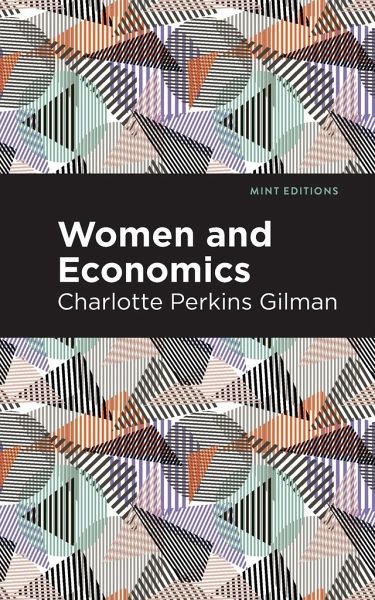
Women and Economics (1898) is a sociological and economic study by American author and feminist Charlotte Perkins Gilman. Inspired by her work as a social reformer and advocate for women's suffrage, Gilman sought to write a work of nonfiction that explained the need to introduce women into the workforce while alleviating their responsibilities as wives and mothers. Women and Economics, arguably Gilman's most important work, employs the theories of Karl Marx, Charles Darwin, and Thorstein Veblen to not only assess the damage done to women and human society by inequality, but to propose realistic ways of eliminating gender oppression while benefitting humanity at large. Observing that women in their roles as wives and mothers tend to work harder for longer hours than men while being excluded from the work force, Gilman proposes that the progress of human society depends upon the equality of men and women in all aspects of working and domestic life. She acknowledges the importance of the suffragist movement-in which she was a leading figure-while making the case for the economic equality of men and women in addition to the democratic equality sought by their activism. Ultimately, Gilman advocates for the professionalization of domestic work, suggesting that women should be allowed to enter the workforce while hiring others to care for and educate their children as well as perform the duties necessary for the upkeep of the home. Grounding her work in the dominant sociological, biological, and economic theories of the time, Gilman provided the intellectual arguments necessary for elevating the feminist cause from a popular movement to a true political force. Women and Economics is a powerful work of sociological thought by a leading reformer and feminist of her day. This edition of Charlotte Perkins Gilman's Women and Economics is a classic of American literature and nonfiction reimagined for modern readers. Since our inception in 2020, Mint Editions has kept sustainability and innovation at the forefront of our mission. Each and every Mint Edition title gets a fresh, professionally typeset manuscript and a dazzling new cover, all while maintaining the integrity of the original book. With thousands of titles in our collection, we aim to spotlight diverse public domain works to help them find modern audiences. Mint Editions celebrates a breadth of literary works, curated from both canonical and overlooked classics from writers around the globe.