
Andere Kunden interessierten sich auch für
 Urban Women26,99 €
 The Year's Work in Medievalism, 200418,99 €
 The Year's Work in Medievalism, 200316,99 €
 Researches In Prehistoric And Protohistoric Comparative Philology, Mythology, And Archaeology20,99 €
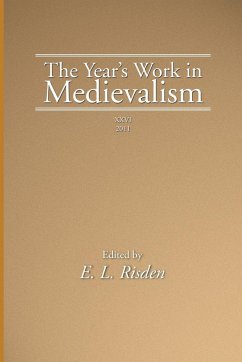
 The Year's Work in Medievalism, 201116,99 €
 A Medieval Woman's Mirror of Honor: The Treasury of the City of Ladies10,99 €
 Women in Purple37,99 €



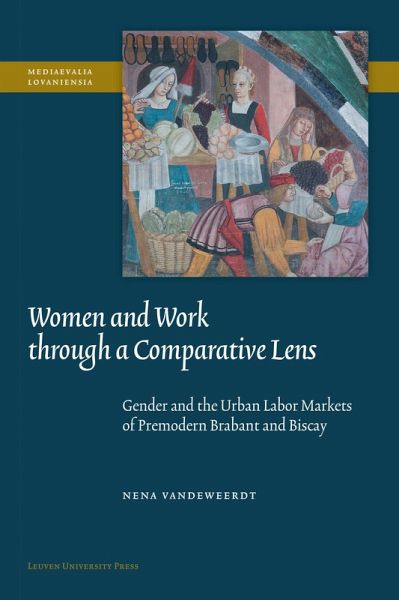
Urban Markets and Women's Labor: Navigating Institutional Boundaries in Premodern Europe Women played a crucial role in medieval and early modern urban economies, yet their labor opportunities varied greatly depending on local institutions. This book compares the guild-structured labor markets of Antwerp and Mechelen in Brabant with Bilbao's informal economy in Biscay during the fifteenth and sixteenth centuries. By analyzing these distinct institutional contexts, it offers a multifaceted understanding of women's economic roles in premodern Europe. Drawing on a wide range of legislative and judicial sources, Vandeweerdt demonstrates how legal frameworks, socioeconomic structures, and individual strategies shaped women's activities in small-scale trade. Bridging institutional analysis and personal agency, Women and Work through a Comparative Lens sheds new light on the interplay between labor organization and everyday practices in premodern Europe.