Suraiya Faroqhi (Turkey Ibn Haldun University)
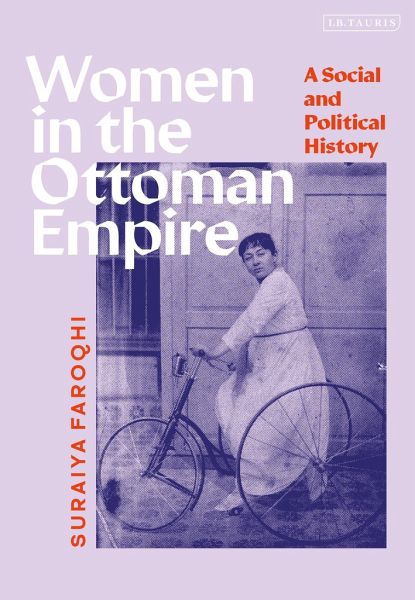
Women in the Ottoman Empire
A Social and Political History
Suraiya Faroqhi (Turkey Ibn Haldun University)
Women in the Ottoman Empire
A Social and Political History
- Broschiertes Buch
- Merkliste
- Auf die Merkliste
- Bewerten Bewerten
- Teilen
- Produkt teilen
- Produkterinnerung
- Produkterinnerung
An overview of the history of Ottoman women, including both members of the elite and townspeople
Andere Kunden interessierten sich auch für
Dr. Necati Alkan (Germany University of Bamberg)Non-Sunni Muslims in the Late Ottoman Empire108,99 €
Nilay Ozok-Gundogan (Florida State Assistant Professor of HistoryThe Kurdish Nobility in the Ottoman Empire98,99 €
Selim KoruNew Turkey and the Far Right19,99 €
Andrew WenderThe End of the Ottoman Empire and the Forging of the Modern Middle East20,99 €
Burce CelikCommunications in Turkey and the Ottoman Empire32,99 €
Daniel Goffman (Indiana Ball State University)The Ottoman Empire and Early Modern Europe106,99 €
Ayse OzilOrthodox Christians in the Late Ottoman Empire54,99 €-
-
-
An overview of the history of Ottoman women, including both members of the elite and townspeople
Produktdetails
- Produktdetails
- Verlag: Bloomsbury Publishing PLC
- Seitenzahl: 328
- Erscheinungstermin: 23. Februar 2023
- Englisch
- Abmessung: 241mm x 169mm x 20mm
- Gewicht: 582g
- ISBN-13: 9780755638260
- ISBN-10: 0755638263
- Artikelnr.: 64296263
- Herstellerkennzeichnung
- Libri GmbH
- Europaallee 1
- 36244 Bad Hersfeld
- gpsr@libri.de
- Verlag: Bloomsbury Publishing PLC
- Seitenzahl: 328
- Erscheinungstermin: 23. Februar 2023
- Englisch
- Abmessung: 241mm x 169mm x 20mm
- Gewicht: 582g
- ISBN-13: 9780755638260
- ISBN-10: 0755638263
- Artikelnr.: 64296263
- Herstellerkennzeichnung
- Libri GmbH
- Europaallee 1
- 36244 Bad Hersfeld
- gpsr@libri.de
Suraiya Faroqhi is Professor Emerita at Ibn Haldun University, Turkey. She has previously held positions at Istanbul Bilgi, Turkey, Ludwig-Maximilians-Universität, Germany and the Middle East Technical University. A leading expert on the social history of the Ottoman Empire, her books include Subjects of the Sultan (I.B.Tauris, 2000), The Ottoman Empire and the World Around It (I.B.Tauris, 2003), Artisans of Empire (I.B.Tauris, 2009) and The Ottoman and Mughal Empires (I.B.Tauris, 2019).
List of Figures
Acknowledgements
A note on spelling and transliteration
Introduction
Prologue: A conspectus of Ottoman history
1. Ottoman women, Ottoman history: Coping with a changing world
Part I (1500s to about 1700)
2. The legal framework of family life
3. Dependent on work, investments and charity
4. Exceptionally talented, exceptionally active: women of distinction
Part II (about 1700-1870s)
5. Ottoman diversity: Female agency and survival in Ottoman Syria and Egypt
6. Ottoman diversity: Coping with relatives, the state and dependent
capitalism
Part III (1870-1918)
7. Female teachers, journalists and actors: education as a source of
survival skills
8. Before 1912: Making a living through family relations, work and charity
- and occasionally turning to crime
9. In profound distress:Struggling to survive the disintegration of the
empire (1912-18)
Conclusion
Suggestions for further reading: A bibliographical essay
Notes
Timeline
Glossary

Acknowledgements
A note on spelling and transliteration
Introduction
Prologue: A conspectus of Ottoman history
1. Ottoman women, Ottoman history: Coping with a changing world
Part I (1500s to about 1700)
2. The legal framework of family life
3. Dependent on work, investments and charity
4. Exceptionally talented, exceptionally active: women of distinction
Part II (about 1700-1870s)
5. Ottoman diversity: Female agency and survival in Ottoman Syria and Egypt
6. Ottoman diversity: Coping with relatives, the state and dependent
capitalism
Part III (1870-1918)
7. Female teachers, journalists and actors: education as a source of
survival skills
8. Before 1912: Making a living through family relations, work and charity
- and occasionally turning to crime
9. In profound distress:Struggling to survive the disintegration of the
empire (1912-18)
Conclusion
Suggestions for further reading: A bibliographical essay
Notes
Timeline
Glossary
List of Figures
Acknowledgements
A note on spelling and transliteration
Introduction
Prologue: A conspectus of Ottoman history
1. Ottoman women, Ottoman history: Coping with a changing world
Part I (1500s to about 1700)
2. The legal framework of family life
3. Dependent on work, investments and charity
4. Exceptionally talented, exceptionally active: women of distinction
Part II (about 1700-1870s)
5. Ottoman diversity: Female agency and survival in Ottoman Syria and Egypt
6. Ottoman diversity: Coping with relatives, the state and dependent
capitalism
Part III (1870-1918)
7. Female teachers, journalists and actors: education as a source of
survival skills
8. Before 1912: Making a living through family relations, work and charity
- and occasionally turning to crime
9. In profound distress:Struggling to survive the disintegration of the
empire (1912-18)
Conclusion
Suggestions for further reading: A bibliographical essay
Notes
Timeline
Glossary
Acknowledgements
A note on spelling and transliteration
Introduction
Prologue: A conspectus of Ottoman history
1. Ottoman women, Ottoman history: Coping with a changing world
Part I (1500s to about 1700)
2. The legal framework of family life
3. Dependent on work, investments and charity
4. Exceptionally talented, exceptionally active: women of distinction
Part II (about 1700-1870s)
5. Ottoman diversity: Female agency and survival in Ottoman Syria and Egypt
6. Ottoman diversity: Coping with relatives, the state and dependent
capitalism
Part III (1870-1918)
7. Female teachers, journalists and actors: education as a source of
survival skills
8. Before 1912: Making a living through family relations, work and charity
- and occasionally turning to crime
9. In profound distress:Struggling to survive the disintegration of the
empire (1912-18)
Conclusion
Suggestions for further reading: A bibliographical essay
Notes
Timeline
Glossary