

Andere Kunden interessierten sich auch für
 Management, Organizations, and Paradoxes137,99 €
 Leadership and Organizational Sustainability38,99 €
 The Cluster Organization40,99 €
 Organisational Ambidexterity and Strategy127,99 €
 Reimagining Faith and Management40,99 €
 Leadership as Emotional Labour53,99 €
 Social Media, Work and Organisations127,99 €



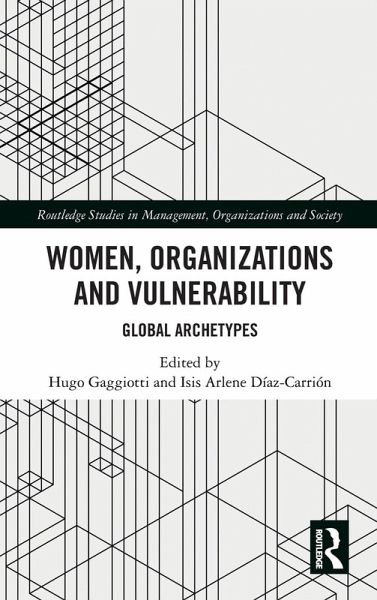
Why are women, despite being resilient, adaptable, and persistent, often constructed and perceived as weak and vulnerable? Women's vulnerability is not a neutral concept but is organizationally defined and understood. Organizations are discursive spaces where women's vulnerability is constructed and reproduced as a communicative act and event. We often represent vulnerability at individual or organizational levels, but not both. Women's vulnerability reminds us of the pervasive interconnectedness of personal and organizational life events. Experiencing women's organizational vulnerability is common. However, is women's vulnerability publicly represented, defined, felt and acted upon in the same way everywhere?
This book is focused on comparing women's organizational vulnerability practices making a significant contribution to reflection, theory, methods and cross-disciplinary expertise. The process of making sense of "vulnerability" is extremely diverse and intersectionally constructed through gender, culture and organizational discourses, which demands complex, innovative and non-Eurocentric methodological paradigms and approaches. This book satisfies these demands by integrating contributions from a diverse range of disciplines, academic traditions and cases and provides an understanding of women's vulnerability as a global phenomenon that comprises both cultural and organizational contexts.
By examining how publicly and organizationally women develop particular and creative strategies to navigate vulnerability, the book significantly contributes towards identifying archetypical practices for negotiating vulnerability in different contexts.
This book is focused on comparing women's organizational vulnerability practices making a significant contribution to reflection, theory, methods and cross-disciplinary expertise. The process of making sense of "vulnerability" is extremely diverse and intersectionally constructed through gender, culture and organizational discourses, which demands complex, innovative and non-Eurocentric methodological paradigms and approaches. This book satisfies these demands by integrating contributions from a diverse range of disciplines, academic traditions and cases and provides an understanding of women's vulnerability as a global phenomenon that comprises both cultural and organizational contexts.
By examining how publicly and organizationally women develop particular and creative strategies to navigate vulnerability, the book significantly contributes towards identifying archetypical practices for negotiating vulnerability in different contexts.