The daughter of a Scottish soldier and a Jamaican herbalist, Mary Seacole (1805-81) gained recognition for her provision of care to British troops during the Crimean War. She had travelled widely in the Caribbean and Panama before venturing to England to volunteer as an army nurse in the Crimea. Although rebuffed by officials, an undeterred Seacole funded her own expedition, establishing the British Hotel near Balaclava to provide a refuge for wounded officers. Known affectionately as 'Mother Seacole' among the men, yet returning to England bankrupt at the end of hostilities, she had her…mehr
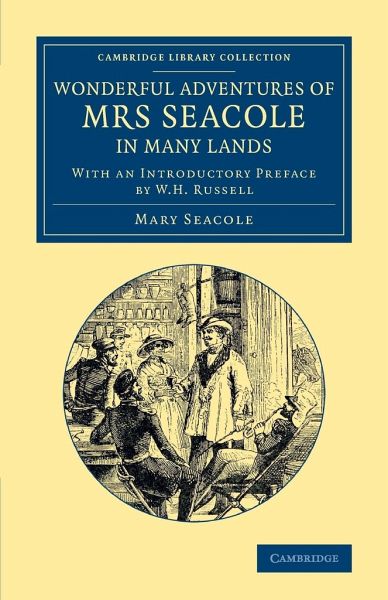
The daughter of a Scottish soldier and a Jamaican herbalist, Mary Seacole (1805-81) gained recognition for her provision of care to British troops during the Crimean War. She had travelled widely in the Caribbean and Panama before venturing to England to volunteer as an army nurse in the Crimea. Although rebuffed by officials, an undeterred Seacole funded her own expedition, establishing the British Hotel near Balaclava to provide a refuge for wounded officers. Known affectionately as 'Mother Seacole' among the men, yet returning to England bankrupt at the end of hostilities, she had her plight highlighted in the press. First published in 1857, and reissued here in its 1858 printing, her autobiography was intended to share her story and restore to her some financial security. Probably dictated to her editor, who then polished the text for publication, this was the first autobiography by a black woman in Britain.
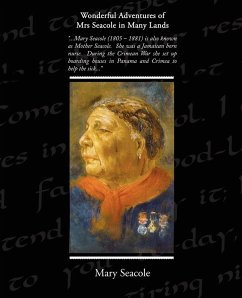
Mary Jane Seacole (née Grant; November 23, 1805 - May 14, 1881) was born in Jamaica to a Creole mother who managed a boarding house and had herbalist talents as a "doctress." In a poll conducted in 2003 by the black heritage website Every Generation, she was chosen the greatest black Briton in 2004. In 1855, Seacole travelled to the Crimean War with the intention of establishing the "British Hotel," which would serve as "a mess-table and comfortable quarters for sick and convalescent officers." It was a big hit, and she and her business partner, a relative of her late husband, fared well with it until the war ended. Her excellent book, Adventures of Mrs Seacole in Many Lands, published in 1857, includes three chapters about the cuisine she served and her interactions with commanders, some of whom were high-ranking, including the commander of the Turkish soldiers.
Inhaltsangabe
To the reader 1. My birth and parentage 2. Struggles for life 3. My reception at the Independent Hotel 4. An unwelcome visitor in Cruces 5. American sympathy 6. Migration to Gorgona 7. The yellow fever on Jamaica 8. I long to join the British army before Sebastopol 9. Voyage to Constantinople 10. I start for Balaclava 11. Alarms in the harbour 12. The British Hotel 13. My work in the Crimea 14. My customers at the British Hotel 15. My first glimpse of war 16. Under fire on the fatal 18th of June 17. Inside Sebastopol 18. Holiday in the camp 19. New Year in the Crimea Conclusion.
To the reader 1. My birth and parentage 2. Struggles for life 3. My reception at the Independent Hotel 4. An unwelcome visitor in Cruces 5. American sympathy 6. Migration to Gorgona 7. The yellow fever on Jamaica 8. I long to join the British army before Sebastopol 9. Voyage to Constantinople 10. I start for Balaclava 11. Alarms in the harbour 12. The British Hotel 13. My work in the Crimea 14. My customers at the British Hotel 15. My first glimpse of war 16. Under fire on the fatal 18th of June 17. Inside Sebastopol 18. Holiday in the camp 19. New Year in the Crimea Conclusion.
Es gelten unsere Allgemeinen Geschäftsbedingungen: www.buecher.de/agb
Impressum
www.buecher.de ist ein Internetauftritt der buecher.de internetstores GmbH
Geschäftsführung: Monica Sawhney | Roland Kölbl | Günter Hilger
Sitz der Gesellschaft: Batheyer Straße 115 - 117, 58099 Hagen
Postanschrift: Bürgermeister-Wegele-Str. 12, 86167 Augsburg
Amtsgericht Hagen HRB 13257
Steuernummer: 321/5800/1497
USt-IdNr: DE450055826