
Andere Kunden interessierten sich auch für
 Stepfather-Stepson Communication99,55 €
 Worlds of Communication78,85 €
 The Interpreting Being and Ideal Space41,99 €
 Wortewelten94,90 €
 Die Entwicklung des "Word-of-Mouth" Marketings zum "Eye-to-Buy" Marketing in der Mode27,95 €
 War of the Worlds to Social Media162,20 €
 The Instigatory Theory of NGO Communication49,99 €
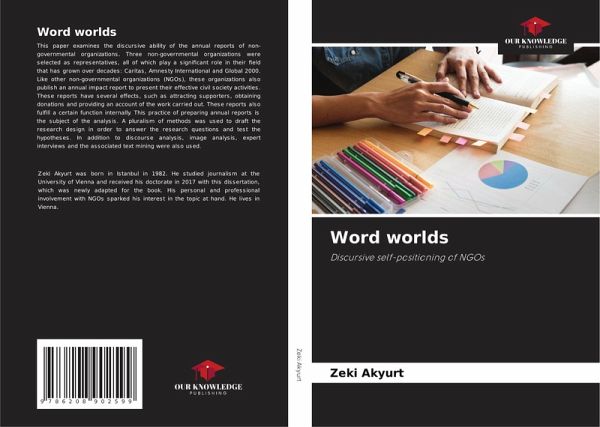
This paper examines the discursive ability of the annual reports of non-governmental organizations. Three non-governmental organizations were selected as representatives, all of which play a significant role in their field that has grown over decades: Caritas, Amnesty International and Global 2000. Like other non-governmental organizations (NGOs), these organizations also publish an annual impact report to present their effective civil society activities. These reports have several effects, such as attracting supporters, obtaining donations and providing an account of the work carried out. These reports also fulfill a certain function internally. This practice of preparing annual reports is the subject of the analysis. A pluralism of methods was used to draft the research design in order to answer the research questions and test the hypotheses. In addition to discourse analysis, image analysis, expert interviews and the associated text mining were also used.