
Andere Kunden interessierten sich auch für
 Keys to the Palace27,99 €
 Navigating Worlds37,99 €
 The Mystery of Shabbos36,99 €
 Navigating Worlds43,99 €
 Reading the Rav23,99 €
 As If We Were There27,99 €
 Torah Song27,99 €
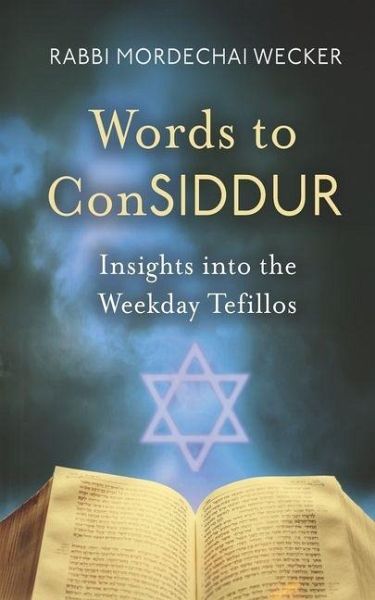
Using Traditional Texts to Create a Personal Connection with Hashem Tefillah is thus meant to be a deep personal, emotional and spiritual experience. Rav Soloveitchik writes (Reflections of the Rav, vol. 1, 1979, p. 74): "This being so, how can such an experience be prescribed and controlled by the Halacha, which seeks to impose precise regulatory controls governing time and manner? How can the Halacha be reconciled with spontaneous emotionality?... The answer is that the norm creates the mood and setting which allow for the spontaneous overflow of emotions. The norm is an educational tool, a guide which organizes our personalities and heightens our sensitivity. It does not dictate emotion; it molds man and his circumstances and thereby stimulates the emotional outpouring." The question arises as to the propriety of approaching Hashem in prayer. Is it not presumptuous of us to glorify Him or solicit requests of Him? The answer to that question is straightforward. Most of the texts of our tefillos were arranged by the Anshe Knesses HaGedolah which included many prophets. Thus, His very words are often used in praise of and supplication to Him. These texts allow for multiple interpretations (no, not every interpretation), offering us an opportunity to express a range of ideas, all of which have passed the litmus test of suitability in prayer. Tefillah Defined Chief Rabbi of Britain Sir Jonathan Sacks zt"l wrote in the introduction to his siddur translation: "Prayer is the language of the soul in conversation with G-d. It is the most intimate gesture of religious life, and the most transformative. The very fact that we can pray testifies to the deepest elements of Jewish faith: that the universe did not come into existence accidentally, nor are our lives destined to be bereft of meaning." Personal Notes The completion of this book caps fifty years of study and teaching the siddur. It is my hope, G-d willing, that my words will be educational, instructive and, hopefully, even inspiring. Do not be misled by the title, Words to ConSIDDUR! It is simply a concession to my predilection for puns. This sefer deals with serious matters, indeed, with our very relationship with Hashem Yisborach. I have focused my efforts on those prayers that are recited individually rather than communally. The former presumably allows more time for reflection. My target audience for this work is... you! It is aimed at the entire spectrum of Jews, from novices to accomplished Torah scholars and everyone in between. Comments on Commentators Even a cursory perusal of the text shows that I often quote the Gra's comments. This is due to the high esteem in which he was/ is held by my rebbeim and my ancestors zt"l, and my heritage as a Litvak. Please Note