
Work in the Digital Age
Challenges of the Fourth Industrial Revolution
Herausgeber: Neufeind, Max; Ranft, Florian; O'Reilly, Jacqueline
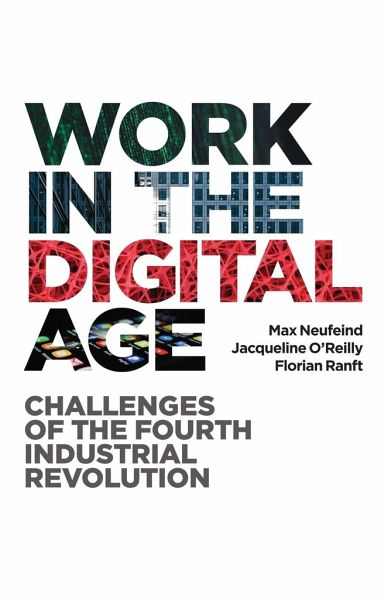
Work in the Digital Age
Challenges of the Fourth Industrial Revolution
Herausgeber: Neufeind, Max; Ranft, Florian; O'Reilly, Jacqueline
- Broschiertes Buch
- Merkliste
- Auf die Merkliste
- Bewerten Bewerten
- Teilen
- Produkt teilen
- Produkterinnerung
- Produkterinnerung
This book sets out to explore the emerging consequences of the so called ‘4th Industrial Revolution for the organisation of work and welfare.
Andere Kunden interessierten sich auch für
 Christophe PROVIDENCEFinancial inclusion in Haiti in the digital age60,99 €
 Business Resilience and Digital Technology in the Post-Pandemic Era129,99 €
 Regional Economic Integration and Global Competition in the Post-COVID-19 Era170,99 €
 Regional Economic Integration and Global Competition in the Post-COVID-19 Era222,99 €
 Rethinking Cultural Criticism83,99 €
 Sustainable Development Risks and Risk Management189,99 €
 Rethinking Cultural Criticism83,99 €
-
-
-






This book sets out to explore the emerging consequences of the so called ‘4th Industrial Revolution for the organisation of work and welfare.
Produktdetails
- Produktdetails
- Verlag: Policy Network
- Seitenzahl: 612
- Erscheinungstermin: 1. Juni 2018
- Englisch
- Abmessung: 216mm x 140mm x 33mm
- Gewicht: 759g
- ISBN-13: 9781786609069
- ISBN-10: 1786609061
- Artikelnr.: 52416634
- Herstellerkennzeichnung
- Libri GmbH
- Europaallee 1
- 36244 Bad Hersfeld
- gpsr@libri.de
- Verlag: Policy Network
- Seitenzahl: 612
- Erscheinungstermin: 1. Juni 2018
- Englisch
- Abmessung: 216mm x 140mm x 33mm
- Gewicht: 759g
- ISBN-13: 9781786609069
- ISBN-10: 1786609061
- Artikelnr.: 52416634
- Herstellerkennzeichnung
- Libri GmbH
- Europaallee 1
- 36244 Bad Hersfeld
- gpsr@libri.de
Florian Ranft is Head of Policy and International at Policy Network. Jacqueline O'Reilly is Professor of Comparative Human Resources at the University of Sussex Business School. Max Neufeind is a researcher and policy adviser on the future of work.
Introduction: Identifying The Challenges For Work In The Digital Age
Jacqueline O'Reilly, Florian Ranft And Max Neufeind
Part I Debating The Fourth Industrial Revolution
A. The Destructive Creation Of Employment In The Digital Age
Destructive Creation: Explaining The Productivity Paradox In The Digital
Age (Luc Soete)
Entrepreneurial Finance In The Era Of Intelligent Tools And Digital
Platforms: Implications And Consequences For Work (Martin Kenney And John
Zysman)
Gender Equality Prospects And The Fourth Industrial Revolution (Debra
Howcroft And Jill Rubery)
No Need For Automation Angst, But Automation Policies (Daniel Arnold,
Melanie Arntz, Terry Gregory, Susanne Steffes And Ulrich Zierahn)
Value Creation In The Data-Driven Economy (Paul Hofheinz)
Shaping Structural Change In An Era Of New Technology (Robert D. Atkinson)
B. The Changing Face Of Work In The Digital Age
The Impact Of Artificial Intelligence On Employment (Georgios Petropoulos)
Game-Changing Technologies For European Manufacturing (Enrique
Fernández-Macías)
Mastering The Digital Transformation: An Inclusive Robotisation Agenda
(Monique Kremer And Robert Went)
Working In The Gig Economy: Insights From Europe (Ursula Huws, Neil H.
Spencer, Dag Sverre Syrdal And Kaire Holts)
The Platform Economy: Consequences For Labour, Inequality And The
Environment (Juliet Schor)
Employment And Regulation For Clickworkers (Janine Berg And Valerio De
Stefano)
C. Labour Relations And The Welfare State In The Digital Age
13. Redefining Labour Relations And Capital In The Digital Age (Colin
Crouch)
14. Rebalancing Worker Power In The Networked Economy: Toward Collective
Regulation Of Outsourced And Precarious Work (Virginia L. Doellgast)
15. Collective Action And Bargaining In The Digital Era (Cécile Jolly)
16. British Workers' Rights After Brexit (Kate Bell)
17. Why Adaptive Technical Skills Systems Are Needed To Capitalise On The
Technological Revolution: Challenges For The UK (Thomas Aubrey)
18. The Politics Of Social Risks And Social Protection In Digitalised
Economies (Bruno Palier)
19. The Work Of World In 2030: Four Scenarios (Salima Benhamou)
Part II: Comparing Digital Discourses
High Digital Density EU Countries
20. Denmark: Progressing The Voluntarist Approach (Anna Ilsøe)
21. Finland: Teaching Old Dogs New Tricks (Jenni Karjalainen)
22. Sweden: Will History Lead The Way In An Age Of Robots And Digital
Platforms? (Fredrik Söderqvist)
23. Netherlands: The Sectoral Impact Of Digitalisation On Employment And
Job Quality (Maarten Keune And Fabian Dekker)
B. Medium Digital Density EU Countries
24. Belgium: Reinvigorating The Self-Regulated Labour Market Model
(Patrizia Zanoni)
25. UK: Preparing For The Digital Revolution (Olivia Bailey And Andrew
Harrop)
26. Ireland: How To Escape The Low Learning Trap In A Runaway Labour Market
(Seán Ó Riain And Amy E. Healy)
27. Austria: Challenging The Perception Of Technology As An End In Itself
(Jörg Flecker)
28. Germany: Rebalancing The Coordinated Market Economy In Times Of
Disruptive Technologies (Sven Rahner And Michael Schönstein)
29. Spain: After The Storm - At The Crossroads Between Employment, Job
Quality And Technological Change (Rafael Grande)
30. Portugal: Preparing The Next Generation (Joana A. Vicente)
C. Low Digital Density EU Countries
31. France: Moving Up The Digital Ranks? (Enzo Weber)
32. Central And Eastern Europe: Raising Living Standards Through
Innovation-Driven Growth (Jan Drahokoupil)
33. Slovenia: The Grassroots, Trade Unions And Empowering The Young
(Aleksandra Kanjuo Mrcela)
34. Latvia: A Case Of Paradigmatic Misalignment (Dmitrijs Kravcenko)
35. Poland: Developing A Smart Digital Agenda (Maria Skóra)
36. Italy: Prioritising Human Capital (Carlotta De Franceschi)
37. Greece: In Search Of Growth, Work And Welfare After The Crisis (Sotiria
Theodoropoulou)
D. Global Perspectives
38. Canada: Opportunities For The Many? (Juan Gomez And Rafael Gomez)
39. US: Balancing Risks And Improving Job Quality In A Changing Economy
(Arne L. Kalleberg)
40. India: Livelihoods In A Digital Age Of Manufacturing (Marc Saxer)
Conclusion: Political Realities And A Reform Agenda For The Digital Age
Max Neufeind, Florian Ranft And Jacqueline O'Reilly
Jacqueline O'Reilly, Florian Ranft And Max Neufeind
Part I Debating The Fourth Industrial Revolution
A. The Destructive Creation Of Employment In The Digital Age
Destructive Creation: Explaining The Productivity Paradox In The Digital
Age (Luc Soete)
Entrepreneurial Finance In The Era Of Intelligent Tools And Digital
Platforms: Implications And Consequences For Work (Martin Kenney And John
Zysman)
Gender Equality Prospects And The Fourth Industrial Revolution (Debra
Howcroft And Jill Rubery)
No Need For Automation Angst, But Automation Policies (Daniel Arnold,
Melanie Arntz, Terry Gregory, Susanne Steffes And Ulrich Zierahn)
Value Creation In The Data-Driven Economy (Paul Hofheinz)
Shaping Structural Change In An Era Of New Technology (Robert D. Atkinson)
B. The Changing Face Of Work In The Digital Age
The Impact Of Artificial Intelligence On Employment (Georgios Petropoulos)
Game-Changing Technologies For European Manufacturing (Enrique
Fernández-Macías)
Mastering The Digital Transformation: An Inclusive Robotisation Agenda
(Monique Kremer And Robert Went)
Working In The Gig Economy: Insights From Europe (Ursula Huws, Neil H.
Spencer, Dag Sverre Syrdal And Kaire Holts)
The Platform Economy: Consequences For Labour, Inequality And The
Environment (Juliet Schor)
Employment And Regulation For Clickworkers (Janine Berg And Valerio De
Stefano)
C. Labour Relations And The Welfare State In The Digital Age
13. Redefining Labour Relations And Capital In The Digital Age (Colin
Crouch)
14. Rebalancing Worker Power In The Networked Economy: Toward Collective
Regulation Of Outsourced And Precarious Work (Virginia L. Doellgast)
15. Collective Action And Bargaining In The Digital Era (Cécile Jolly)
16. British Workers' Rights After Brexit (Kate Bell)
17. Why Adaptive Technical Skills Systems Are Needed To Capitalise On The
Technological Revolution: Challenges For The UK (Thomas Aubrey)
18. The Politics Of Social Risks And Social Protection In Digitalised
Economies (Bruno Palier)
19. The Work Of World In 2030: Four Scenarios (Salima Benhamou)
Part II: Comparing Digital Discourses
High Digital Density EU Countries
20. Denmark: Progressing The Voluntarist Approach (Anna Ilsøe)
21. Finland: Teaching Old Dogs New Tricks (Jenni Karjalainen)
22. Sweden: Will History Lead The Way In An Age Of Robots And Digital
Platforms? (Fredrik Söderqvist)
23. Netherlands: The Sectoral Impact Of Digitalisation On Employment And
Job Quality (Maarten Keune And Fabian Dekker)
B. Medium Digital Density EU Countries
24. Belgium: Reinvigorating The Self-Regulated Labour Market Model
(Patrizia Zanoni)
25. UK: Preparing For The Digital Revolution (Olivia Bailey And Andrew
Harrop)
26. Ireland: How To Escape The Low Learning Trap In A Runaway Labour Market
(Seán Ó Riain And Amy E. Healy)
27. Austria: Challenging The Perception Of Technology As An End In Itself
(Jörg Flecker)
28. Germany: Rebalancing The Coordinated Market Economy In Times Of
Disruptive Technologies (Sven Rahner And Michael Schönstein)
29. Spain: After The Storm - At The Crossroads Between Employment, Job
Quality And Technological Change (Rafael Grande)
30. Portugal: Preparing The Next Generation (Joana A. Vicente)
C. Low Digital Density EU Countries
31. France: Moving Up The Digital Ranks? (Enzo Weber)
32. Central And Eastern Europe: Raising Living Standards Through
Innovation-Driven Growth (Jan Drahokoupil)
33. Slovenia: The Grassroots, Trade Unions And Empowering The Young
(Aleksandra Kanjuo Mrcela)
34. Latvia: A Case Of Paradigmatic Misalignment (Dmitrijs Kravcenko)
35. Poland: Developing A Smart Digital Agenda (Maria Skóra)
36. Italy: Prioritising Human Capital (Carlotta De Franceschi)
37. Greece: In Search Of Growth, Work And Welfare After The Crisis (Sotiria
Theodoropoulou)
D. Global Perspectives
38. Canada: Opportunities For The Many? (Juan Gomez And Rafael Gomez)
39. US: Balancing Risks And Improving Job Quality In A Changing Economy
(Arne L. Kalleberg)
40. India: Livelihoods In A Digital Age Of Manufacturing (Marc Saxer)
Conclusion: Political Realities And A Reform Agenda For The Digital Age
Max Neufeind, Florian Ranft And Jacqueline O'Reilly
Introduction: Identifying The Challenges For Work In The Digital Age
Jacqueline O'Reilly, Florian Ranft And Max Neufeind
Part I Debating The Fourth Industrial Revolution
A. The Destructive Creation Of Employment In The Digital Age
Destructive Creation: Explaining The Productivity Paradox In The Digital
Age (Luc Soete)
Entrepreneurial Finance In The Era Of Intelligent Tools And Digital
Platforms: Implications And Consequences For Work (Martin Kenney And John
Zysman)
Gender Equality Prospects And The Fourth Industrial Revolution (Debra
Howcroft And Jill Rubery)
No Need For Automation Angst, But Automation Policies (Daniel Arnold,
Melanie Arntz, Terry Gregory, Susanne Steffes And Ulrich Zierahn)
Value Creation In The Data-Driven Economy (Paul Hofheinz)
Shaping Structural Change In An Era Of New Technology (Robert D. Atkinson)
B. The Changing Face Of Work In The Digital Age
The Impact Of Artificial Intelligence On Employment (Georgios Petropoulos)
Game-Changing Technologies For European Manufacturing (Enrique
Fernández-Macías)
Mastering The Digital Transformation: An Inclusive Robotisation Agenda
(Monique Kremer And Robert Went)
Working In The Gig Economy: Insights From Europe (Ursula Huws, Neil H.
Spencer, Dag Sverre Syrdal And Kaire Holts)
The Platform Economy: Consequences For Labour, Inequality And The
Environment (Juliet Schor)
Employment And Regulation For Clickworkers (Janine Berg And Valerio De
Stefano)
C. Labour Relations And The Welfare State In The Digital Age
13. Redefining Labour Relations And Capital In The Digital Age (Colin
Crouch)
14. Rebalancing Worker Power In The Networked Economy: Toward Collective
Regulation Of Outsourced And Precarious Work (Virginia L. Doellgast)
15. Collective Action And Bargaining In The Digital Era (Cécile Jolly)
16. British Workers' Rights After Brexit (Kate Bell)
17. Why Adaptive Technical Skills Systems Are Needed To Capitalise On The
Technological Revolution: Challenges For The UK (Thomas Aubrey)
18. The Politics Of Social Risks And Social Protection In Digitalised
Economies (Bruno Palier)
19. The Work Of World In 2030: Four Scenarios (Salima Benhamou)
Part II: Comparing Digital Discourses
High Digital Density EU Countries
20. Denmark: Progressing The Voluntarist Approach (Anna Ilsøe)
21. Finland: Teaching Old Dogs New Tricks (Jenni Karjalainen)
22. Sweden: Will History Lead The Way In An Age Of Robots And Digital
Platforms? (Fredrik Söderqvist)
23. Netherlands: The Sectoral Impact Of Digitalisation On Employment And
Job Quality (Maarten Keune And Fabian Dekker)
B. Medium Digital Density EU Countries
24. Belgium: Reinvigorating The Self-Regulated Labour Market Model
(Patrizia Zanoni)
25. UK: Preparing For The Digital Revolution (Olivia Bailey And Andrew
Harrop)
26. Ireland: How To Escape The Low Learning Trap In A Runaway Labour Market
(Seán Ó Riain And Amy E. Healy)
27. Austria: Challenging The Perception Of Technology As An End In Itself
(Jörg Flecker)
28. Germany: Rebalancing The Coordinated Market Economy In Times Of
Disruptive Technologies (Sven Rahner And Michael Schönstein)
29. Spain: After The Storm - At The Crossroads Between Employment, Job
Quality And Technological Change (Rafael Grande)
30. Portugal: Preparing The Next Generation (Joana A. Vicente)
C. Low Digital Density EU Countries
31. France: Moving Up The Digital Ranks? (Enzo Weber)
32. Central And Eastern Europe: Raising Living Standards Through
Innovation-Driven Growth (Jan Drahokoupil)
33. Slovenia: The Grassroots, Trade Unions And Empowering The Young
(Aleksandra Kanjuo Mrcela)
34. Latvia: A Case Of Paradigmatic Misalignment (Dmitrijs Kravcenko)
35. Poland: Developing A Smart Digital Agenda (Maria Skóra)
36. Italy: Prioritising Human Capital (Carlotta De Franceschi)
37. Greece: In Search Of Growth, Work And Welfare After The Crisis (Sotiria
Theodoropoulou)
D. Global Perspectives
38. Canada: Opportunities For The Many? (Juan Gomez And Rafael Gomez)
39. US: Balancing Risks And Improving Job Quality In A Changing Economy
(Arne L. Kalleberg)
40. India: Livelihoods In A Digital Age Of Manufacturing (Marc Saxer)
Conclusion: Political Realities And A Reform Agenda For The Digital Age
Max Neufeind, Florian Ranft And Jacqueline O'Reilly
Jacqueline O'Reilly, Florian Ranft And Max Neufeind
Part I Debating The Fourth Industrial Revolution
A. The Destructive Creation Of Employment In The Digital Age
Destructive Creation: Explaining The Productivity Paradox In The Digital
Age (Luc Soete)
Entrepreneurial Finance In The Era Of Intelligent Tools And Digital
Platforms: Implications And Consequences For Work (Martin Kenney And John
Zysman)
Gender Equality Prospects And The Fourth Industrial Revolution (Debra
Howcroft And Jill Rubery)
No Need For Automation Angst, But Automation Policies (Daniel Arnold,
Melanie Arntz, Terry Gregory, Susanne Steffes And Ulrich Zierahn)
Value Creation In The Data-Driven Economy (Paul Hofheinz)
Shaping Structural Change In An Era Of New Technology (Robert D. Atkinson)
B. The Changing Face Of Work In The Digital Age
The Impact Of Artificial Intelligence On Employment (Georgios Petropoulos)
Game-Changing Technologies For European Manufacturing (Enrique
Fernández-Macías)
Mastering The Digital Transformation: An Inclusive Robotisation Agenda
(Monique Kremer And Robert Went)
Working In The Gig Economy: Insights From Europe (Ursula Huws, Neil H.
Spencer, Dag Sverre Syrdal And Kaire Holts)
The Platform Economy: Consequences For Labour, Inequality And The
Environment (Juliet Schor)
Employment And Regulation For Clickworkers (Janine Berg And Valerio De
Stefano)
C. Labour Relations And The Welfare State In The Digital Age
13. Redefining Labour Relations And Capital In The Digital Age (Colin
Crouch)
14. Rebalancing Worker Power In The Networked Economy: Toward Collective
Regulation Of Outsourced And Precarious Work (Virginia L. Doellgast)
15. Collective Action And Bargaining In The Digital Era (Cécile Jolly)
16. British Workers' Rights After Brexit (Kate Bell)
17. Why Adaptive Technical Skills Systems Are Needed To Capitalise On The
Technological Revolution: Challenges For The UK (Thomas Aubrey)
18. The Politics Of Social Risks And Social Protection In Digitalised
Economies (Bruno Palier)
19. The Work Of World In 2030: Four Scenarios (Salima Benhamou)
Part II: Comparing Digital Discourses
High Digital Density EU Countries
20. Denmark: Progressing The Voluntarist Approach (Anna Ilsøe)
21. Finland: Teaching Old Dogs New Tricks (Jenni Karjalainen)
22. Sweden: Will History Lead The Way In An Age Of Robots And Digital
Platforms? (Fredrik Söderqvist)
23. Netherlands: The Sectoral Impact Of Digitalisation On Employment And
Job Quality (Maarten Keune And Fabian Dekker)
B. Medium Digital Density EU Countries
24. Belgium: Reinvigorating The Self-Regulated Labour Market Model
(Patrizia Zanoni)
25. UK: Preparing For The Digital Revolution (Olivia Bailey And Andrew
Harrop)
26. Ireland: How To Escape The Low Learning Trap In A Runaway Labour Market
(Seán Ó Riain And Amy E. Healy)
27. Austria: Challenging The Perception Of Technology As An End In Itself
(Jörg Flecker)
28. Germany: Rebalancing The Coordinated Market Economy In Times Of
Disruptive Technologies (Sven Rahner And Michael Schönstein)
29. Spain: After The Storm - At The Crossroads Between Employment, Job
Quality And Technological Change (Rafael Grande)
30. Portugal: Preparing The Next Generation (Joana A. Vicente)
C. Low Digital Density EU Countries
31. France: Moving Up The Digital Ranks? (Enzo Weber)
32. Central And Eastern Europe: Raising Living Standards Through
Innovation-Driven Growth (Jan Drahokoupil)
33. Slovenia: The Grassroots, Trade Unions And Empowering The Young
(Aleksandra Kanjuo Mrcela)
34. Latvia: A Case Of Paradigmatic Misalignment (Dmitrijs Kravcenko)
35. Poland: Developing A Smart Digital Agenda (Maria Skóra)
36. Italy: Prioritising Human Capital (Carlotta De Franceschi)
37. Greece: In Search Of Growth, Work And Welfare After The Crisis (Sotiria
Theodoropoulou)
D. Global Perspectives
38. Canada: Opportunities For The Many? (Juan Gomez And Rafael Gomez)
39. US: Balancing Risks And Improving Job Quality In A Changing Economy
(Arne L. Kalleberg)
40. India: Livelihoods In A Digital Age Of Manufacturing (Marc Saxer)
Conclusion: Political Realities And A Reform Agenda For The Digital Age
Max Neufeind, Florian Ranft And Jacqueline O'Reilly