
Andere Kunden interessierten sich auch für
 Progressive Challenges to the American Constitution109,99 €
 The Workplace Constitution from the New Deal to the New Right36,99 €
 Pestilential Foreign Invasion, As A Question Of States' Rights And The Constitution24,99 €
") Slavery And The Constitution (1849)23,99 €
Slavery And The Constitution (1849)23,99 €") The Constitution (1845)23,99 €
The Constitution (1845)23,99 €") The Growth Of The Constitution In The Federal Convention Of 1787 (1899)32,99 €
The Growth Of The Constitution In The Federal Convention Of 1787 (1899)32,99 €") The Money Of The Constitution (1896)22,99 €
The Money Of The Constitution (1896)22,99 €

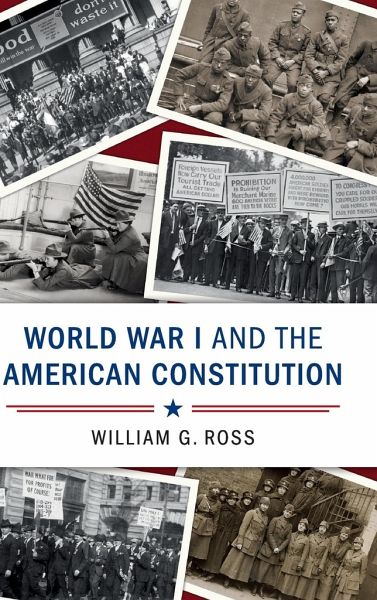
The First World War profoundly affected the American political system by transforming constitutional law and providing the predicate for the modern administrative state. In this groundbreaking study, William G. Ross examines the social, political, economic and legal forces that generated this rapid change. Ross explains how the war increased federal and state economic regulatory powers, transferred power from Congress to the President, and altered federalism by enhancing the powers of the federal government. He demonstrates how social changes generated by the war provided a catalyst for the expansion of personal liberties, including freedom of speech, freedom of the press, and the rights of women, racial minorities, and industrial workers. Through a study of constitutional law, gender, race, economics, labor, the prohibition movement, international relations, civil liberties, and society, this book provides a major contribution to our understanding of the development of the American Constitution.