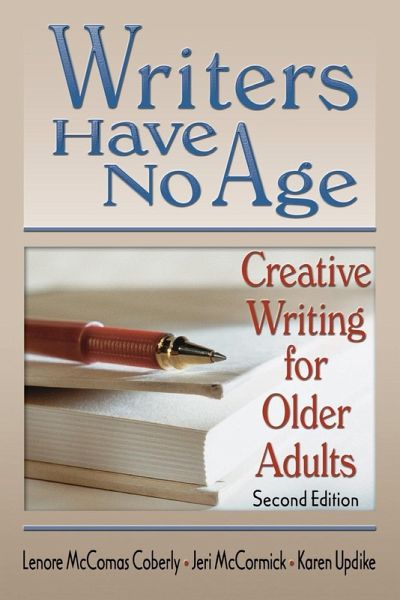
Writers Have No Age: Creative Writing for Older Adults, Second Edition is a book for writers by writers. Unlike the first edition, which was aimed at teachers of writing, this new edition is aimed at writers themselves. This book will help older writers value themselves and their potential, and increase the pleasure and satisfaction found in writing. With numerous exercises and assignments, resources and information, this book is an essential tool for beginners and professionals.
Writers Have No Age: Creative Writing for Older Adults, Second Edition is a book for writers by writers. Unlike the first edition, which was aimed at teachers of writing, this new edition is aimed at writers themselves. This book will help older writers value themselves and their potential, and increase the pleasure and satisfaction found in writing. With numerous exercises and assignments, resources and information, this book is an essential tool for beginners and professionals.
* Foreword (James T. Sykes) * Preface (Karen Updike) * Chapter 1. Why We Write (Jeri McCormick) (Discusses the motivations for writing, such as telling stories, the love of language, and sharing history) * Chapter 2. Alone or in a Group: Do Writers Need One Another? (Lenore McComas Coberly) (Explores the benefits of writers' groups and includes We Leave Behind Our Other Lives: An Essay, by Lenore McComas Coberly and Kindred Spirits and Acute Listeners, by Robin Chapman) * Chapter 3. The Work Begins (Jeri McCormick) (Presents practical steps for getting started by creating a workspace and work schedule and offers advice on approaching a first draft) * Chapter 4. Writing's a Snap (Karen Updike) (Satirizes distractions that plague the undisciplined writer) * Chapter 5. Come to Your Senses (Karen Updike) (Explores the value of listening to what our senses tell us) * Chapter 6. Mining Your Memory (Jeri McCormick) (Includes the topics History Is Not Finished with Us and Childhood: Another Kind of History, as exemplified by the poem A Girl Running, by Jeri McCormick) * Chapter 7. Focus (Jeri McCormick) (Explains the various writing forms, including essays, personal experience articles, fiction, and poetry) * Chapter 8. How a Poem Was Made (Karen Updike) (Tells the story of the creation of Karen Updike's poem Villanelle for Dropouts at 8:30 a.m.) * Chapter 9. Using Artwork As Inspiration (Karen Updike) (Describes how fine art can lead to inspiration in writing and includes Karen Updike's poem Portrait of Mrs. Pearce) * Chapter 10. Writing Free Verse (Jeri McCormick) (Explores the literary tradition of free verse and the challenge this presents to modern writers) * Chapter 11. The Long Haul (Lenore McComas Coberly) (Presents examples of how to continue with the writing process through revision) * Chapter 12. Ah, to See Others As They See Themselves (Lenore McComas Coberly) (Discusses the necessity of putting ourselves into our characters' heads in order to know them) * Chapter 13. The Rewards (Jeri McCormick) (Revisits the reasons for writing and what writers stand to gain by writing) * Chapter 14. Writing Groups in Nursing-Home Settings (Lenore McComas Coberly) (Examines ways to work successfully in nursing-home settings as professionals or volunteers) * Chapter 15. Marketing Adventures (Lenore McComas Coberly) (Discusses preparing a manuscript for submission, finding an appropriate market, and different market options, including as an example of the process the essay Serendipity, by Lenore McComas Coberly) * Chapter 16. On to Fiction (Lenore McComas Coberly) (Provides an example of breaking into the fiction market and includes the excerpt The Fellowship at Wysong's Clearing, from The Handywoman Stories, by Lenore McComas Coberly) * Appendix: Resources for Writers (Includes writing exercises, an editing checklist, and marketing information, such as how to find markets and a list of freelance-friendly publications) * Recommended Reading * Index
* Foreword (James T. Sykes) * Preface (Karen Updike) * Chapter 1. Why We Write (Jeri McCormick) (Discusses the motivations for writing, such as telling stories, the love of language, and sharing history) * Chapter 2. Alone or in a Group: Do Writers Need One Another? (Lenore McComas Coberly) (Explores the benefits of writers' groups and includes We Leave Behind Our Other Lives: An Essay, by Lenore McComas Coberly and Kindred Spirits and Acute Listeners, by Robin Chapman) * Chapter 3. The Work Begins (Jeri McCormick) (Presents practical steps for getting started by creating a workspace and work schedule and offers advice on approaching a first draft) * Chapter 4. Writing's a Snap (Karen Updike) (Satirizes distractions that plague the undisciplined writer) * Chapter 5. Come to Your Senses (Karen Updike) (Explores the value of listening to what our senses tell us) * Chapter 6. Mining Your Memory (Jeri McCormick) (Includes the topics History Is Not Finished with Us and Childhood: Another Kind of History, as exemplified by the poem A Girl Running, by Jeri McCormick) * Chapter 7. Focus (Jeri McCormick) (Explains the various writing forms, including essays, personal experience articles, fiction, and poetry) * Chapter 8. How a Poem Was Made (Karen Updike) (Tells the story of the creation of Karen Updike's poem Villanelle for Dropouts at 8:30 a.m.) * Chapter 9. Using Artwork As Inspiration (Karen Updike) (Describes how fine art can lead to inspiration in writing and includes Karen Updike's poem Portrait of Mrs. Pearce) * Chapter 10. Writing Free Verse (Jeri McCormick) (Explores the literary tradition of free verse and the challenge this presents to modern writers) * Chapter 11. The Long Haul (Lenore McComas Coberly) (Presents examples of how to continue with the writing process through revision) * Chapter 12. Ah, to See Others As They See Themselves (Lenore McComas Coberly) (Discusses the necessity of putting ourselves into our characters' heads in order to know them) * Chapter 13. The Rewards (Jeri McCormick) (Revisits the reasons for writing and what writers stand to gain by writing) * Chapter 14. Writing Groups in Nursing-Home Settings (Lenore McComas Coberly) (Examines ways to work successfully in nursing-home settings as professionals or volunteers) * Chapter 15. Marketing Adventures (Lenore McComas Coberly) (Discusses preparing a manuscript for submission, finding an appropriate market, and different market options, including as an example of the process the essay Serendipity, by Lenore McComas Coberly) * Chapter 16. On to Fiction (Lenore McComas Coberly) (Provides an example of breaking into the fiction market and includes the excerpt The Fellowship at Wysong's Clearing, from The Handywoman Stories, by Lenore McComas Coberly) * Appendix: Resources for Writers (Includes writing exercises, an editing checklist, and marketing information, such as how to find markets and a list of freelance-friendly publications) * Recommended Reading * Index
Es gelten unsere Allgemeinen Geschäftsbedingungen: www.buecher.de/agb
Impressum
www.buecher.de ist ein Internetauftritt der buecher.de internetstores GmbH
Geschäftsführung: Monica Sawhney | Roland Kölbl | Günter Hilger
Sitz der Gesellschaft: Batheyer Straße 115 - 117, 58099 Hagen
Postanschrift: Bürgermeister-Wegele-Str. 12, 86167 Augsburg
Amtsgericht Hagen HRB 13257
Steuernummer: 321/5800/1497
USt-IdNr: DE450055826