Critical introductions to a range of literary topics and genres. Writing Lives takes as its focus life writing, both autobiography and biography, discussing these genres specifically within the contexts of the lives and literary careers of writers, past and present. In addition to exploring the key characteristics of life writing, the book also examines the relationship between the lives of authors and the influence of these lives both on their own writing and on the reception of their work by contemporary and later readers. The book traces the origins of literary biography from its early roots to its position as a best-selling genre in its own right.…mehr
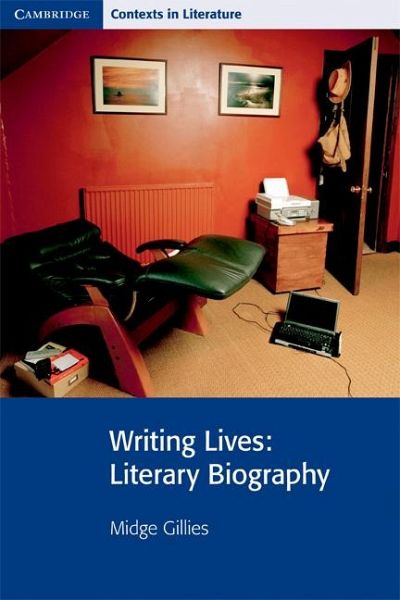
Critical introductions to a range of literary topics and genres. Writing Lives takes as its focus life writing, both autobiography and biography, discussing these genres specifically within the contexts of the lives and literary careers of writers, past and present. In addition to exploring the key characteristics of life writing, the book also examines the relationship between the lives of authors and the influence of these lives both on their own writing and on the reception of their work by contemporary and later readers. The book traces the origins of literary biography from its early roots to its position as a best-selling genre in its own right.
Introduction 1. Reading life writing: The influence of early biographers: Plutarch, Izaak Walton, John Aubrey, Samuel Johnson and James Boswell The Victorian approach Bloomsbury Autobiography Life Writing and the Second World War Women's autobiographical writing Family memoirs Biographical structure in the twentieth century and key writers Ethics and biography Assignments 2. Approaching the texts: How biographers choose their subjects Structuring a life New approaches to biography Other forms of life writing: letters and diaries, autobiographical fiction Sources Illustrations Assignments 3. Texts and extracts: Peter Ackroyd, from Dickens Maya Angelou, from I Know Why The Caged Bird Sings John Aubrey, from Brief Lives JG Ballard, from Empire of the Sun and Miracles of Life Vera Brittain, from Testament of Youth and Letters from a Lost Generation: First World War, Letters of Vera Brittain and Four Friends Elizabeth Gaskell, from The Life of Charlotte Brontë Brian Keenan, from An Evil Cradling Doris Lessing, from Alfred and Emily Primo Levi, from If This is a Man Alison Light, from Mrs Woolf and the Servants, Janet Malcolm, from The Silent Woman Sylvia Plath, 'Morning Song' Plutarch, from Parallel Lives James Shapiro, from 1599, A Year in the Live of William Shakespeare Zadie Smith and Ian McEwan, from Believer Book of Writers Talking to Writers Virginia Woolf, from The Diary of Virginia Woolf, volume III, 1925-30 4. Critical Approaches: The autobiographical writings of Doris Lessing Alfred and Emily Critical responses to Alfred and Emily Assignments 5. How to write about life writing: The writer and the reader Different perspectives: comparing texts The context of writing: facts and their emphasis Your own and other readers' interpretations Assignments 6. Resources: Chronology Further reading Websites Glossary Index Acknowledgements.
Introduction 1. Reading life writing: The influence of early biographers: Plutarch, Izaak Walton, John Aubrey, Samuel Johnson and James Boswell The Victorian approach Bloomsbury Autobiography Life Writing and the Second World War Women's autobiographical writing Family memoirs Biographical structure in the twentieth century and key writers Ethics and biography Assignments 2. Approaching the texts: How biographers choose their subjects Structuring a life New approaches to biography Other forms of life writing: letters and diaries, autobiographical fiction Sources Illustrations Assignments 3. Texts and extracts: Peter Ackroyd, from Dickens Maya Angelou, from I Know Why The Caged Bird Sings John Aubrey, from Brief Lives JG Ballard, from Empire of the Sun and Miracles of Life Vera Brittain, from Testament of Youth and Letters from a Lost Generation: First World War, Letters of Vera Brittain and Four Friends Elizabeth Gaskell, from The Life of Charlotte Brontë Brian Keenan, from An Evil Cradling Doris Lessing, from Alfred and Emily Primo Levi, from If This is a Man Alison Light, from Mrs Woolf and the Servants, Janet Malcolm, from The Silent Woman Sylvia Plath, 'Morning Song' Plutarch, from Parallel Lives James Shapiro, from 1599, A Year in the Live of William Shakespeare Zadie Smith and Ian McEwan, from Believer Book of Writers Talking to Writers Virginia Woolf, from The Diary of Virginia Woolf, volume III, 1925-30 4. Critical Approaches: The autobiographical writings of Doris Lessing Alfred and Emily Critical responses to Alfred and Emily Assignments 5. How to write about life writing: The writer and the reader Different perspectives: comparing texts The context of writing: facts and their emphasis Your own and other readers' interpretations Assignments 6. Resources: Chronology Further reading Websites Glossary Index Acknowledgements.
Es gelten unsere Allgemeinen Geschäftsbedingungen: www.buecher.de/agb
Impressum
www.buecher.de ist ein Internetauftritt der buecher.de internetstores GmbH
Geschäftsführung: Monica Sawhney | Roland Kölbl | Günter Hilger
Sitz der Gesellschaft: Batheyer Straße 115 - 117, 58099 Hagen
Postanschrift: Bürgermeister-Wegele-Str. 12, 86167 Augsburg
Amtsgericht Hagen HRB 13257
Steuernummer: 321/5800/1497
USt-IdNr: DE450055826