Stefan Berger / Kevin Passmore (eds.)Western Europe Since 1800
Writing National Histories
Western Europe Since 1800
Herausgeber: Berger, Stefan; Passmore, Kevin; Donovan, Mark
Stefan Berger / Kevin Passmore (eds.)Western Europe Since 1800
Writing National Histories
Western Europe Since 1800
Herausgeber: Berger, Stefan; Passmore, Kevin; Donovan, Mark
- Broschiertes Buch
- Merkliste
- Auf die Merkliste
- Bewerten Bewerten
- Teilen
- Produkt teilen
- Produkterinnerung
- Produkterinnerung
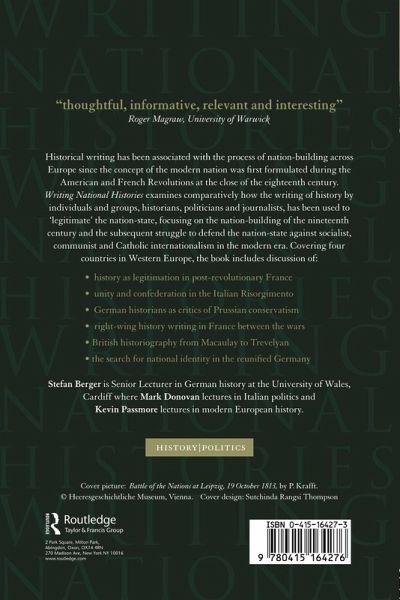
This book examines comparatively how the writing of history has been used to 'legitimate' the nation-state against socialist, communist and catholic internationalism in the modern era.
Andere Kunden interessierten sich auch für
Robert BideleuxThe Balkans45,99 €
Geoffrey RobertsThe Soviet Union in World Politics50,99 €
Stuart Woolf (ed.)Nationalism in Europe52,99 €
Alison OramHer Husband was a Woman!52,99 €
Mark FenemoreFighting the Cold War in Post-Blockade, Pre-Wall Berlin51,99 €
Isaac Don LevineThe Resurrected Nations; Short Histories of the Peoples Freed by the Great war and Statements of Their National Claims22,99 €
Brian CarrollWhen to Stop the Cheering?62,99 €-
-
-
This book examines comparatively how the writing of history has been used to 'legitimate' the nation-state against socialist, communist and catholic internationalism in the modern era.
Produktdetails
- Produktdetails
- Verlag: Routledge
- Seitenzahl: 332
- Erscheinungstermin: 3. Dezember 1998
- Englisch
- Abmessung: 234mm x 156mm x 18mm
- Gewicht: 506g
- ISBN-13: 9780415164276
- ISBN-10: 0415164273
- Artikelnr.: 21238229
- Herstellerkennzeichnung
- Libri GmbH
- Europaallee 1
- 36244 Bad Hersfeld
- gpsr@libri.de
- Verlag: Routledge
- Seitenzahl: 332
- Erscheinungstermin: 3. Dezember 1998
- Englisch
- Abmessung: 234mm x 156mm x 18mm
- Gewicht: 506g
- ISBN-13: 9780415164276
- ISBN-10: 0415164273
- Artikelnr.: 21238229
- Herstellerkennzeichnung
- Libri GmbH
- Europaallee 1
- 36244 Bad Hersfeld
- gpsr@libri.de
Stefan Berger is Senior Lecturer in German history at the University of Wales, Cardiff, where Mark Donovan lectures in Italian politics and Kevin Passmore lectures in modern European history.
PART I Comparative perspectives 1 Apologias for the nation-state in Western
Europe since 1800 2 Nationalism and historiography, 1789-1996: the German
example in historical perspective 3 Literature, liberty and life of the
nation: British historiography from Macaulay to Trevelyan PART II The age
of bourgeois revolution 4 History as a principle of legitimation in France
(1820-48) 5 National unification and narrative unity: the case of Ranke's
German History 6 Unity and confederation in the Italian Risorgimento: the
case of Carlo Cattaneo PART III The age of the masses 7 Taine and the
nation-state 8 'Prussians in a good sense': German historians as critics of
Prussian conservatism, 1890-1920 9 The search for a 'national' history:
Italian historiographical trends following unification PART IV Liberal
democracy and antifascism (1918-45) 10 Marc Bloch as a critic of
historiographical nationalism in the interwar years 11 From antifascist to
Volkshistoriker: demos and ethnos in the political thought of Fritz Rörig,
1921-45 12 Reclaiming Italy? Antifascist historians and history in Justice
and Liberty PART V Fascist historiography and the nation-state 13
Right-wing historiographical models in France, 1918-45 14 German
historiography under National Socialism: dreams of a powerful nation-state
and German Volkstum come true 15 Gioacchino Volpe and fascist
historiography in Italy PART VI The Cold War years 203 16 Rebuilding
France: Gaullist historiography, the rise-fall myth and French identity
(1945-58) 17 Dividing the past, defining the present: historians and
national identity in the two Germanies 18 A neglected question: Historians
and the Italian national state (1945-95) PART VII Contemporary trends 19
Historians and the nation in contemporary France 20 Historians and the
search for national identity in the reunified Germany 21 Historians and the
'First Republic' PART VIII Conclusion 22 Historians and the nation-state:
some conclusions
Europe since 1800 2 Nationalism and historiography, 1789-1996: the German
example in historical perspective 3 Literature, liberty and life of the
nation: British historiography from Macaulay to Trevelyan PART II The age
of bourgeois revolution 4 History as a principle of legitimation in France
(1820-48) 5 National unification and narrative unity: the case of Ranke's
German History 6 Unity and confederation in the Italian Risorgimento: the
case of Carlo Cattaneo PART III The age of the masses 7 Taine and the
nation-state 8 'Prussians in a good sense': German historians as critics of
Prussian conservatism, 1890-1920 9 The search for a 'national' history:
Italian historiographical trends following unification PART IV Liberal
democracy and antifascism (1918-45) 10 Marc Bloch as a critic of
historiographical nationalism in the interwar years 11 From antifascist to
Volkshistoriker: demos and ethnos in the political thought of Fritz Rörig,
1921-45 12 Reclaiming Italy? Antifascist historians and history in Justice
and Liberty PART V Fascist historiography and the nation-state 13
Right-wing historiographical models in France, 1918-45 14 German
historiography under National Socialism: dreams of a powerful nation-state
and German Volkstum come true 15 Gioacchino Volpe and fascist
historiography in Italy PART VI The Cold War years 203 16 Rebuilding
France: Gaullist historiography, the rise-fall myth and French identity
(1945-58) 17 Dividing the past, defining the present: historians and
national identity in the two Germanies 18 A neglected question: Historians
and the Italian national state (1945-95) PART VII Contemporary trends 19
Historians and the nation in contemporary France 20 Historians and the
search for national identity in the reunified Germany 21 Historians and the
'First Republic' PART VIII Conclusion 22 Historians and the nation-state:
some conclusions
PART I Comparative perspectives 1 Apologias for the nation-state in Western
Europe since 1800 2 Nationalism and historiography, 1789-1996: the German
example in historical perspective 3 Literature, liberty and life of the
nation: British historiography from Macaulay to Trevelyan PART II The age
of bourgeois revolution 4 History as a principle of legitimation in France
(1820-48) 5 National unification and narrative unity: the case of Ranke's
German History 6 Unity and confederation in the Italian Risorgimento: the
case of Carlo Cattaneo PART III The age of the masses 7 Taine and the
nation-state 8 'Prussians in a good sense': German historians as critics of
Prussian conservatism, 1890-1920 9 The search for a 'national' history:
Italian historiographical trends following unification PART IV Liberal
democracy and antifascism (1918-45) 10 Marc Bloch as a critic of
historiographical nationalism in the interwar years 11 From antifascist to
Volkshistoriker: demos and ethnos in the political thought of Fritz Rörig,
1921-45 12 Reclaiming Italy? Antifascist historians and history in Justice
and Liberty PART V Fascist historiography and the nation-state 13
Right-wing historiographical models in France, 1918-45 14 German
historiography under National Socialism: dreams of a powerful nation-state
and German Volkstum come true 15 Gioacchino Volpe and fascist
historiography in Italy PART VI The Cold War years 203 16 Rebuilding
France: Gaullist historiography, the rise-fall myth and French identity
(1945-58) 17 Dividing the past, defining the present: historians and
national identity in the two Germanies 18 A neglected question: Historians
and the Italian national state (1945-95) PART VII Contemporary trends 19
Historians and the nation in contemporary France 20 Historians and the
search for national identity in the reunified Germany 21 Historians and the
'First Republic' PART VIII Conclusion 22 Historians and the nation-state:
some conclusions
Europe since 1800 2 Nationalism and historiography, 1789-1996: the German
example in historical perspective 3 Literature, liberty and life of the
nation: British historiography from Macaulay to Trevelyan PART II The age
of bourgeois revolution 4 History as a principle of legitimation in France
(1820-48) 5 National unification and narrative unity: the case of Ranke's
German History 6 Unity and confederation in the Italian Risorgimento: the
case of Carlo Cattaneo PART III The age of the masses 7 Taine and the
nation-state 8 'Prussians in a good sense': German historians as critics of
Prussian conservatism, 1890-1920 9 The search for a 'national' history:
Italian historiographical trends following unification PART IV Liberal
democracy and antifascism (1918-45) 10 Marc Bloch as a critic of
historiographical nationalism in the interwar years 11 From antifascist to
Volkshistoriker: demos and ethnos in the political thought of Fritz Rörig,
1921-45 12 Reclaiming Italy? Antifascist historians and history in Justice
and Liberty PART V Fascist historiography and the nation-state 13
Right-wing historiographical models in France, 1918-45 14 German
historiography under National Socialism: dreams of a powerful nation-state
and German Volkstum come true 15 Gioacchino Volpe and fascist
historiography in Italy PART VI The Cold War years 203 16 Rebuilding
France: Gaullist historiography, the rise-fall myth and French identity
(1945-58) 17 Dividing the past, defining the present: historians and
national identity in the two Germanies 18 A neglected question: Historians
and the Italian national state (1945-95) PART VII Contemporary trends 19
Historians and the nation in contemporary France 20 Historians and the
search for national identity in the reunified Germany 21 Historians and the
'First Republic' PART VIII Conclusion 22 Historians and the nation-state:
some conclusions