Andere Kunden interessierten sich auch für
 The Cambridge Companion to War Writing41,99 €
 Missionary Writing and Empire, 1800 186060,99 €
 Samuel Richardson and the Art of Letter-Writing104,99 €
 Wordsworth Writing105,99 €
 Writing Performative Shakespeares42,99 €
 Selected Writings of Daniel Defoe42,99 €
 Dickensiana: A Bibliography of the Literature Relating to Charles Dickens and His Writings38,99 €
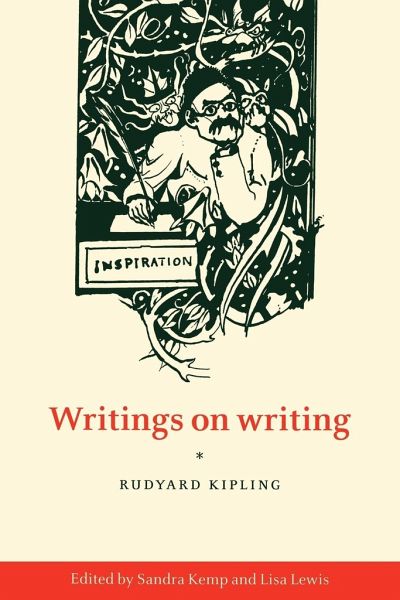
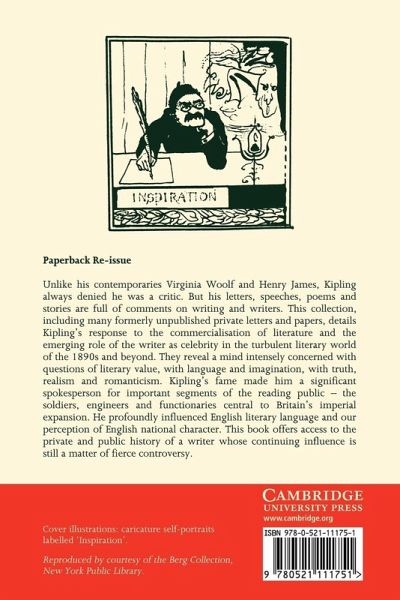
Unlike his contemporaries Virginia Woolf and Henry James, Kipling always denied he was a critic. But his letters, speeches, and stories are full of comments on writing and writers. This collection, including many formerly unpublished private letters and papers, details Kipling's response to the commercialisation of literature and the emerging role of the writer as celebrity in the turbulent literary world of the 1890s and beyond. They reveal a mind intensely concerned with questions of literary value, with language and imagination, with truth, realism, and romanticism. Kipling's fame made him a significant spokesperson for important segments of the reading public - the soldiers, engineers, and functionaries central to Britain's imperial expansion. He profoundly influenced English literary language and our perception of English national character. This book offers access to the private and public history of a writer whose continuing influence is still a matter of fierce controversy.
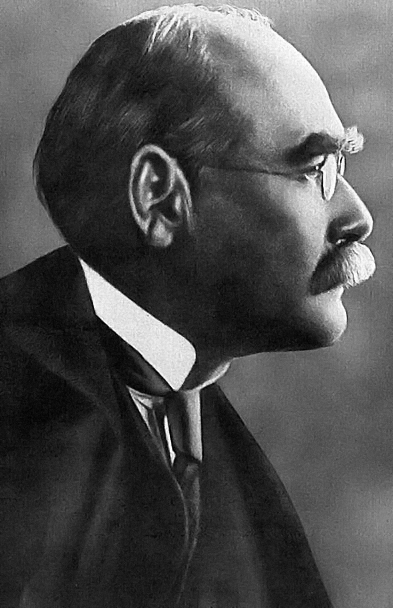
Joseph Rudyard Kipling (1865 - 1936) was an English journalist, short-story writer, poet and novelist. Kipling's works of fiction include The Jungle Book (1894), Kim (1901) and many short stories, including "The Man Who Would Be King" (1888). His poems include "Mandalay" (1890), "Gunga Din" (1890), "The Gods of the Copybook Headings" (1919), "The White Man's Burden" (1899) and "If-" (1910). He is regarded as a major innovator in the art of the short story; his children's books are classics of children's literature and one critic described his work as exhibiting "a versatile and luminous narrative gift". Kipling was one of the most popular writers in the United Kingdom, in both prose and verse, in the late 19th and early 20th centuries. Henry James said: "Kipling strikes me personally as the most complete man of genius, as distinct from fine intelligence, that I have ever known." In 1907, at the age of 42, he was awarded the Nobel Prize in Literature, making him the first English-language writer to receive the prize and its youngest recipient to date. He was also sounded out for the British Poet Laureateship and on several occasions for a knighthood, both of which he declined.