
Andere Kunden interessierten sich auch für
 ZEUS. Einen schlafenden Gott nicht wecken56,20 €
 ZEUS. Ne réveillez pas un Dieu endormi37,99 €
 ZEUS. Nie budzi¿ ¿pi¿cego Boga36,99 €
 ZEUS. Non svegliare un Dio che dorme37,99 €
 ZEVS. Ne budi spqschego Boga36,99 €
 Rain with the taste of love17,99 €
 Experiencing God Through Spiritual Formation45,99 €





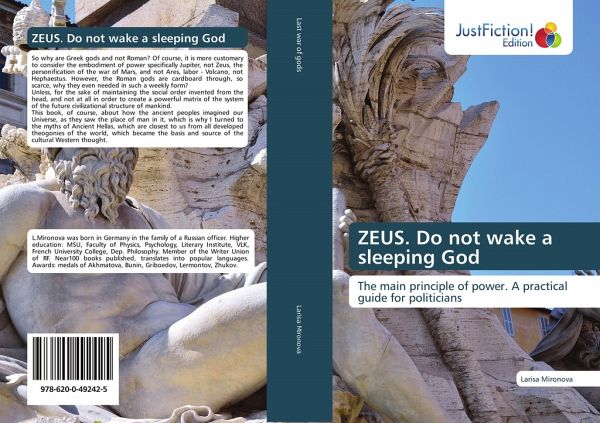
So why are Greek gods and not Roman? Of course, it is more customary to consider the embodiment of power specifically Jupiter, not Zeus, the personification of the war of Mars, and not Ares, labor - Volcano, not Hephaestus. However, the Roman gods are cardboard through, so scarce, why they even needed in such a weekly form? Unless, for the sake of maintaining the social order invented from the head, and not at all in order to create a powerful matrix of the system of the future civilizational structure of mankind. This book, of course, about how the ancient peoples imagined our Universe, as they saw the place of man in it, which is why I turned to the myths of Ancient Hellas, which are closest to us from all developed theogonies of the world, which became the basis and source of the cultural Western thought.