7,99 €
7,99 €
inkl. MwSt.
Sofort per Download lieferbar

4 °P sammeln
7,99 €
Als Download kaufen
7,99 €
inkl. MwSt.
Sofort per Download lieferbar
4 °P sammeln
Jetzt verschenken
Alle Infos zum eBook verschenken
7,99 €
inkl. MwSt.
Sofort per Download lieferbar
Alle Infos zum eBook verschenken
4 °P sammeln

Andere Kunden interessierten sich auch für
") The Millionth Chance: The Story of the R. 101 (eBook, ePUB)4,49 €
The Millionth Chance: The Story of the R. 101 (eBook, ePUB)4,49 €") Voyages, the Age of Engines (eBook, ePUB)26,95 €
Voyages, the Age of Engines (eBook, ePUB)26,95 €") The Railway Conquest of the World (eBook, ePUB)2,13 €
The Railway Conquest of the World (eBook, ePUB)2,13 €") The American Postal Network, 1792-1914 Vol 4 (eBook, ePUB)52,95 €
The American Postal Network, 1792-1914 Vol 4 (eBook, ePUB)52,95 €") Respectability on the Line (eBook, ePUB)0,00 €
Respectability on the Line (eBook, ePUB)0,00 €") ALL THE LIVELONG DAY (eBook, ePUB)7,99 €
ALL THE LIVELONG DAY (eBook, ePUB)7,99 €") The Most Valuable Asset of the Reich (eBook, ePUB)22,95 €
The Most Valuable Asset of the Reich (eBook, ePUB)22,95 €



- Review by Ric Mixter, maritime historian, author, and filmmaker known for documenting Great Lakes shipwrecks and history and author of Tattletale Sounds.
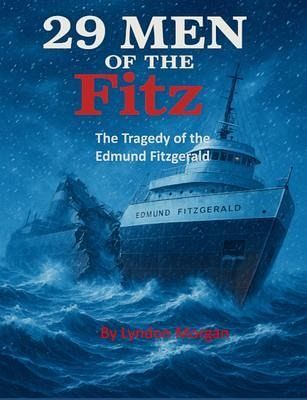
"The Novel, 29 men of the Fitz, by Lyndon Morgan, takes a different approach to current books published, offering insights into the Fitz crew after interviewing surviving relatives. Chapter 1 of the book starts with Lyndon's imagined conversation in the Delta submersible between me and David Slater in 1995. This was done to establish some critical facts. He uses: NOAA weather predictions, the locations each hour of the Fitz, Anderson and Sykes, and the likely state of mind of crew members, to give a persuasive insight into the critical moments on deck of the doomed ship. Although this is not a journalistic historical account, the book is well researched and a welcomed narrative that offers Lyndon's expertise in engineering at the end of the book"
The author worked with Ray Sheldon, former Captain of the Joseph L Block, and his wife Peggy. Their insights on reading a draft of the book helped the author get some simple facts right. "Don't call a Great Lakes freighter a ship, it's a boat. Don't call a Great Lakes freighter cook a chef, they are cooks, and so on.
It can be argued that the Mighty Fitz is still in our consciousness because of Gordon Lightfoot's song. The musical group Lynddrush (search YouTube) consisting of the author, his wife, and best friend has continued this tradition with four original heartfelt songs. The song Daddies brought tears to the eyes of Pam Johnson, daughter of the Fitz's cook, Bob Rafftery. It was written for her.
On the 50th anniversary of the sinking of the Edmund Fitzgeralsd this author brings the poetic elegance of two other novels he has written to this book: The Cello and Ruby Ring.
One of the objectives of this historical fiction novel was to bring out the lack of closure by families that the author interviewed. They still grieve every year as twenty-nine bells are rung at the Great Lakes Shipwreck Museum at Whitefish Point in the upper peninsula of Michigan. Each ring is accompanied by a tear and an indelible memory of their loved ones.
In addition, because of the author's engineer background, with a degree from Imperial College London in engineering, and 45 years practicing engineering in the USA, he was able to bring a unique perspective and actual engineering calculations to throw light on why the Fitz sank and some of the myths around it. Blaming the crew for not clamping the cargo hold covers is dispelled. Structural failure and subsequent bucking of the front cargo hold hatches by the waves called the three sisters is proved to be the main factor that broke it in half on the surface and her subsequent sinking.
The uniqueness of this book is that it is a novel, not a documentary, and seeks to bring alive the crew as not merely facts or journalist figures, but as real people who had goals and objectives like all of us have in life, but were snubbed out by a gale in November that has claimed so many lives on the Great Lakes.
"The Novel, 29 men of the Fitz, by Lyndon Morgan, takes a different approach to current books published, offering insights into the Fitz crew after interviewing surviving relatives. Chapter 1 of the book starts with Lyndon's imagined conversation in the Delta submersible between me and David Slater in 1995. This was done to establish some critical facts. He uses: NOAA weather predictions, the locations each hour of the Fitz, Anderson and Sykes, and the likely state of mind of crew members, to give a persuasive insight into the critical moments on deck of the doomed ship. Although this is not a journalistic historical account, the book is well researched and a welcomed narrative that offers Lyndon's expertise in engineering at the end of the book"
The author worked with Ray Sheldon, former Captain of the Joseph L Block, and his wife Peggy. Their insights on reading a draft of the book helped the author get some simple facts right. "Don't call a Great Lakes freighter a ship, it's a boat. Don't call a Great Lakes freighter cook a chef, they are cooks, and so on.
It can be argued that the Mighty Fitz is still in our consciousness because of Gordon Lightfoot's song. The musical group Lynddrush (search YouTube) consisting of the author, his wife, and best friend has continued this tradition with four original heartfelt songs. The song Daddies brought tears to the eyes of Pam Johnson, daughter of the Fitz's cook, Bob Rafftery. It was written for her.
On the 50th anniversary of the sinking of the Edmund Fitzgeralsd this author brings the poetic elegance of two other novels he has written to this book: The Cello and Ruby Ring.
One of the objectives of this historical fiction novel was to bring out the lack of closure by families that the author interviewed. They still grieve every year as twenty-nine bells are rung at the Great Lakes Shipwreck Museum at Whitefish Point in the upper peninsula of Michigan. Each ring is accompanied by a tear and an indelible memory of their loved ones.
In addition, because of the author's engineer background, with a degree from Imperial College London in engineering, and 45 years practicing engineering in the USA, he was able to bring a unique perspective and actual engineering calculations to throw light on why the Fitz sank and some of the myths around it. Blaming the crew for not clamping the cargo hold covers is dispelled. Structural failure and subsequent bucking of the front cargo hold hatches by the waves called the three sisters is proved to be the main factor that broke it in half on the surface and her subsequent sinking.
The uniqueness of this book is that it is a novel, not a documentary, and seeks to bring alive the crew as not merely facts or journalist figures, but as real people who had goals and objectives like all of us have in life, but were snubbed out by a gale in November that has claimed so many lives on the Great Lakes.
Dieser Download kann aus rechtlichen Gründen nur mit Rechnungsadresse in A, D ausgeliefert werden.