19,99 €
inkl. MwSt.
Sofort per Download lieferbar
0 °P sammeln

Andere Kunden interessierten sich auch für
") Steam Turbines (eBook, ePUB)19,99 €
Steam Turbines (eBook, ePUB)19,99 €") The Stoker's Catechism (eBook, ePUB)19,99 €
The Stoker's Catechism (eBook, ePUB)19,99 € (eBook, ePUB)") The evolution of the steam locomotive (1803 to 1898) (eBook, ePUB)19,99 €
The evolution of the steam locomotive (1803 to 1898) (eBook, ePUB)19,99 €") Practical Quality Management in the Chemical Process Industry (eBook, ePUB)178,95 €
Practical Quality Management in the Chemical Process Industry (eBook, ePUB)178,95 €") History of Steam on the Erie Canal (eBook, ePUB)19,99 €
History of Steam on the Erie Canal (eBook, ePUB)19,99 €") Steam-ships (eBook, ePUB)19,99 €
Steam-ships (eBook, ePUB)19,99 €") Steam Engines (eBook, ePUB)19,99 €
Steam Engines (eBook, ePUB)19,99 €






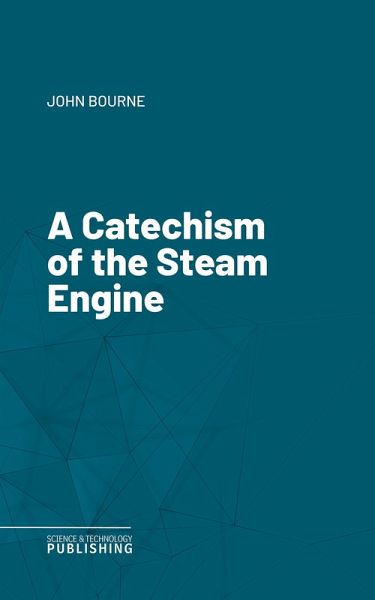
A Catechism of the Steam Engine by John Bourne is a comprehensive and accessible guide to the principles, construction, and operation of steam engines, written in the form of a question-and-answer catechism. First published in the 19th century, this book was designed to educate engineers, mechanics, and anyone interested in the rapidly advancing technology of steam power during the Industrial Revolution. Bourne's work covers a wide range of topics, including the history and development of the steam engine, the scientific principles underlying its operation, and detailed explanations of its various components such as boilers, cylinders, pistons, valves, and condensers. The book is structured to facilitate learning, with each chapter presenting a series of questions followed by clear, concise answers. This format makes complex technical information approachable for readers of varying backgrounds, from apprentices and students to experienced engineers. Bourne delves into the practical aspects of steam engine maintenance and troubleshooting, offering advice on common problems and their solutions. He also discusses the different types of steam engines in use at the time, including stationary, locomotive, and marine engines, and explains the advantages and disadvantages of each. In addition to technical details, A Catechism of the Steam Engine provides valuable historical context, tracing the evolution of steam technology and its transformative impact on industry and society. The book is richly illustrated with diagrams and engravings that clarify the mechanical concepts described in the text. Bourne's authoritative yet accessible style, combined with his thorough knowledge of the subject, makes this work an essential resource for anyone interested in the mechanics and history of steam engines. Today, it remains a valuable reference for historians, engineers, and enthusiasts of industrial technology, offering a fascinating glimpse into the world of 19th-century engineering and innovation.
Dieser Download kann aus rechtlichen Gründen nur mit Rechnungsadresse in A, B, BG, CY, CZ, D, DK, EW, E, FIN, F, GR, HR, H, IRL, I, LT, L, LR, M, NL, PL, P, R, S, SLO, SK ausgeliefert werden.