Sie sind bereits eingeloggt. Klicken Sie auf 2. tolino select Abo, um fortzufahren.
Bitte loggen Sie sich zunächst in Ihr Kundenkonto ein oder registrieren Sie sich bei bücher.de, um das eBook-Abo tolino select nutzen zu können.
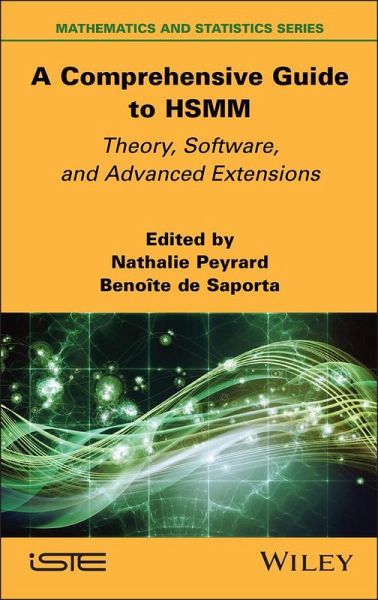
Hidden Semi-Markov Models (HSMMs) have been extensively used for diverse applications where the objective is to analyze time series whose dynamics can be explained by a hidden process. A Comprehensive Guide to HSMM offers an accessible introduction to the framework of HSMM, covering the main methods and theoretical results for maximum likelihood estimation in HSMM. It also includes a unique review of existing R and Python software for HSMM estimation. The book then introduces less classical related topics, such as multi-chain HSMM and controlled HSMM, with an emphasis on the challenges related…mehr
Hidden Semi-Markov Models (HSMMs) have been extensively used for diverse applications where the objective is to analyze time series whose dynamics can be explained by a hidden process. A Comprehensive Guide to HSMM offers an accessible introduction to the framework of HSMM, covering the main methods and theoretical results for maximum likelihood estimation in HSMM. It also includes a unique review of existing R and Python software for HSMM estimation. The book then introduces less classical related topics, such as multi-chain HSMM and controlled HSMM, with an emphasis on the challenges related to computational complexity. This book is primarily intended for master's and PhD students, researchers and academic faculty in the fields of statistics, applied probability, graphical models, computer science and connected domains. It is also meant to be accessible to practitioners involved in modeling, analysis or control of time series in the fields of reliability, theoretical ecology, signal processing, finance, medicine and epidemiology.
Dieser Download kann aus rechtlichen Gründen nur mit Rechnungsadresse in D ausgeliefert werden.
Die Herstellerinformationen sind derzeit nicht verfügbar.
Autorenporträt
Nathalie Peyrard is Senior Scientist at INRAE, Toulouse, France. Her research includes computational statistics in models with latent variables, with applications in ecology. Benoîte de Saporta is Professor of Applied Mathematics at the University of Montpellier, France. Her research includes applied probability (Markov processes, optimal stochastic control) and statistics (inference for partially hidden processes).
Inhaltsangabe
Introduction xi Benoîte DESAPORTA, Jean-Baptiste DURAND, Alain FRANC and Nathalie PEYRARD Chapter 1. Monochain HSMM 1 Jean-Baptiste DURAND, Alain FRANC, Nathalie PEYRARD, Nicolas VERGNE and Irene VOTSI 1.1. Introduction 1 1.2. HSMM framework 2 1.3. Inferential topics for HSMMs 11 1.4. Two toy examples reappearing throughout the book 22 1.5. Reliability 24 1.6. Introducing mixed effects into HSMMs 27 1.7. Conclusion/discussion 38 1.8. Notations 39 1.9. Acknowledgments 40 1.10. Appendix: EM algorithm for a monochain HMM 40 1.11. References 43 Chapter 2. Review of HSMM Rand Python Softwares 47 Caroline BÉRARD, Marie-Josée CROS, Jean-Baptiste DURAND, Corentin LOTHODÉ, Sandra PLANCADE, Ronan TRÉPOS and Nicolas VERGNE 2.1. Introduction 47 2.2. Software around HSMMs: state of the art 48 2.3. Comparative overview: Rand Python packages for HSMM. 62 2.4. Illustration of the use of two packages for the toy examples 66 2.5. Conclusion 75 2.6.References 75 Chapter 3. Multichain HMM 79 Hanna BACAVE, Jean-Baptiste DURAND, Alain FRANC, Nathalie PEYRARD, Sandra PLANCADE and Régis SABBADIN 3.1. Introduction 79 3.2. Different concepts of MHMM 81 3.3. Examples of models of class 1to1-MHMM-CI 90 3.4. Metapopulation dynamics and MHMM 96 3.5. Parameter inference in MHMMs with the EM algorithm 98 3.6. Approximate inference in MHMMs 106 3.7. Discussion and conclusion. 111 3.8. Notations 113 3.9. References. 114 Chapter 4. Multichain HSMM 117 Jean-Baptiste DURAND, Nathalie PEYRARD, Sandra PLANCADE and Régis SABBADIN 4.1. Multichain HSMM in literature 117 4.2. Formalization of an explicit duration coupled semi-Markov model with interaction at jump events 118 4.3. Definition of coupled SMM classes based on a time-indexed representation 122 4.4. Extension of some MHMM classes to semi-Markov framework 133 4.5. Discussion and conclusion 136 4.6. Notations 136 4.7. Appendix: proof of proposition 1 138 4.8. References 142 Chapter 5. The Forward-backward Algorithm with Matrix Calculus 143 Alain FRANC 5.1. Introduction 144 5.2. UHMDs, with elimination and marginalization algorithms 145 5.3. Complements on the complexity of elimination and marginalization algorithms for an UHMD 150 5.4. Hidden Markov model 154 5.5. Multichain hidden Markov models 159 5.6. Hidden semi-Markov models 166 5.7. Multichain HSMM 172 5.8. Conclusions and perspectives 176 5.9. Notations 178 5.10. Acknowledgments 179 5.11. Appendix: Viterbi algorithm and most likely state 179 5.12. References 184 Chapter 6. Controlled Hidden Semi-Markov Models 185 Alice CLEYNEN, Benoîte DESAPORTA, Orlane ROSSINI, Régis SABBADIN and Amélie VERNAY 6.1. Introduction 185 6.2. Markov decision processes 186 6.3. Piecewise deterministic Markov processes 200 6.4. Controlled PDMPs as members of the MDP family 215 6.5. Concluding remarks and open questions 222 6.6. Notations 223 6.7. Acknowledgments 225 6.8. References 226 List of Authors 231 Index 233
Introduction xi Benoîte DESAPORTA, Jean-Baptiste DURAND, Alain FRANC and Nathalie PEYRARD Chapter 1. Monochain HSMM 1 Jean-Baptiste DURAND, Alain FRANC, Nathalie PEYRARD, Nicolas VERGNE and Irene VOTSI 1.1. Introduction 1 1.2. HSMM framework 2 1.3. Inferential topics for HSMMs 11 1.4. Two toy examples reappearing throughout the book 22 1.5. Reliability 24 1.6. Introducing mixed effects into HSMMs 27 1.7. Conclusion/discussion 38 1.8. Notations 39 1.9. Acknowledgments 40 1.10. Appendix: EM algorithm for a monochain HMM 40 1.11. References 43 Chapter 2. Review of HSMM Rand Python Softwares 47 Caroline BÉRARD, Marie-Josée CROS, Jean-Baptiste DURAND, Corentin LOTHODÉ, Sandra PLANCADE, Ronan TRÉPOS and Nicolas VERGNE 2.1. Introduction 47 2.2. Software around HSMMs: state of the art 48 2.3. Comparative overview: Rand Python packages for HSMM. 62 2.4. Illustration of the use of two packages for the toy examples 66 2.5. Conclusion 75 2.6.References 75 Chapter 3. Multichain HMM 79 Hanna BACAVE, Jean-Baptiste DURAND, Alain FRANC, Nathalie PEYRARD, Sandra PLANCADE and Régis SABBADIN 3.1. Introduction 79 3.2. Different concepts of MHMM 81 3.3. Examples of models of class 1to1-MHMM-CI 90 3.4. Metapopulation dynamics and MHMM 96 3.5. Parameter inference in MHMMs with the EM algorithm 98 3.6. Approximate inference in MHMMs 106 3.7. Discussion and conclusion. 111 3.8. Notations 113 3.9. References. 114 Chapter 4. Multichain HSMM 117 Jean-Baptiste DURAND, Nathalie PEYRARD, Sandra PLANCADE and Régis SABBADIN 4.1. Multichain HSMM in literature 117 4.2. Formalization of an explicit duration coupled semi-Markov model with interaction at jump events 118 4.3. Definition of coupled SMM classes based on a time-indexed representation 122 4.4. Extension of some MHMM classes to semi-Markov framework 133 4.5. Discussion and conclusion 136 4.6. Notations 136 4.7. Appendix: proof of proposition 1 138 4.8. References 142 Chapter 5. The Forward-backward Algorithm with Matrix Calculus 143 Alain FRANC 5.1. Introduction 144 5.2. UHMDs, with elimination and marginalization algorithms 145 5.3. Complements on the complexity of elimination and marginalization algorithms for an UHMD 150 5.4. Hidden Markov model 154 5.5. Multichain hidden Markov models 159 5.6. Hidden semi-Markov models 166 5.7. Multichain HSMM 172 5.8. Conclusions and perspectives 176 5.9. Notations 178 5.10. Acknowledgments 179 5.11. Appendix: Viterbi algorithm and most likely state 179 5.12. References 184 Chapter 6. Controlled Hidden Semi-Markov Models 185 Alice CLEYNEN, Benoîte DESAPORTA, Orlane ROSSINI, Régis SABBADIN and Amélie VERNAY 6.1. Introduction 185 6.2. Markov decision processes 186 6.3. Piecewise deterministic Markov processes 200 6.4. Controlled PDMPs as members of the MDP family 215 6.5. Concluding remarks and open questions 222 6.6. Notations 223 6.7. Acknowledgments 225 6.8. References 226 List of Authors 231 Index 233
Es gelten unsere Allgemeinen Geschäftsbedingungen: www.buecher.de/agb
Impressum
www.buecher.de ist ein Internetauftritt der buecher.de internetstores GmbH
Geschäftsführung: Monica Sawhney | Roland Kölbl | Günter Hilger
Sitz der Gesellschaft: Batheyer Straße 115 - 117, 58099 Hagen
Postanschrift: Bürgermeister-Wegele-Str. 12, 86167 Augsburg
Amtsgericht Hagen HRB 13257
Steuernummer: 321/5800/1497
USt-IdNr: DE450055826