Sie sind bereits eingeloggt. Klicken Sie auf 2. tolino select Abo, um fortzufahren.
Bitte loggen Sie sich zunächst in Ihr Kundenkonto ein oder registrieren Sie sich bei bücher.de, um das eBook-Abo tolino select nutzen zu können.
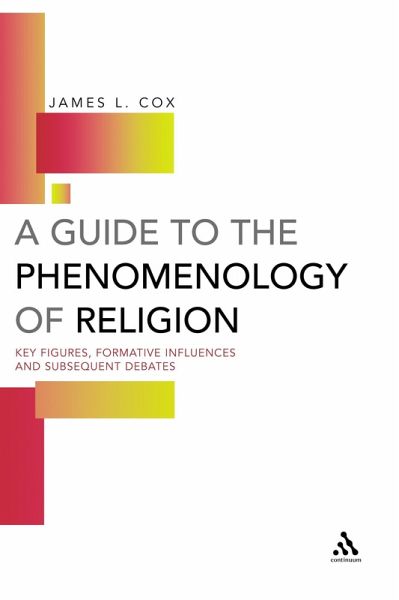
The phenomenological method in the study of religions has provided the linchpin supporting the argument that Religious Studies constitutes an academic discipline in its own right and thus that it is irreducible either to theology or to the social sciences. This book examines the figures whom the author regards as having been most influential in creating a phenomenology of religion. Background factors drawn from philosophy, theology and the social sciences are traced before examining the thinking of scholars within the Dutch, British and North American 'schools' of religious phenomenology.
The phenomenological method in the study of religions has provided the linchpin supporting the argument that Religious Studies constitutes an academic discipline in its own right and thus that it is irreducible either to theology or to the social sciences. This book examines the figures whom the author regards as having been most influential in creating a phenomenology of religion. Background factors drawn from philosophy, theology and the social sciences are traced before examining the thinking of scholars within the Dutch, British and North American 'schools' of religious phenomenology.
Die Herstellerinformationen sind derzeit nicht verfügbar.
Autorenporträt
James L. Cox isEmeritus Professor of Religious Studies, University of Edinburgh, UK and Adjunct Professor in the Religion and Society Research Cluster, Western Sydney University, Australia.
Inhaltsangabe
Introduction Part One: Formative Influences Chapter 1: Edmund Husserl and Philosophical Phenomenology From Descartes to Kant The Significance of Hegel Husserl and the Transformation to Idealism Husserl's Phenomenological Method Chapter 2: Theological Influences: The School of Albrecht Ritschl The Theological Climate at the Time of Ritschl Ritschl's Theology of Religions Wilhelm Herrmann and Religion as Communion with God Ernst Troeltsch: A Bridge to the Social Sciences Chapter 3: Reductionism and the Social Sciences Evolutionary Assumptions in the Study of Primitive Religions Projectionist Theories as Explaining Religion Classic Cases in Social Scientific Reductionism: Durkheim and Freud Part Two: Key Phenomenological Schools Chapter 4: Foundational Figures in the Dutch School of Phenomenology Background to the Study of Religions in the Netherlands C P Tiele and P D Chantepie de la Saussaye: Christianity as a World Theology W Brede Kristensen as Advocate of the Believer Gerardus van der Leeuw and the Formation of Phenomenological Typologies C J Bleeker's Universal Structure of Religion Chapter 5: Phenomenology in the United Kingdom The African Connection: Parrinder, McKenzie, Walls and Harold Turner E O James and Ninian Smart: From Comparative Religion to Phenomenology Frank Whaling and the Study of Religions in Edinburgh Chapter 6: North American Phenomenology: Wach, Eliade and W C Smith History of Religions as Diachronic Phenomenology Joachim Wach's Empathetic Sociology Mircea Eliade: Religon as a Longing for the Sacred Wilfred Cantwell Smith's Meaning and End of Religion Part Three: Subsequent Debates Chapter 7: The Reductionist-Religionist Debate Current Polarities The Reductionists: Segal, Wiebe and Strenski The Anti-Religionists: Fitzgerald and Platvoet Chapter 8: Alternatives to Phenomenology Dialogical Approaches: Panikkar, Krieger and Flood Religion as Cultural Studies The Cognitive Science of Religion Hervieu-Leger and Religion as a Chain of Memory Chapter 9: A New Phenomenology of Religion Self-Reflexivity and the Phenomenological Tradition Knowing the 'Other' within Oneself Converting to the 'Other' as Phenomenological Empathy Bibliography Index
Introduction Part One: Formative Influences Chapter 1: Edmund Husserl and Philosophical Phenomenology From Descartes to Kant The Significance of Hegel Husserl and the Transformation to Idealism Husserl's Phenomenological Method Chapter 2: Theological Influences: The School of Albrecht Ritschl The Theological Climate at the Time of Ritschl Ritschl's Theology of Religions Wilhelm Herrmann and Religion as Communion with God Ernst Troeltsch: A Bridge to the Social Sciences Chapter 3: Reductionism and the Social Sciences Evolutionary Assumptions in the Study of Primitive Religions Projectionist Theories as Explaining Religion Classic Cases in Social Scientific Reductionism: Durkheim and Freud Part Two: Key Phenomenological Schools Chapter 4: Foundational Figures in the Dutch School of Phenomenology Background to the Study of Religions in the Netherlands C P Tiele and P D Chantepie de la Saussaye: Christianity as a World Theology W Brede Kristensen as Advocate of the Believer Gerardus van der Leeuw and the Formation of Phenomenological Typologies C J Bleeker's Universal Structure of Religion Chapter 5: Phenomenology in the United Kingdom The African Connection: Parrinder, McKenzie, Walls and Harold Turner E O James and Ninian Smart: From Comparative Religion to Phenomenology Frank Whaling and the Study of Religions in Edinburgh Chapter 6: North American Phenomenology: Wach, Eliade and W C Smith History of Religions as Diachronic Phenomenology Joachim Wach's Empathetic Sociology Mircea Eliade: Religon as a Longing for the Sacred Wilfred Cantwell Smith's Meaning and End of Religion Part Three: Subsequent Debates Chapter 7: The Reductionist-Religionist Debate Current Polarities The Reductionists: Segal, Wiebe and Strenski The Anti-Religionists: Fitzgerald and Platvoet Chapter 8: Alternatives to Phenomenology Dialogical Approaches: Panikkar, Krieger and Flood Religion as Cultural Studies The Cognitive Science of Religion Hervieu-Leger and Religion as a Chain of Memory Chapter 9: A New Phenomenology of Religion Self-Reflexivity and the Phenomenological Tradition Knowing the 'Other' within Oneself Converting to the 'Other' as Phenomenological Empathy Bibliography Index
Es gelten unsere Allgemeinen Geschäftsbedingungen: www.buecher.de/agb
Impressum
www.buecher.de ist ein Internetauftritt der buecher.de internetstores GmbH
Geschäftsführung: Monica Sawhney | Roland Kölbl | Günter Hilger
Sitz der Gesellschaft: Batheyer Straße 115 - 117, 58099 Hagen
Postanschrift: Bürgermeister-Wegele-Str. 12, 86167 Augsburg
Amtsgericht Hagen HRB 13257
Steuernummer: 321/5800/1497
USt-IdNr: DE450055826