112,95 €
112,95 €
inkl. MwSt.
Sofort per Download lieferbar

56 °P sammeln
112,95 €
Als Download kaufen
112,95 €
inkl. MwSt.
Sofort per Download lieferbar
56 °P sammeln
Jetzt verschenken
Alle Infos zum eBook verschenken
112,95 €
inkl. MwSt.
Sofort per Download lieferbar
Alle Infos zum eBook verschenken
56 °P sammeln

Andere Kunden interessierten sich auch für
") Long-term Environmental Change in Arctic and Antarctic Lakes (eBook, PDF)112,95 €
Long-term Environmental Change in Arctic and Antarctic Lakes (eBook, PDF)112,95 €") Community Adaptation and Vulnerability in Arctic Regions (eBook, PDF)112,95 €
Community Adaptation and Vulnerability in Arctic Regions (eBook, PDF)112,95 €") Indigenous Peoples' Governance of Land and Protected Territories in the Arctic (eBook, PDF)80,95 €
Indigenous Peoples' Governance of Land and Protected Territories in the Arctic (eBook, PDF)80,95 €") Arctic Marine Resource Governance and Development (eBook, PDF)64,95 €
Arctic Marine Resource Governance and Development (eBook, PDF)64,95 €") Environmental Security and Sustainable Land Use - with special reference to Central Asia (eBook, PDF)160,95 €
Environmental Security and Sustainable Land Use - with special reference to Central Asia (eBook, PDF)160,95 €") Climate Change in Eurasian Arctic Shelf Seas (eBook, PDF)72,95 €
Climate Change in Eurasian Arctic Shelf Seas (eBook, PDF)72,95 €") Environmental Stress: Indication, Mitigation and Eco-conservation (eBook, PDF)112,95 €
Environmental Stress: Indication, Mitigation and Eco-conservation (eBook, PDF)112,95 €
Produktdetails
- Verlag: Springer Netherlands
- Seitenzahl: 308
- Erscheinungstermin: 30. Mai 2010
- Englisch
- ISBN-13: 9789048191215
- Artikelnr.: 37413552
Dieser Download kann aus rechtlichen Gründen nur mit Rechnungsadresse in A, B, BG, CY, CZ, D, DK, EW, E, FIN, F, GR, HR, H, IRL, I, LT, L, LR, M, NL, PL, P, R, S, SLO, SK ausgeliefert werden.
- Herstellerkennzeichnung Die Herstellerinformationen sind derzeit nicht verfügbar.
From the reviews:
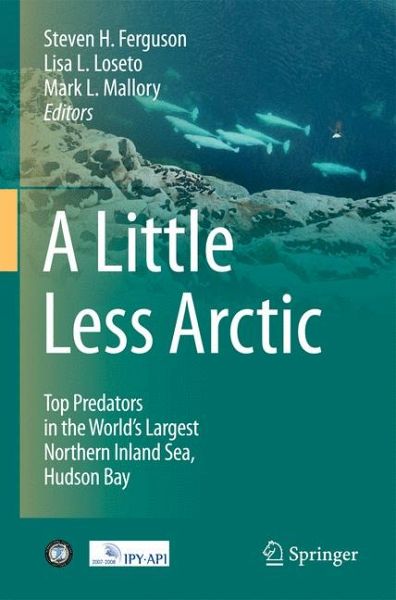
"Northern Canada's Hudson Bay stretches north into Arctic waters where climate change is proceeding most rapidly. This 14-chapter work covers the physical environment (sea ice), food chain (capelin), marine mammals (beluga, narwhal, polar bear, orca, bowhead, ringed seal, walrus), and seabirds. Climate change and sea ice change are a central theme throughout. ... Extensive references for each chapter; well illustrated. Summing Up: Recommended. Academic and professional collections, all levels." (J. Burger, Choice, Vol. 48 (6), February, 2011)
"A Little Less Arctic: Top Predators in the World's Largest Northern Inland Sea is an edited compendium of the state of various predators (e.g., killer whales, polar bears) in the Hudson Bay Complex ... . By providing a comprehensive overview of the current developments transpiring in the HBC, the book does provide senior undergraduates, graduate students and other individuals interested in this area with a good overview of the current ecological changes in the HBC." (Raynald Harvey Lemelin, Human Ecology, Vol. 39, 2011)
"This book is a diverse compendium of work from a multitude of scientists, examining various predatory species in the Arctic versus the effects of climate change and the history and projected future of the Hudson Bay. ... I very much enjoyed the papers presented in this book ... . recommend this book to anyone looking to learn about the current issues facing this unique setting, the flora and fauna contained therein, and the efforts of dedicated scientists to unravel the mysteries of a changing habitat." (Mike Pool, Aquatic Mammals, Vol. 39 (1), 2013)
"Northern Canada's Hudson Bay stretches north into Arctic waters where climate change is proceeding most rapidly. This 14-chapter work covers the physical environment (sea ice), food chain (capelin), marine mammals (beluga, narwhal, polar bear, orca, bowhead, ringed seal, walrus), and seabirds. Climate change and sea ice change are a central theme throughout. ... Extensive references for each chapter; well illustrated. Summing Up: Recommended. Academic and professional collections, all levels." (J. Burger, Choice, Vol. 48 (6), February, 2011)
"A Little Less Arctic: Top Predators in the World's Largest Northern Inland Sea is an edited compendium of the state of various predators (e.g., killer whales, polar bears) in the Hudson Bay Complex ... . By providing a comprehensive overview of the current developments transpiring in the HBC, the book does provide senior undergraduates, graduate students and other individuals interested in this area with a good overview of the current ecological changes in the HBC." (Raynald Harvey Lemelin, Human Ecology, Vol. 39, 2011)
"This book is a diverse compendium of work from a multitude of scientists, examining various predatory species in the Arctic versus the effects of climate change and the history and projected future of the Hudson Bay. ... I very much enjoyed the papers presented in this book ... . recommend this book to anyone looking to learn about the current issues facing this unique setting, the flora and fauna contained therein, and the efforts of dedicated scientists to unravel the mysteries of a changing habitat." (Mike Pool, Aquatic Mammals, Vol. 39 (1), 2013)