
50,95 €
50,95 €
inkl. MwSt.
Sofort per Download lieferbar

25 °P sammeln
50,95 €
Als Download kaufen
50,95 €
inkl. MwSt.
Sofort per Download lieferbar
25 °P sammeln
Jetzt verschenken
Alle Infos zum eBook verschenken
50,95 €
inkl. MwSt.
Sofort per Download lieferbar
Alle Infos zum eBook verschenken
25 °P sammeln

Andere Kunden interessierten sich auch für
") Opium Nation (eBook, ePUB)9,99 €
Opium Nation (eBook, ePUB)9,99 €") The Wars of Afghanistan (eBook, ePUB)11,99 €
The Wars of Afghanistan (eBook, ePUB)11,99 €") Afghanistan Graveyard of Empires (eBook, ePUB)11,49 €
Afghanistan Graveyard of Empires (eBook, ePUB)11,49 €") Afghanistan (eBook, ePUB)44,95 €
Afghanistan (eBook, ePUB)44,95 €") How to Defuse a Bomb (eBook, ePUB)4,99 €
How to Defuse a Bomb (eBook, ePUB)4,99 €") Weapons of Misfortune: Proxy Wars, Power Vacuums, and the U.S. Legacy of Arming Future Adversaries (eBook, ePUB)9,49 €
Weapons of Misfortune: Proxy Wars, Power Vacuums, and the U.S. Legacy of Arming Future Adversaries (eBook, ePUB)9,49 €") The Snow Leopard Project (eBook, ePUB)12,99 €
The Snow Leopard Project (eBook, ePUB)12,99 €


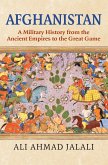



The history of Afghanistan is largely military history. From the Persians and Greeks of antiquity to the British, Soviet, and American powers in modern times, outsiders have led military conquests into the mountains and plains of Afghanistan, leaving their indelible marks on this ancient land at the juncture of Europe, Asia, and the Middle East. In this book Ali Ahmad Jalali, a former interior minister of Afghanistan, taps a deep understanding of his country's distant and recent past to explore Afghanistan's military history during the last two hundred years.
With an introductory chapter highlighting the major military developments from early times to the foundation of the modern Afghan state, Jalali's account focuses primarily on the era of British conquest and Anglo-Afghan wars; the Soviet invasion; the civil war and the rise of the Taliban; and the subsequent U.S. invasion. Looking beyond persistent stereotypes and generalizationse.g., the graveyard of empiresdesignation emerging from the Anglo-Afghan wars of the 19th century and the Soviet experience of the 1980sJalali offers a nuanced and comprehensive portrayal of the way of war pursued by both state and non-state actors in Afghanistan against different domestic and foreign enemies, under changing social, political, and technological conditions. He reveals how the structure of states, tribes, and social communities in Afghanistan, along with the scope of their controlled space, has shaped their modes of fighting throughout history. In particular, his account shows how dynastic wars and foreign conquests differ in principle, strategy, and method from wars initiated by non-state actors including tribal and community militias against foreign invasions or repressive governments.
Written by a professional soldier, politician, and noted scholar with a keen analytical grasp of his country's military and political history, this magisterial work offers unique insight into the military history of Afghanistanand thus, into Afghanistan itself.
With an introductory chapter highlighting the major military developments from early times to the foundation of the modern Afghan state, Jalali's account focuses primarily on the era of British conquest and Anglo-Afghan wars; the Soviet invasion; the civil war and the rise of the Taliban; and the subsequent U.S. invasion. Looking beyond persistent stereotypes and generalizationse.g., the graveyard of empiresdesignation emerging from the Anglo-Afghan wars of the 19th century and the Soviet experience of the 1980sJalali offers a nuanced and comprehensive portrayal of the way of war pursued by both state and non-state actors in Afghanistan against different domestic and foreign enemies, under changing social, political, and technological conditions. He reveals how the structure of states, tribes, and social communities in Afghanistan, along with the scope of their controlled space, has shaped their modes of fighting throughout history. In particular, his account shows how dynastic wars and foreign conquests differ in principle, strategy, and method from wars initiated by non-state actors including tribal and community militias against foreign invasions or repressive governments.
Written by a professional soldier, politician, and noted scholar with a keen analytical grasp of his country's military and political history, this magisterial work offers unique insight into the military history of Afghanistanand thus, into Afghanistan itself.
Dieser Download kann aus rechtlichen Gründen nur mit Rechnungsadresse in A, D ausgeliefert werden.