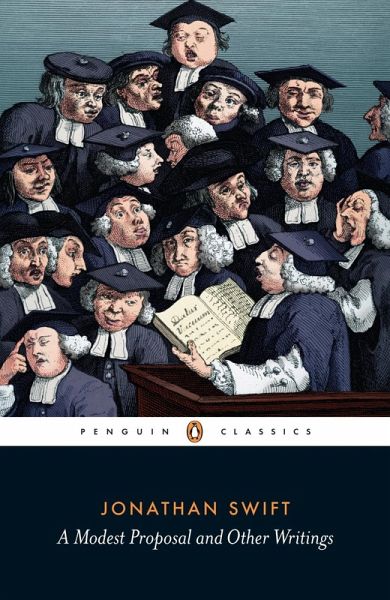
9,49 €
inkl. MwSt.
Sofort per Download lieferbar
0 °P sammeln

Andere Kunden interessierten sich auch für
") News from Nowhere and Other Writings (eBook, ePUB)9,49 €
News from Nowhere and Other Writings (eBook, ePUB)9,49 €") A Modest Proposal (eBook, ePUB)1,49 €
A Modest Proposal (eBook, ePUB)1,49 €") Mere Anarchy (eBook, ePUB)8,99 €
Mere Anarchy (eBook, ePUB)8,99 €") The School for Scandal and Other Plays (eBook, ePUB)9,49 €
The School for Scandal and Other Plays (eBook, ePUB)9,49 €") Stung with Love: Poems and Fragments of Sappho (eBook, ePUB)8,49 €
Stung with Love: Poems and Fragments of Sappho (eBook, ePUB)8,49 €") Faust, Part I (eBook, ePUB)8,49 €
Faust, Part I (eBook, ePUB)8,49 €") Plays Pleasant (eBook, ePUB)11,99 €
Plays Pleasant (eBook, ePUB)11,99 €




The political dilemma of Ireland; the state of faith in England; the charms of the Beggar's Opera; the importance of puns . . . This selection gathers together some of Swift's most brilliant prose, from high politics to social gossip, from savage tirades to lighthearted social satire. In addition to his classic essays, the collection includes several of Swift's letters to Alexander Pope and other great thinkers of the age.
Dieser Download kann aus rechtlichen Gründen nur mit Rechnungsadresse in A, B, BG, CY, CZ, D, DK, EW, E, FIN, F, GR, HR, H, IRL, I, LT, L, LR, M, NL, PL, P, R, S, SLO, SK ausgeliefert werden.