72,95 €
inkl. MwSt.
Sofort per Download lieferbar
36 °P sammeln

Andere Kunden interessierten sich auch für
") Machine Learning Applications in Renewable Energy (eBook, PDF)112,95 €
Machine Learning Applications in Renewable Energy (eBook, PDF)112,95 €") A Comprehensive Guide to Factorial Two-Level Experimentation (eBook, PDF)72,95 €
A Comprehensive Guide to Factorial Two-Level Experimentation (eBook, PDF)72,95 €") Bayesian Inference and Maximum Entropy Methods in Science and Engineering (eBook, PDF)128,95 €
Bayesian Inference and Maximum Entropy Methods in Science and Engineering (eBook, PDF)128,95 €") Stochastic Processes and Applications (eBook, PDF)40,95 €
Stochastic Processes and Applications (eBook, PDF)40,95 €") IUTAM Symposium on Nonlinear Stochastic Dynamics (eBook, PDF)112,95 €
IUTAM Symposium on Nonlinear Stochastic Dynamics (eBook, PDF)112,95 €") Hybrid Switching Diffusions (eBook, PDF)72,95 €
Hybrid Switching Diffusions (eBook, PDF)72,95 €") Controlled Markov Processes and Viscosity Solutions (eBook, PDF)128,95 €
Controlled Markov Processes and Viscosity Solutions (eBook, PDF)128,95 €




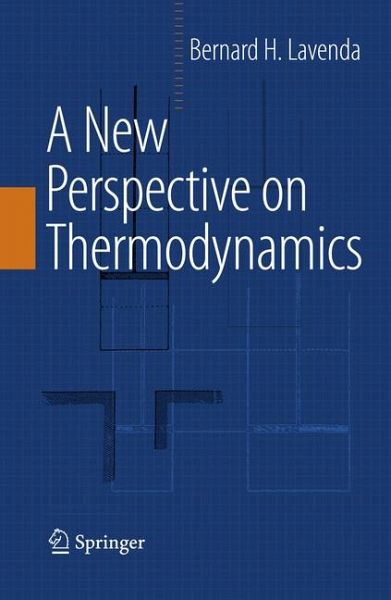
More than to any other single individual, thermodynamics owes its creation to Nicolas-Leonard-Sadi ¿ Carnot. Sadi, the son of the "great Carnot" Lazare, was he- ily in uencedby his father. Not onlywas LazareMinister of War duringNapoleon's consulate, he was a respected mathematician and engineer in his own right. Ma- ematically, Lazare can lay claim to the de nition of the cross ratio, a projective invariant of four points. Lazare was also interested in how machines operated, - phasizing the roles of work and "vis viva," or living force, which was later to be associated with the kinetic energy. He arrived at a dynamical theory that machines in order to operate at maximum ef ciency should avoid "any impact or sudden change. " This was the heritage he left to his son Sadi. The mechanics of Newton, in his Principia, was more than a century old. It dealt with the mechanics of conservative systems in which there was no room for p- cesses involving heat and friction. Such processes would ruin the time reversibility of mechanical laws, which could no longer be derived by minimizing the difference between kinetic and potential energies. When Sadi wrote his only scienti c work in 1824, there were no laws governing the mechanical effects of heat. In fact, caloric theory was still in vogue, which treated heat as an imponderable uid that was c- served.
Dieser Download kann aus rechtlichen Gründen nur mit Rechnungsadresse in A, B, BG, CY, CZ, D, DK, EW, E, FIN, F, GR, HR, H, IRL, I, LT, L, LR, M, NL, PL, P, R, S, SLO, SK ausgeliefert werden.
From the reviews:
"In six chapters, the author describes the fundamental principles of thermodynamics, starting from Carnot's works and ending with nonextensive thermodynamics. ... Throughout the whole book, the author shows the power of Carnot works. He always quotes citations and computations from these original works, then considering criticisms and possible extensions. Students and researchers involved in the fundamentals of thermodynamics will surely be interested by this historical presentation of the thermodynamics starting from the pioneering works by Carnot and going to some recent extensions." (Alain Brillard, Zentralblatt MATH, Vol. 1186, 2010)
"In six chapters, the author describes the fundamental principles of thermodynamics, starting from Carnot's works and ending with nonextensive thermodynamics. ... Throughout the whole book, the author shows the power of Carnot works. He always quotes citations and computations from these original works, then considering criticisms and possible extensions. Students and researchers involved in the fundamentals of thermodynamics will surely be interested by this historical presentation of the thermodynamics starting from the pioneering works by Carnot and going to some recent extensions." (Alain Brillard, Zentralblatt MATH, Vol. 1186, 2010)