66,95 €
66,95 €
inkl. MwSt.
Sofort per Download lieferbar

33 °P sammeln
66,95 €
Als Download kaufen
66,95 €
inkl. MwSt.
Sofort per Download lieferbar
33 °P sammeln
Jetzt verschenken
Alle Infos zum eBook verschenken
66,95 €
inkl. MwSt.
Sofort per Download lieferbar
Alle Infos zum eBook verschenken
33 °P sammeln

Andere Kunden interessierten sich auch für
") A Question of Balance (eBook, PDF)66,95 €
A Question of Balance (eBook, PDF)66,95 €") A Question of Balance (eBook, ePUB)15,95 €
A Question of Balance (eBook, ePUB)15,95 €") Civic and Uncivic Values in Hungary (eBook, ePUB)42,95 €
Civic and Uncivic Values in Hungary (eBook, ePUB)42,95 €") Prejudice and Policymaking (eBook, ePUB)61,95 €
Prejudice and Policymaking (eBook, ePUB)61,95 €") The Muslim Question in Assam and Northeast India (eBook, ePUB)41,95 €
The Muslim Question in Assam and Northeast India (eBook, ePUB)41,95 €") The Political Question Doctrine and the Supreme Court of the United States (eBook, ePUB)36,95 €
The Political Question Doctrine and the Supreme Court of the United States (eBook, ePUB)36,95 €") Elites, Non-Elites, and Political Realism (eBook, ePUB)22,95 €
Elites, Non-Elites, and Political Realism (eBook, ePUB)22,95 €

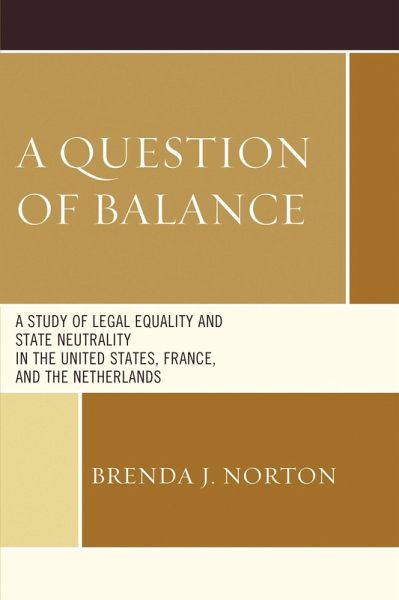
Western liberal democracy has a dual foundation of limited government implementing the will of the majority and protecting individual autonomy within a sphere of fundamental rights. Under the rubric of universal human rights Western societies take for granted that they tolerate all religions and treat all persons equally. However, through globalization and immigration Western societies are increasingly finding non-Christian people in their midst. This pluralism is causing polities to rethink fundamental notions of the boundaries of religious freedom, equality, and state neutrality. Three countries whose systems are based on the Western liberal democratic philosophy and which are religiously pluralist-the United States, France, and the Netherlands-are reacting in different ways.
The politics of the hijab and burqa lie at the intersection of the political and legal spheres. Consequently, the political and legal spheres have each attempted to enforce differing versions of the concepts of equality and neutrality. A cross-cultural and cross-national survey of judicial decisions and legislative action in these countries demonstrates how each is balancing individual rights and communal bonds, and adhering to or retreating from previously accepted human rights norms for women and religious practices.
The politics of the hijab and burqa lie at the intersection of the political and legal spheres. Consequently, the political and legal spheres have each attempted to enforce differing versions of the concepts of equality and neutrality. A cross-cultural and cross-national survey of judicial decisions and legislative action in these countries demonstrates how each is balancing individual rights and communal bonds, and adhering to or retreating from previously accepted human rights norms for women and religious practices.