22,95 €
22,95 €
inkl. MwSt.
Sofort per Download lieferbar

11 °P sammeln
22,95 €
Als Download kaufen
22,95 €
inkl. MwSt.
Sofort per Download lieferbar
11 °P sammeln
Jetzt verschenken
Alle Infos zum eBook verschenken
22,95 €
inkl. MwSt.
Sofort per Download lieferbar
Alle Infos zum eBook verschenken
11 °P sammeln

Andere Kunden interessierten sich auch für
") Atlanta, Cradle of the New South (eBook, ePUB)14,95 €
Atlanta, Cradle of the New South (eBook, ePUB)14,95 €") The Majority Finds Its Past (eBook, ePUB)22,95 €
The Majority Finds Its Past (eBook, ePUB)22,95 €") Lincoln's Proclamation (eBook, ePUB)14,95 €
Lincoln's Proclamation (eBook, ePUB)14,95 €") John Brown's Body (eBook, ePUB)14,95 €
John Brown's Body (eBook, ePUB)14,95 €") Embattled Freedom (eBook, ePUB)14,95 €
Embattled Freedom (eBook, ePUB)14,95 €") Black Soldiers in Blue (eBook, ePUB)18,95 €
Black Soldiers in Blue (eBook, ePUB)18,95 €") Emancipation's Diaspora (eBook, ePUB)22,95 €
Emancipation's Diaspora (eBook, ePUB)22,95 €




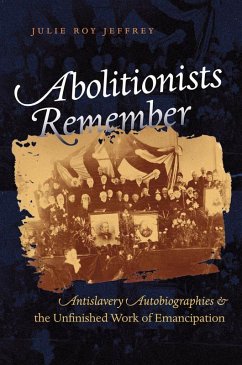
In Abolitionists Remember, Julie Roy Jeffrey illuminates a second, little-noted antislavery struggle as abolitionists in the postwar period attempted to counter the nation’s growing inclination to forget why the war was fought, what slavery was really like, and why the abolitionist cause was so important. In the rush to mend fences after the Civil War, the memory of the past faded and turned romantic — slaves became quaint, owners kindly, and the war itself a noble struggle for the Union. Jeffrey examines the autobiographical writings of former abolitionists such as Laura Haviland, Frederick Douglass, Parker Pillsbury, and Samuel J. May, revealing that they wrote not only to counter the popular image of themselves as fanatics, but also to remind readers of the harsh reality of slavery and to advocate equal rights for African Americans in an era of growing racism, Jim Crow, and the Ku Klux Klan. These abolitionists, who went to great lengths to get their accounts published, challenged every important point of the reconciliation narrative, trying to salvage the nobility of their work for emancipation and African Americans and defending their own participation in the great events of their day.
Dieser Download kann aus rechtlichen Gründen nur mit Rechnungsadresse in A, D ausgeliefert werden.