15,95 €
15,95 €
inkl. MwSt.
Erscheint vor. 03.02.26

8 °P sammeln
15,95 €
Als Download kaufen
15,95 €
inkl. MwSt.
Erscheint vor. 03.02.26
8 °P sammeln
Jetzt verschenken
Alle Infos zum eBook verschenken
15,95 €
inkl. MwSt.
Erscheint vor. 03.02.26
Alle Infos zum eBook verschenken
8 °P sammeln

Andere Kunden interessierten sich auch für
") The Every-Day Life Of Abraham Lincoln (eBook, ePUB)0,99 €
The Every-Day Life Of Abraham Lincoln (eBook, ePUB)0,99 €") The Words of Abraham Lincoln (eBook, ePUB)6,79 €
The Words of Abraham Lincoln (eBook, ePUB)6,79 €") Emancipation, the Union Army, and the Reelection of Abraham Lincoln (eBook, ePUB)15,95 €
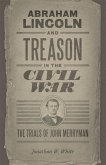
Emancipation, the Union Army, and the Reelection of Abraham Lincoln (eBook, ePUB)15,95 €") Abraham Lincoln and Treason in the Civil War (eBook, ePUB)15,95 €
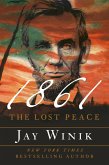
Abraham Lincoln and Treason in the Civil War (eBook, ePUB)15,95 €") 1861 (eBook, ePUB)15,99 €
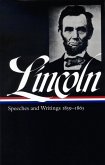
1861 (eBook, ePUB)15,99 € (eBook, ePUB)") Abraham Lincoln: Speeches and Writings Vol. 2 1859-1865 (LOA #46) (eBook, ePUB)19,95 €
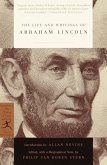
Abraham Lincoln: Speeches and Writings Vol. 2 1859-1865 (LOA #46) (eBook, ePUB)19,95 €") The Life and Writings of Abraham Lincoln (eBook, ePUB)10,95 €
The Life and Writings of Abraham Lincoln (eBook, ePUB)10,95 €
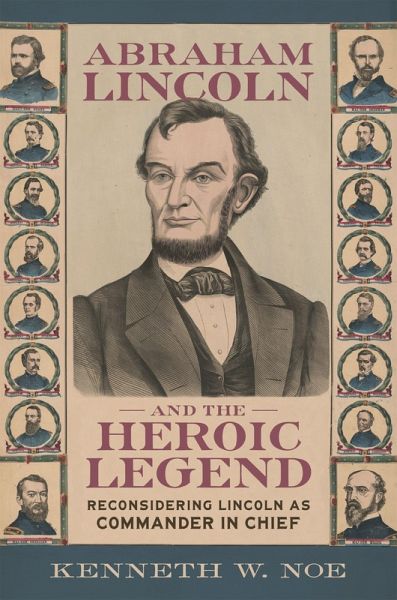
Kenneth W. Noe's Abraham Lincoln and the Heroic Legend boldly questions the long-accepted notion that the sixteenth president was an almost-perfect commander in chief, more intelligent than his generals. The legend originated with Lincoln himself, who early in the war concluded that he possessed a keen strategic and tactical mind. Noe explores the genesis of this powerful idea and asks why so many have tenaciously defended it.
George McClellan, Lincoln's top general, emerged in Lincoln's mind and the American psyche as his chief adversary, and to this day, the Lincoln-McClellan relationship remains central to the enduring legend. Lincoln came to view himself as a wiser warrior than McClellan, and as the war proceeded, a few members of Lincoln's inner circle began to echo the president's thoughts on his military prowess. Convinced of his own tactical brilliance, Lincoln demanded that Ulysses Grant, McClellan's replacement, turn to the "hard, tough fighting" of the Overland and Petersburg campaigns, when Grant's first instinct was to copy McClellan and swing into the Confederate rear.
Noe suggests that the growth and solidification of the heroic legend began with Lincoln's assassination; it debuted in print only months afterward and was so cloaked in religious piety that for decades it could not withstand the counternarratives offered by secular contemporaries. Although the legend was debated and neglected at times, it reemerged in interwar Great Britain and gained canonical status in the 1950s Cold War era and during the Civil War Centennial of the 1960s. Historians became torchbearers of the heroic legend and much else that we know about Lincoln, reorienting his biography forever. Based on lessons and language from the world wars, their arguments were so timely and powerful that they seized the field. Since then, biographers and historians have reevaluated many aspects of Lincoln's life, but have rarely revisited his performance as commander in chief. Noe's reappraisal is long overdue.
George McClellan, Lincoln's top general, emerged in Lincoln's mind and the American psyche as his chief adversary, and to this day, the Lincoln-McClellan relationship remains central to the enduring legend. Lincoln came to view himself as a wiser warrior than McClellan, and as the war proceeded, a few members of Lincoln's inner circle began to echo the president's thoughts on his military prowess. Convinced of his own tactical brilliance, Lincoln demanded that Ulysses Grant, McClellan's replacement, turn to the "hard, tough fighting" of the Overland and Petersburg campaigns, when Grant's first instinct was to copy McClellan and swing into the Confederate rear.
Noe suggests that the growth and solidification of the heroic legend began with Lincoln's assassination; it debuted in print only months afterward and was so cloaked in religious piety that for decades it could not withstand the counternarratives offered by secular contemporaries. Although the legend was debated and neglected at times, it reemerged in interwar Great Britain and gained canonical status in the 1950s Cold War era and during the Civil War Centennial of the 1960s. Historians became torchbearers of the heroic legend and much else that we know about Lincoln, reorienting his biography forever. Based on lessons and language from the world wars, their arguments were so timely and powerful that they seized the field. Since then, biographers and historians have reevaluated many aspects of Lincoln's life, but have rarely revisited his performance as commander in chief. Noe's reappraisal is long overdue.
Dieser Download kann aus rechtlichen Gründen nur mit Rechnungsadresse in A, D ausgeliefert werden.