Sie sind bereits eingeloggt. Klicken Sie auf 2. tolino select Abo, um fortzufahren.
Bitte loggen Sie sich zunächst in Ihr Kundenkonto ein oder registrieren Sie sich bei bücher.de, um das eBook-Abo tolino select nutzen zu können.
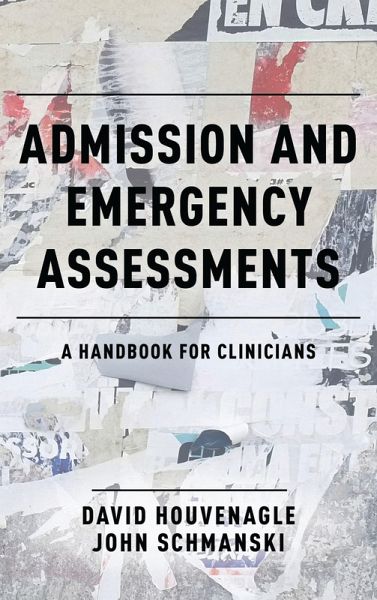
Admission and Emergency Assessments: A Handbook for Clinicians provides a conceptual framework and concrete practice examples to conduct effective assessments for mental health crises and psychiatric admissions. Behavioral health treatment starts with an accurate and thorough assessment of a client's daily functioning, level of risk, and needs. This assessment serves as the clinician's lens for conceptualizing the patient's presentation and aptitude for expressing their problems. Through narrative descriptions, diagrams, and vignettes, this book provides the necessary tools to assess patients…mehr
Admission and Emergency Assessments: A Handbook for Clinicians provides a conceptual framework and concrete practice examples to conduct effective assessments for mental health crises and psychiatric admissions. Behavioral health treatment starts with an accurate and thorough assessment of a client's daily functioning, level of risk, and needs. This assessment serves as the clinician's lens for conceptualizing the patient's presentation and aptitude for expressing their problems. Through narrative descriptions, diagrams, and vignettes, this book provides the necessary tools to assess patients in behavioral health crises. It serves as a reference for specific clinical situations-from working with translators, busy doctors, and adversarial insurance agencies to assessing a variety of patient dispositions and demographics. This book seeks to elevate and accelerate clinical skills that can be integrated into other practice settings.
Die Herstellerinformationen sind derzeit nicht verfügbar.
Autorenporträt
David Houvenagle, PhD, LCSW, is a board-approved clinical supervisor in the state of Kentucky. He has thirty years of professional experience in outpatient, partial hospitalization, intensive outpatient, inpatient hospitalization, and assessment settings. His previous published works include Local Healthcare Politics: Louisville's Growth Machine 1947-2007 and Clinician's Guide to Partial Hospitalization and Intensive Outpatient Practice.
Inhaltsangabe
Authors' Note Acknowledgments Chapter 1:Introduction Comment on Diversity Chapter 2: The Purpose of the Interview Criteria The Patient's or Family's Agenda Reconciling Criteria and Motivation Concluding Thoughts Chapter 3: The Reality of the Emergency and Assessment Interview: Challenges to Validity and Reliability The Deciphering Filters: The Assessment Questions, Observations, and Criteria The Curve of Ability The Different Levels of Motivation The External Factors of the Collateral Sources and Climate Vignettes Concluding Thoughts Chapter 4: Interviewing Skills and Patterns The Structured versus the Unstructured Interview Pattern Joining with the Patient: Formality, Tone of Voice, and Confidence Case Vignettes Concluding Thoughts Chapter 5: Suicide Assessment The Criteria of Suicide Assessment: Immediate versus Potential Safety Risk Applying the Curve of Ability The Value of Collateral Sources Becoming Accustomed to Asking Patients about Suicide Vignettes of Suicide Assessment Concluding Thoughts Chapter 6: The Disruptive, Aggressive, and Anti-Social Patient Anger Due to Unmet Human Needs Risks Associated with the Disruptive, Aggressive, and/or Anti-Social Patient Safety Measures to Protect Therapists, Patients, and Guests Concluding Thoughts Chapter 7: Assessing Children and Adolescents Interviewing Considerations The Immediate Safety Risk Out of Control, Reckless, Risky Behavior Assets and Liabilities of the Caregiver in the Assessment Process Legal Obligations Vignettes Concluding Thoughts Chapter 8:Substance Use Assessment Taking the History Scope of Drug and Alcohol Types COWS Questions Criteria for Hospital Admission Immediate Safety Risk versus Potential Safety Risk Concluding Thoughts Chapter 9:Language Interpretation Legal and Ethical Considerations Expectations for the Interview Telehealth Vignettes Working with the Interpreter Concluding Thoughts Chapter 10: Staffing with the Doctors The Script and Its Elements The Structure of the Script Delivery of the Script: Tone and Pace Getting to Know the Doctors You Work With When a Doctor Passes The Risk of Bad Recommendations Extraordinary Situations Vignettes Concluding Thoughts Chapter 11: Telling People "No" Reviewing Boundaries Understanding Assertiveness Vignettes Concluding Thoughts Chapter 12:Insurance Prior Authorizations Prior Authorization as an Element of Utilization Management The Phone Call Prior Authorization The Fax Authorization The Online Authorization The Peer-to-Peer or Physician Review What If There Is a Denial? Concluding Thoughts Chapter 13: The High Utilizer Describing High Utilizers Overall Perspective Serial Behavioral Patterns Challenges to Interviewing Strategies for Interviewing Difficult High Utilizers Sometimes You Can Divert the High Utilizer Vignettes Concluding Thoughts Chapter 14: Concluding Thoughts: Learning and Appreciating the Value of Communication John's Experiences David's Experience References Index About the Authors
Authors' Note Acknowledgments Chapter 1:Introduction Comment on Diversity Chapter 2: The Purpose of the Interview Criteria The Patient's or Family's Agenda Reconciling Criteria and Motivation Concluding Thoughts Chapter 3: The Reality of the Emergency and Assessment Interview: Challenges to Validity and Reliability The Deciphering Filters: The Assessment Questions, Observations, and Criteria The Curve of Ability The Different Levels of Motivation The External Factors of the Collateral Sources and Climate Vignettes Concluding Thoughts Chapter 4: Interviewing Skills and Patterns The Structured versus the Unstructured Interview Pattern Joining with the Patient: Formality, Tone of Voice, and Confidence Case Vignettes Concluding Thoughts Chapter 5: Suicide Assessment The Criteria of Suicide Assessment: Immediate versus Potential Safety Risk Applying the Curve of Ability The Value of Collateral Sources Becoming Accustomed to Asking Patients about Suicide Vignettes of Suicide Assessment Concluding Thoughts Chapter 6: The Disruptive, Aggressive, and Anti-Social Patient Anger Due to Unmet Human Needs Risks Associated with the Disruptive, Aggressive, and/or Anti-Social Patient Safety Measures to Protect Therapists, Patients, and Guests Concluding Thoughts Chapter 7: Assessing Children and Adolescents Interviewing Considerations The Immediate Safety Risk Out of Control, Reckless, Risky Behavior Assets and Liabilities of the Caregiver in the Assessment Process Legal Obligations Vignettes Concluding Thoughts Chapter 8:Substance Use Assessment Taking the History Scope of Drug and Alcohol Types COWS Questions Criteria for Hospital Admission Immediate Safety Risk versus Potential Safety Risk Concluding Thoughts Chapter 9:Language Interpretation Legal and Ethical Considerations Expectations for the Interview Telehealth Vignettes Working with the Interpreter Concluding Thoughts Chapter 10: Staffing with the Doctors The Script and Its Elements The Structure of the Script Delivery of the Script: Tone and Pace Getting to Know the Doctors You Work With When a Doctor Passes The Risk of Bad Recommendations Extraordinary Situations Vignettes Concluding Thoughts Chapter 11: Telling People "No" Reviewing Boundaries Understanding Assertiveness Vignettes Concluding Thoughts Chapter 12:Insurance Prior Authorizations Prior Authorization as an Element of Utilization Management The Phone Call Prior Authorization The Fax Authorization The Online Authorization The Peer-to-Peer or Physician Review What If There Is a Denial? Concluding Thoughts Chapter 13: The High Utilizer Describing High Utilizers Overall Perspective Serial Behavioral Patterns Challenges to Interviewing Strategies for Interviewing Difficult High Utilizers Sometimes You Can Divert the High Utilizer Vignettes Concluding Thoughts Chapter 14: Concluding Thoughts: Learning and Appreciating the Value of Communication John's Experiences David's Experience References Index About the Authors
Es gelten unsere Allgemeinen Geschäftsbedingungen: www.buecher.de/agb
Impressum
www.buecher.de ist ein Internetauftritt der buecher.de internetstores GmbH
Geschäftsführung: Monica Sawhney | Roland Kölbl | Günter Hilger
Sitz der Gesellschaft: Batheyer Straße 115 - 117, 58099 Hagen
Postanschrift: Bürgermeister-Wegele-Str. 12, 86167 Augsburg
Amtsgericht Hagen HRB 13257
Steuernummer: 321/5800/1497
USt-IdNr: DE450055826